I've been reading about the American Revolution a lot lately. It's a topic I've always found interesting, but never really had the time to devote to; I was too busy with school, the Tudors and work. But I graduated a year ago, have read all the Tudor books I own, and have a bit of free time on the weekends now. It just seemed like a good time to get to know the men (and women) who helped to create our country and the events that set the Revolution into motion.
One of the best fictional novels I've read through on the subject was Shadow Patriots by Lucia St. Clair Robson (which is available at the Trumbull Library if you're interested). The novel tells the story of a young Quaker woman who fully intends on staying neutral throughout the rebellion and has friends on both sides of the war. After her brother joins the patriots however, she gradually gets drawn into the war effort and, late in the novel, becomes part of the Culper (spy) ring in New York City.
The novel, which is based on stories and legends concerning the very real spy ring, is a great example on how to merge historical fact with action and adventure. The protagonist, Kate, is bound by the culture of her religion and the times she lives in yet, like many women in the revolution and throughout history, she finds ways to work around it. I find it particularly interesting that Robson chose to make her a Quaker, since they have a strict policy of neutrality and don't believe in lying, both of which Kate winds up needing throughout the course of the novel.
Find out what's happening in Trumbullfor free with the latest updates from Patch.
Speaking of spies, there was another book I got from the Library that focused entirely on the spy rings that George Washington ran during the revolution. You know that story about how Washington couldn't tell a lie? Yeah, he could and did it very well when he needed to. Thomas Allen's book George Washington, Spymaster: How America Outspied the British and Won the Revolutionary War, was a great source for learning more about his spying techniques; for example, Washington would sometimes give fake documents to trusted spies, who would then "accidentally" drop them or turn them over to British authorities, making them think he had more men or his Army was in a different location than they actually were.
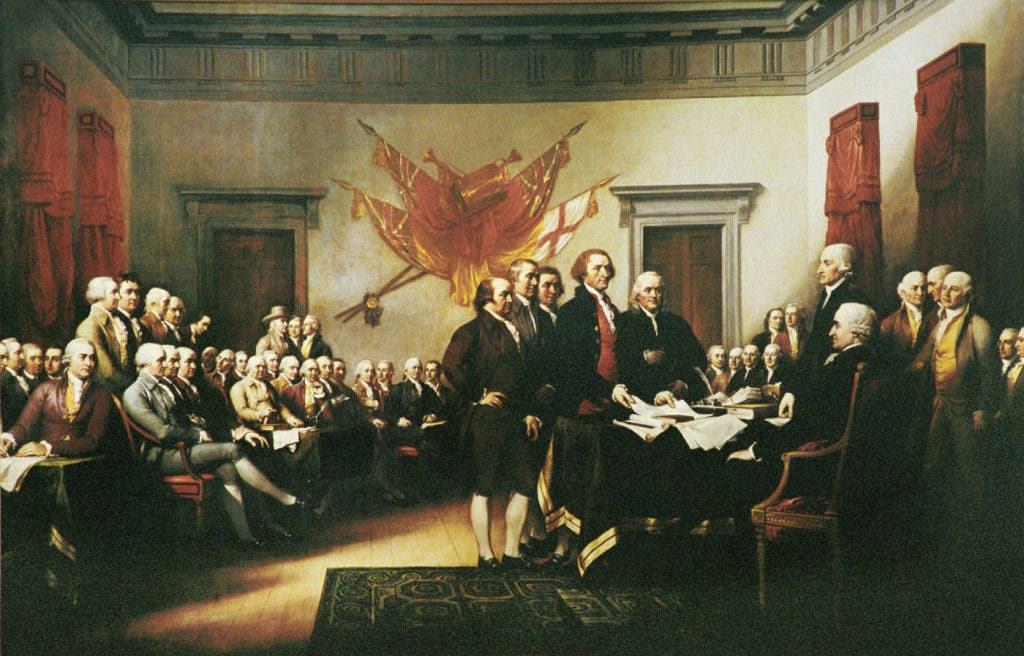
I think the most interesting part of reading about the Revolution, however, is getting to read about the Founding Fathers. So many people across the country view them as almost God-like figures and, to be fair, they did many amazing things in the name of freedom. But they were also very much regular men, prone to the same character flaws as anyone else. Washington had a well-known temper, Jefferson struggled with his reliance on slaves most of his life, John Adams had a tendency towards extreme jealousy (which led to an estrangement with Jefferson that last several years), and Franklin had a bit of a reputation as a womanizer. Yet for all their flaws they were able to come together at a time of crisis, put their individual differences aside, and do what needed to be done. So when you're out at a picnic or watching the fireworks on Monday I hope you take a moment to remember all the men and women (both well-known and the anonymous citizens and soldiers) who risked their lives and the lives of their families to create the country we all know and love.