Politics & Government
Courtney: Consumer Protection Report Outlines Prevailing Questions on 'Horrifying' Crumbling Foundation Epidemic
The report was made available on Tuesday.


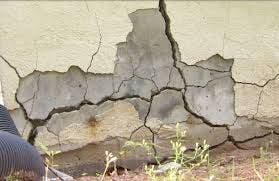
WASHINGTON, DC/HARTFORD, CT — U.S. Rep. Joe Courtney on Tuesday said a report released by the state Consumer Protection Department about an epidemic of crumbling home foundations in eastern Connecticut has reiterated the need fir answers on what can be done to rectify a "horrifying situation."
“This report documents the work done to date by the staff of the Department of Consumer Protection. As such, it accurately lays out the Commissioner’s efforts which have been laudable," Courtney said. "Unfortunately, it totally begs the question of what needs to happen next to solve this problem, which will require the concerted effort of all levels of government."
Courtney, a 2nd District Democrat, lives in Vernon, one town touched by the problem. He said 22 other towns are affected. See a map here.
Find out what's happening in Vernonfor free with the latest updates from Patch.
The DCP released details of the report, completed on Dec. 31, on Tuesday.
The DCP’s investigation, in conjunction with the state Attorney General's office, focused on whether or not the state could assert a Connecticut Unfair Trade Practices Act claim against any party related to deteriorating foundations. In July of 2016 the OAG issued a letter to Governor Dannell P. Malloy and the DCP indicating the low likelihood of a successful CUTPA claim.
Find out what's happening in Vernonfor free with the latest updates from Patch.
The investigation concluded that the mineral pyrrhotite must be present for the foundations to deteriorate in the way observed. The minimum amount of pyrrhotite needed to trigger deterioration is not yet known, according to the report.
Becker’s Quarry, the main source of concrete aggregate for the distributor — J.J. Mottes company — includes more than trace amounts of pyrrhotite, and is located on a vein of rock that contains significant amounts of pyrrhotite, according to the report.
J.J. Mottes and Becker’s Quarry entered into an Assurance of Voluntary Compliance with the state =, in which they agreed not to use concrete from the quarry for residential purposes until July of 2017, according to the report.
“DCP remains committed to providing our expertise and any information from our investigation we can disclose to elected officials, other government officials, and members of the private sector working together to seek remedies for homeowners,” said Consumer Protection Commissioner Jonathan A. Harris, “We’re pleased to have completed our investigation on schedule so that we can make information available to others trying to address this challenge. I know that our homes are often our biggest financial asset and the property closest to our hearts, and our hope is to provide the information needed to get homeowners the relief they deserve.”
The investigation included a scientific study where a concrete expert from the University of Connecticut was retained to study core samples from affected homes. DCP also conducted approximately 70 site visits to potentially affected homes, conducted roughly 90 interviews with builders identified by consumer complaint forms, conducted 85 interviews with experts involved in residential construction and foundation installation, issued 31 subpoenas to insurance companies under CUTPA, and processed more than 450 complaints from potentially affected homeowners, according to the report.
Complaints received by DCP include homes with foundations poured between 1983 and 2010, according to the report.
A copy of DCP’s final report and appendices can be found below:
Consumers also refer to www.ct.gov/DCP/concrete.
Courtney has been pushing for some type of federal disaster relief for homeowners affected by the problem.
"Today, local officials in 23 communities we know have impacted homes are taking the brunt of declining property assessments," Courtney said. "This horrifying situation poses a grave threat to the housing market of a significant part of the state which will have a negative ripple effect across our state's economic recovery. My office received confirmation last August that federal resources can be applied to this problem through the Department of Housing and Urban Development. Local leaders are hard at work trying to leverage these resources, which, combined with help from other stakeholders, insurers, lenders and home builders, can stop the escalating harm this report identifies. I look forward to working with my colleagues in the federal delegation, area legislators and local officials to flush opportunities like these out further."
Patch file photo
Get more local news delivered straight to your inbox. Sign up for free Patch newsletters and alerts.