Community Corner
On Juneteenth, CT Civil War Officer Memorialized In Vernon Remembered As One Who Fought With Historic Unit
"He fought for them," Colleagues said of Capt. Edwin Post and the Black troops.


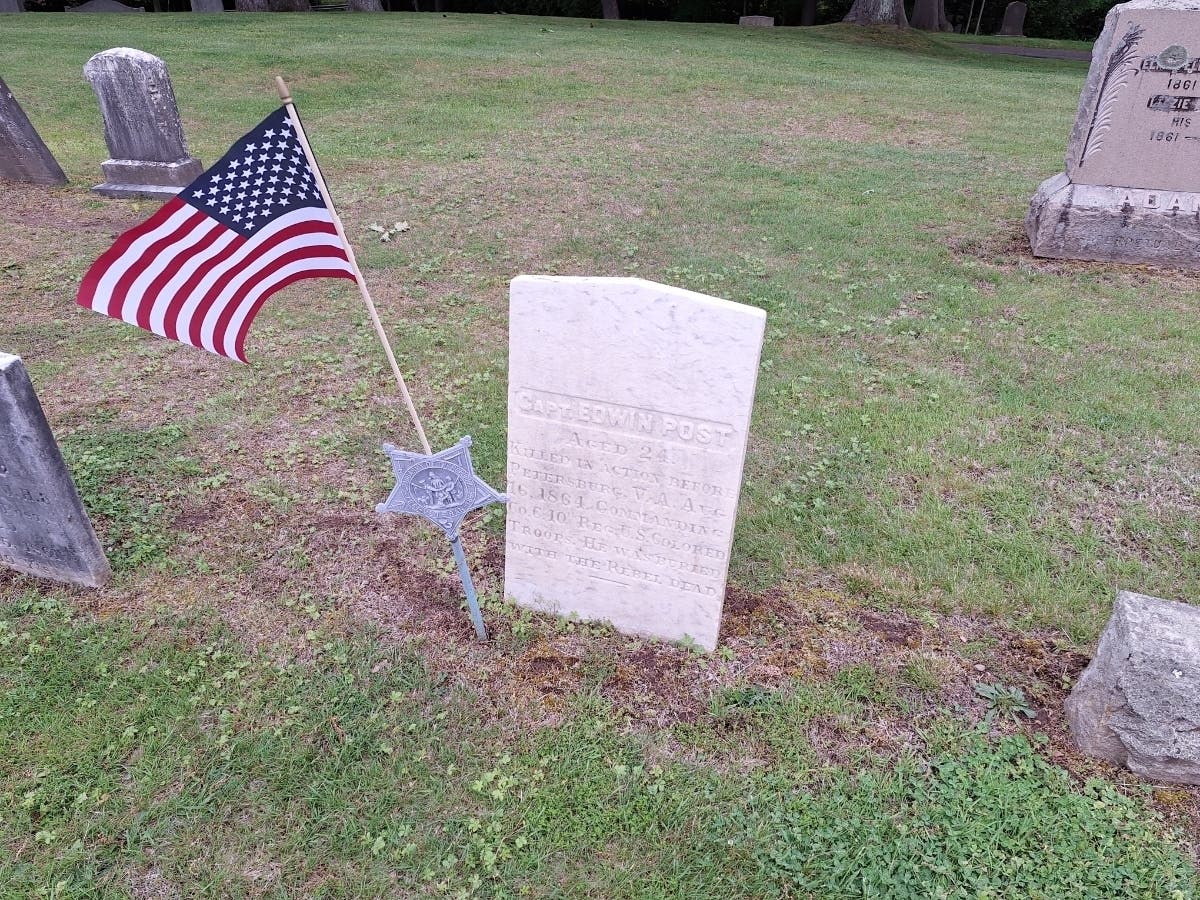
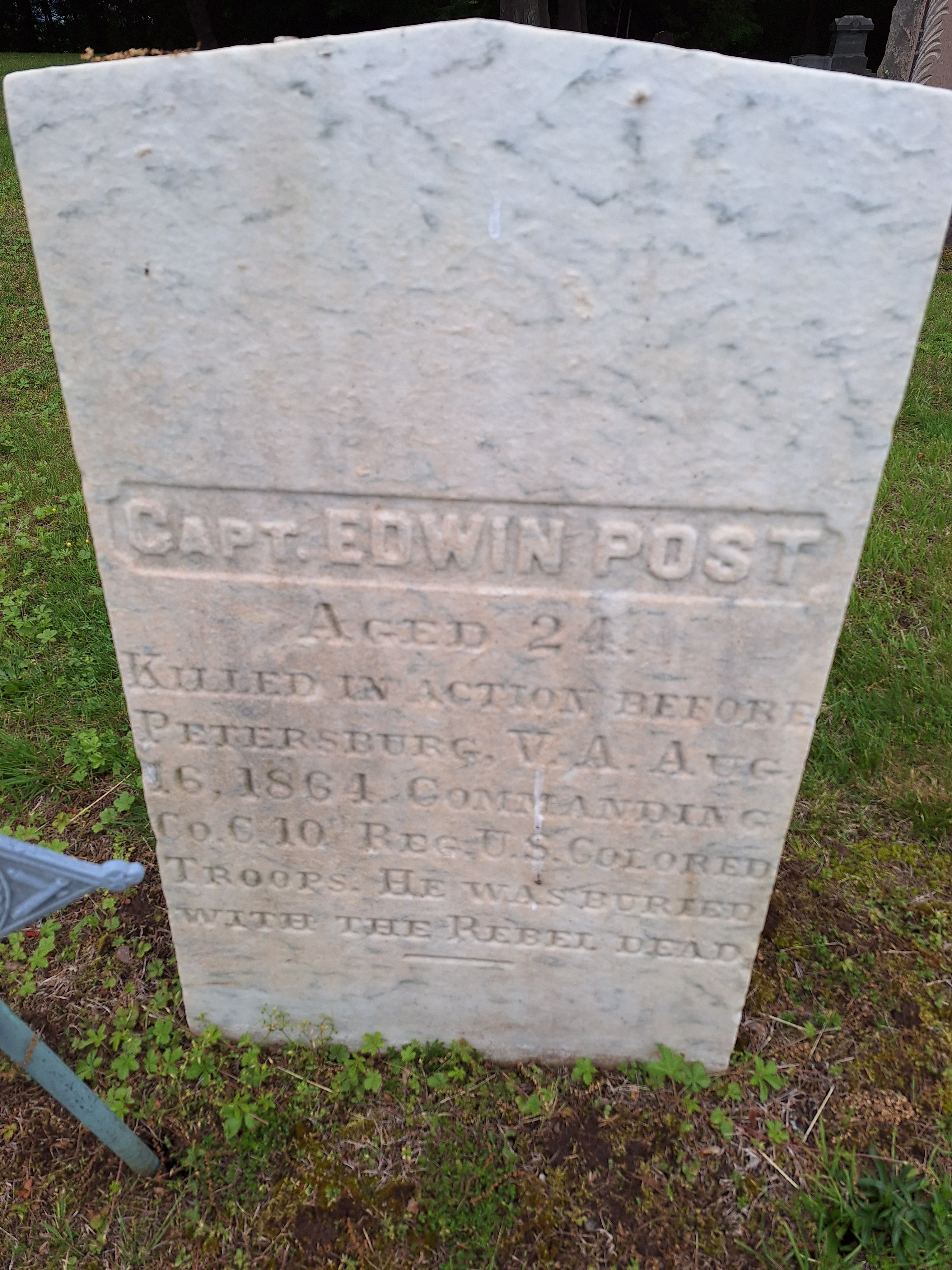
VERNON, CT — In Vernon's Grove Hill Cemetery lies a memorial to a Union army officer who is certainly worthy of a mention every Juneteenth.
The "grave" of Capt. Edwin Post lies in a cluster that is the final resting place — at least in spirit in Pope's case — for several Civil War soldiers. Not too far away, in the Rockville section of town, sits the New England Civil War Museum and Research Center in a fully preserved Grand Army of the Republic Hall, where veterans met after the conflict.
Post never made it to the meetings — and to his actual gravestone. He was killed in action on Aug. 16, 1864 at the age of 24.
Find out what's happening in Vernonfor free with the latest updates from Patch.
His gravestone, though, tells us he gave the last full measure of devotion outside Petersburg in Virginia, some eight months after President Abraham Lincoln coined the famous phrase during his address at Gettysburg.
"He was buried with the Rebel dead," while serving as a commander in a regiment of Black troops, the Vernon gravestone inscription reads.
Find out what's happening in Vernonfor free with the latest updates from Patch.
But what happened?
According to a letter to Post's family shared by the museum, he was living in the Rockville section of Vernon when the war broke out and joined up with the 4th Connecticut Volunteers in Terryville. In a reorganization, he found himself with the 1st Connecticut Heavy Artillery.
But a twist of fate took place on the way to Petersburg. According to the letter, Post was named a commander of the 9th U.S. Regiment of Colored Troops (the letter says the 9th while the gravestone says the 10th). Historians say the 9th, organized in November 1863, around the time of the Gettysburg Address, was a pivotal part of the Union Army's push to enlist Black Americans during the war.
On that day 16th day of August in 1864, the letter says, the 9th charged Confederate rifle pits outside Petersburg and was crossing "slashed timber" in a flanking maneuver when Post was hit.
Colleagues said Post could not be recovered because how heavy the firefight was.
He was listed officially as missing in action and it was presumed he was buried by the Confederates "in a quiet grave near where he fell."
Said colleagues in the letter, "He was full of soldierly principals as one of the truest men in the service."
And of the Black troops, they said, "He fought for them."
The gravestone was then placed in Grove Hill to honor Post and, every Memorial Day, re-enactors from the museum place a flag at his grave and at the stones of all who served in the Civil War.
Get more local news delivered straight to your inbox. Sign up for free Patch newsletters and alerts.