Community Corner
Mysteries of Cohanzie
The land between the Mall and Quaker Hill is full of all kinds of unlikely facts and tales.
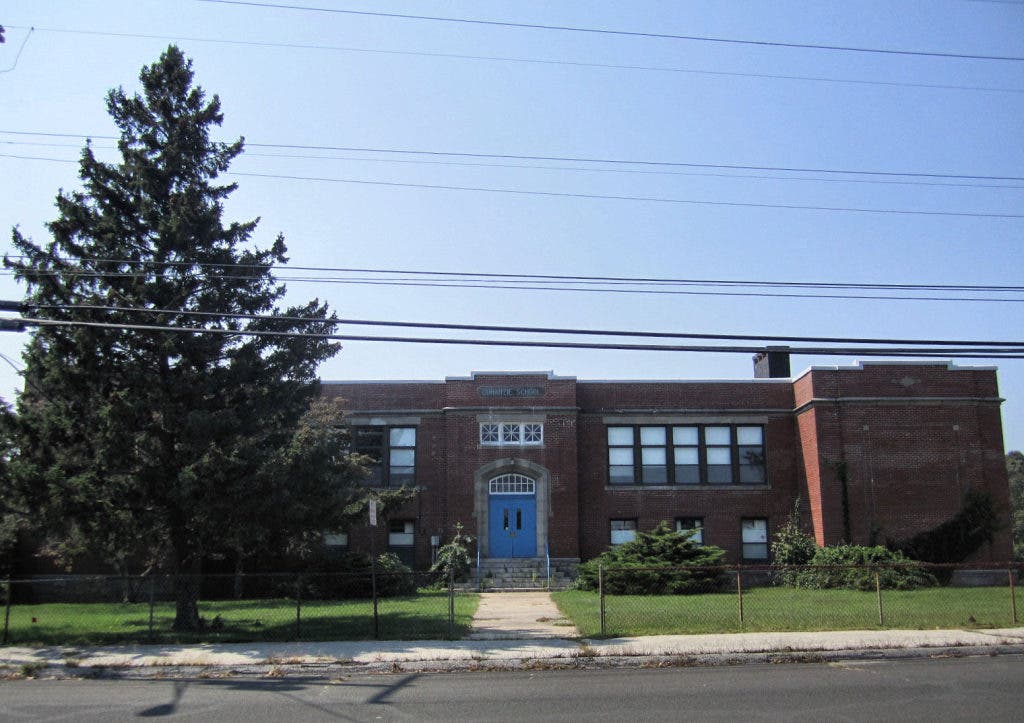
It’s easy to ignore Cohanzie. It’s a district, but though it’s not a Historic District like Jordan or Quaker Hill, it is historic: the earliest reference to it comes from the mid-18th century. It’s located in an area you wouldn’t wander into unless you were looking for something specific. And then once you do find out about it, it doesn’t look like anything very special. It looks normal, residential, happily uneventful, with some parks and a fire station and a disused brick school building. But once it occurs to you to wonder about Cohanzie, some of the things you turn up are most unusual.
The name Cohanzie, it was once said, derived from “an old Pequot who had a wigwam in a dense swamp in the district, where he dwelt and made brooms and baskets for his neighbors, long after all others of his race had disappeared from the neighborhood.”
The earliest known reference to the district comes from
1750. In 1794 (or thereabouts) it was sometimes spelled Cohanzy.
Find out what's happening in Waterfordfor free with the latest updates from Patch.
In the early 1700s, large wild animals still roamed the
area. Cohanzie, along with Spit Head and Potaquonk, by the Rope Ferry, “had their traditions of bear bunts and painter waulings.” (Which I assume were bear hunts and panther maulings, though the other things sound even more fantastical.)
Vauxhall Street Extension was once called the Cohanzie Road. There are other old names, no longer referenced much anymore, like the Cohanzie Gardens farm, dating from 1870, which sold its produce (some out-of-season, grown in greenhouses) locally and as far away as New York.
Find out what's happening in Waterfordfor free with the latest updates from Patch.
Cohanzie used to be the place to go for ice: Walter R. Perry was the biggest purveyor of ice in Waterford in the late 19th century. His first icehouse at Cohanzie Lakes had a capacity of 6,000 tons. His second held 4,000 tons. (For a comparative illustration of just how much ice that is, another Waterford icehouse of the time held 300 tons.) Perry’s ice was known for its quality. It was written that “especially in emergency cases, the Perry company's special delivery has been found invaluable. Numerous auto trucks and horse-drawn wagons are used to supply this company's demand.”
The reservoir pond for John Winthrop Jr.’s New London grist mill was on his farm, creatively named Mill Pond Farm, located in what would become Cohanzie.
The Cohanzie School was built in 1923. It replaced four earlier
schoolhouses. One is gone; its lot is now a part of the highway. One became a section of a house. One still stands, its 1861 provenance apparently forgotten, on Parkway North. Another small one is apparently still standing on Vauxhall Street. I have never noticed it there, so I looked at Google maps, hoping their photographers caught something I missed. But the images were blasted with sunlight, and part of the street was obscured by a ghostly brightness. The large 1923 building is closed now, and vegetation is just beginning to overtake its walls.
All of which gives this decidedly normal-looking place an air of mystery. The first time I ventured into Cohanzie, not knowing where I
was, my brakes started to act up and I feared I’d crash into a tree on Dayton Road. The most recent time, I happened upon the extensive , which I’d never even heard of. Looking at the map while writing this, I see that the area is bigger than I thought, and I wonder what will happen if I go there, and what I might find.