Politics & Government
Brush Pick-Up Estimated to Cost $6.8 Million
By Monday, crews from AshBritt, a FEMA contractor, had picked up approximately 150,000 cubic yards of debris — about half of the estimated total.




The large black trucks – "ginormous" according to one resident's description – with their grappling arms, have become an omnipresent sight throughout the streets of West Hartford, cleaning up the piles of fallen tree branches and limbs left in the aftermath of October's freak snowstorm.
West Hartford has contracted with AshBritt, a Florida-based FEMA contractor, to clean up the woody debris from residential areas. Approximately 15,000 cubic yards per day are currently being picked up by 22 trucks, and being transported to the at Trout Brook Drive where the matter is ground into mulch.
According to the Town of West Hartford's website, "Crews will continue collecting town-wide until one complete pass is made of all residential streets. A second round will then begin and continue until complete or as weather permits."
Find out what's happening in West Hartfordfor free with the latest updates from Patch.
Residents were originally requested to pile brush in the right-of-way – close to the curb but without blocking either the street or sidewalk – perpendicular to the street with the butt ends facing out. However, that instruction has now changed and residents who have not yet cleared their yards are asked to place the brush parallel to the curb.
"I need to apologize to the community. Originally we asked them to place it one way, but it's a problem with the machinery's capability. If you haven't done your yard yet, please put the brush parallel, and as close to the street as possible," said Director of John Phillips.
Find out what's happening in West Hartfordfor free with the latest updates from Patch.
Phillips said that the town is attempting to pick up all of the brush, including piles which are placed in the wrong direction. However, brush piled in the wrong direction will slow the process.
"If you can get it close to the curb and parallel to the street line, it will be a great benefit to the town," Phillips said. Brush that is missed on the first pass will be picked up on the second, or third, round of collection, he said.
Debris piles must be limited to 20 feet in length in order to fit in the trucks, but there is no restriction on the diameter of the debris.
Certain piles, however, cannot be picked up. "If your piles are too far off the road they will be missed. The machine's arms can only extend so far," Phillips said. The machines cannot drive onto residents' lawns without tearing up the ground.
According to the town's website, residents with damage to their property as a result of the collection should report the damage to the public works department at 860-561-8100. Due to weather conditions and clean-up operations, however, most damage to property is not likely to be repaired until the spring of 2012.
Phillips also asks residents not to leave their cars in front of brush piles. "We can't pick piles up if they're behind parked cars. They can't even be close because the trucks are big," Phillips said.
Who is paying for all this?
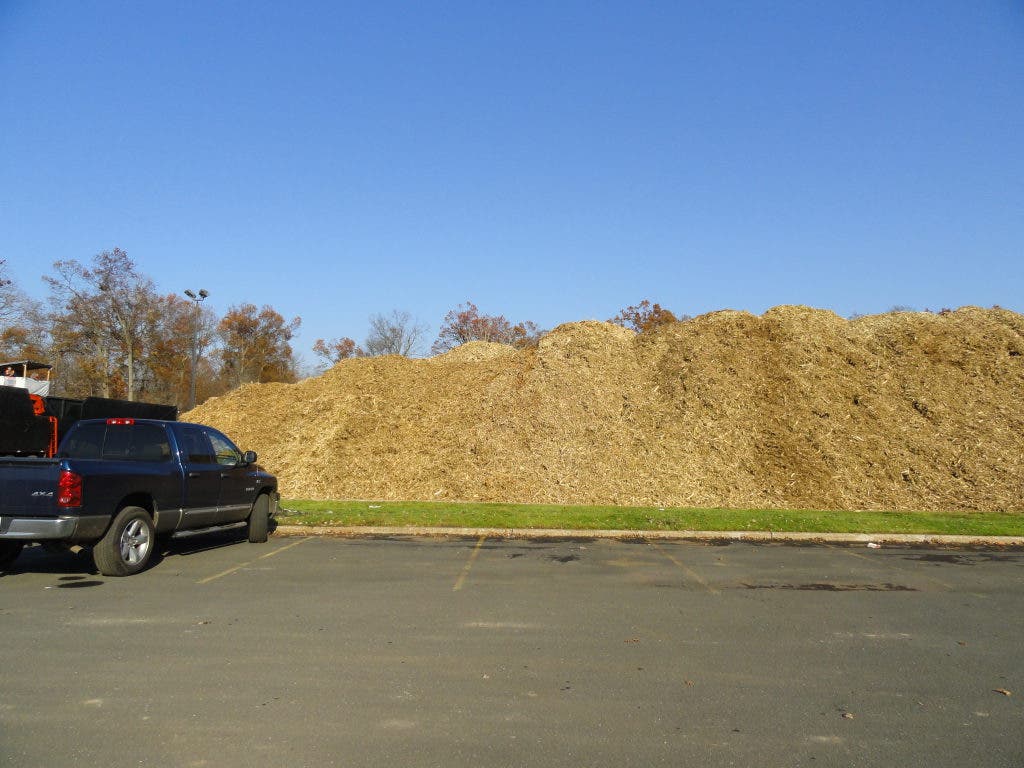
Enormous piles of mulch have sprouted at the UConn parking lot on Trout Brook, where there is a steady stream of trucks offloading piles of brush which are ground up at the site.
It is an awe-inspiring operation, and one which Phillips estimates may cost $6.8 million. "I shudder to think what this is going to cost the entire state," said Town Council Minority Leader Denise Hall, who added that the town anticipates 75 percent of West Hartford's costs will be ultimately paid by FEMA.
Storm cleanup expenses were a major topic of discussion at a meeting of the council's Finance and Budget subcommittee Monday morning. Hall, a member of the subcommittee, said the town will likely tap into its fund balance to pay for storm cleanup.
The fund balance, which is projected to be $16.7 million after deductions for deficiencies of revenues over expenses related to other economic factors, is kept by municipalities as a reserve for emergencies.
"If anything was an emergency, this was an emergency," said Hall. "Hopefully this is a once-in-a-lifetime thing."
The next step is removing the mulch from the UConn parking lot. Hall said that a disposal site in South Windsor has been identified, and is awaiting state approval.
The market for decorative mulch is saturated, and there is little possibility that the matter will be able to be sold to an end user. "The best we can hope for is disposing of it as cheaply as possible," Hall said.
Get more local news delivered straight to your inbox. Sign up for free Patch newsletters and alerts.