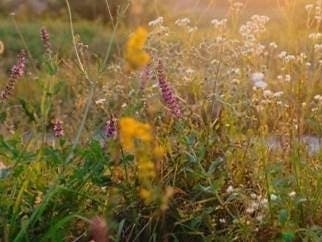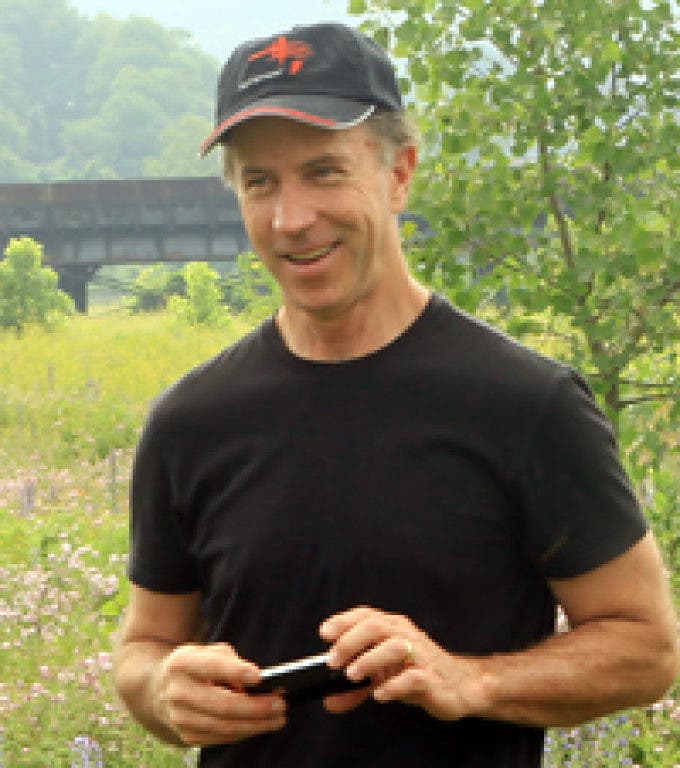
When Rick Darke gazes at landscapes, he looks for ghosts. Ghosts are the patterns in the land and vegetation that linger longer than one might imagine and that reveal things about the ecological and cultural history of a place, he says.
To him, such patterns are partly what make a landscape intriguing. “A lot of what I’ve known and loved about local, happenstance landscapes has to do with pattern and framing, nuance and distance and mood, …things that imbue the landscape with value and wonder and have nothing to do with the moment of bloom,” he told supporters of the High Line, the elevated park along New York City’s West Side, last year.
Find out what's happening in West Hartfordfor free with the latest updates from Patch.
Things, in other words, that contribute to the "wildness" of the place. Learning to read the land in such a way is important because it’s the first step toward creating what Darke calls “livable landscapes.” They are personal, intimate spaces that at the same time celebrate community. They encourage and sustain “spontaneous, sensual everyday living, preserving local uniqueness while evolving toward a universal language of landscape stewardship,” he says.
Find out what's happening in West Hartfordfor free with the latest updates from Patch.
The blend of cultural geography, horticulture, ecology and art in Darke’s design and management of landscapes has earned him widespread acclaim as a photographer, author, lecturer and consultant.
Darke will talk to the Connecticut Horticultural Society on Sept. 13 at Emanuel Synagogue in West Hartford about the new wild landscape. Everyone is welcome to his talk, which begins at 7:30 p.m.
Darke graduated from the University of Delaware with a bachelor’s degree in plant science in 1977, and then worked at Longwood Gardens in Kennett Square, Pa., for 20 years. He spent half of that time as curator of plants, and his expeditions took him to Japan, South Africa and the Canary Islands, Europe, Latin America, and Australia and New Zealand.
His books include “The Wild Garden: Expanded Edition” (Timber Press, 2009) and “The American Woodland Garden: Capturing the Spirit of the Deciduous Forest” (Timber Press, 2002), which emphasized the use of native plants as a way to preserve regional landscapes. He is an expert in grasses, the subject of several of his books.
His photography and writing are included in two multi-author books published in 2011: The New American Landscape: Leading Voices on the Future of Sustainable Gardening (Timber Press) and Fallingwater (Rizzoli).
Darke has received numerous awards, including the American Horticultural Society’s writing award in 2004 and its scientific award in 1998. In 1997, he earned a citation from the American Association of Botanical Gardens and Arboreta (AABGA).
Over time, as he has traveled, seen successes and failures in his own 1.5-acre garden in rolling piedmont near the Delaware border and in the numerous public spaces he has designed, his own thinking about the landscape has evolved.
“All landscapes are layered in space and time, and landscapes are most livable and conserving when they celebrate the dynamic layering of regional ecologies and cultures,” he says.