Community Corner
Like A Queen: Easton Beekeepers Breeding Better Bees
Last winter, a mite infestation savaged over 41% of the backyard hives in CT. A group of Easton apiarists and their bees are battling back.


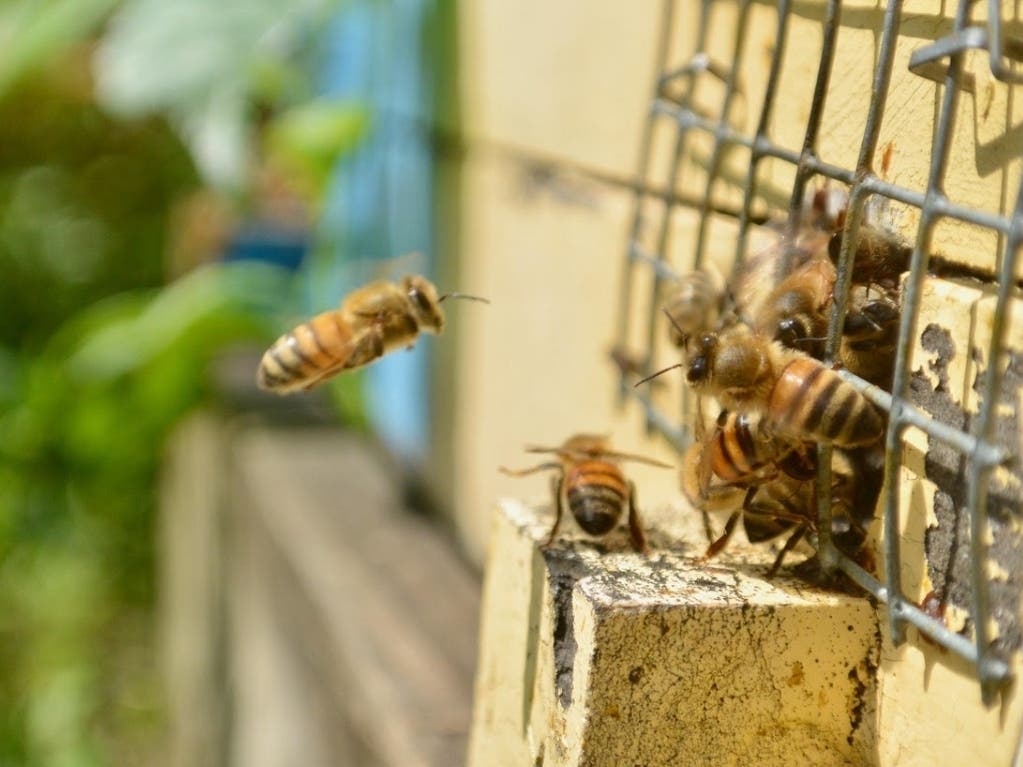

EASTON, CT — Whether or not you believe that all honeybees face an existential threat, as some entomologists fear, it's tough to argue that backyard hives are in good shape. Last winter, a mite infestation savaged 43.5 percent of backyard hives across the country, and over 41 percent of those in Connecticut.
It's a matter of no small concern to the 300-plus members of the Redding Ridge-based Backyard Beekeepers Association. They enlisted apiarist David Blocher, of Redding, to help them breed a better bee that would beat the mites.
Blocher has been keeping bees for 45 years, and is on the Board of Directors and a past president of the BBA.
Find out what's happening in Weston-Redding-Eastonfor free with the latest updates from Patch.
Varroa mite infestation, or varroosis, is the primary reason for bee colony mortality. The parasitic mites feed on adults and their young, and they can transmit diseases to the bees such as deformed wing virus.
Blocher’s mission is to raise hives at the BBA's Bee HQ, at Randall's Farm Preserve in Easton, that are entirely resistant to the mites. He is also teaching local beekeepers how to do the same in their own hives to combat varroosis throughout the beekeeping community.
Find out what's happening in Weston-Redding-Eastonfor free with the latest updates from Patch.
Fortunately over many generations, some hives have adapted behaviors to defend themselves and their offspring from varroosis, called "Varroa Sensitive Hygiene." Bees expressing this VSH trait understand how to identify pupal cells containing mites, uncap these cells, and remove the mite-infected pupae from the hive. This behavior can be passed down from the queen to each of her offspring, until the entire hive has the VSH trait.
Blocher and his two classes of BYBA members, ranging in skill from novice to experienced, are strategically breeding queens to pass the colony-saving trait on to each of her offspring.
Randall's Farm Preserve's 34 acres of meadows, fields and forests are particularly well-situated for keeping bees, according to Blocher.
"First it's a beautiful area with open meadows, lots of flowers that are blooming, so great resources for the bees," he said. "Both the colonies that we're using to start these cells need lots of nectar and pollen because that's their only source of food. And that's what they use to feed the young larvae."
The number of natural pollinators varies from year to year, depending upon how hard the winter was, among other factors. Honey bees are valued as exceptional pollinators, Blocher said, "because you can move them into an orchard to pollinate apples, or whatever your target crop is, and people will pay for that."
But not enough to pay the bills. Professionally, Blocher works in information technology for a bank, and calls beekeeping "just a passion.
"I did it commercially one year," he said, "but decided the mortgage did need to be paid."
Get more local news delivered straight to your inbox. Sign up for free Patch newsletters and alerts.