Business & Tech
Tips from a Master Gardener
Sal Gilbertie's latest book tells how to harvest 60-90 tomatoes from a single seed.


The volcanic eruption in Iceland has stranded millions of air travelers, among them untold numbers of the tiny insects of lacewings and encarsia formosa.
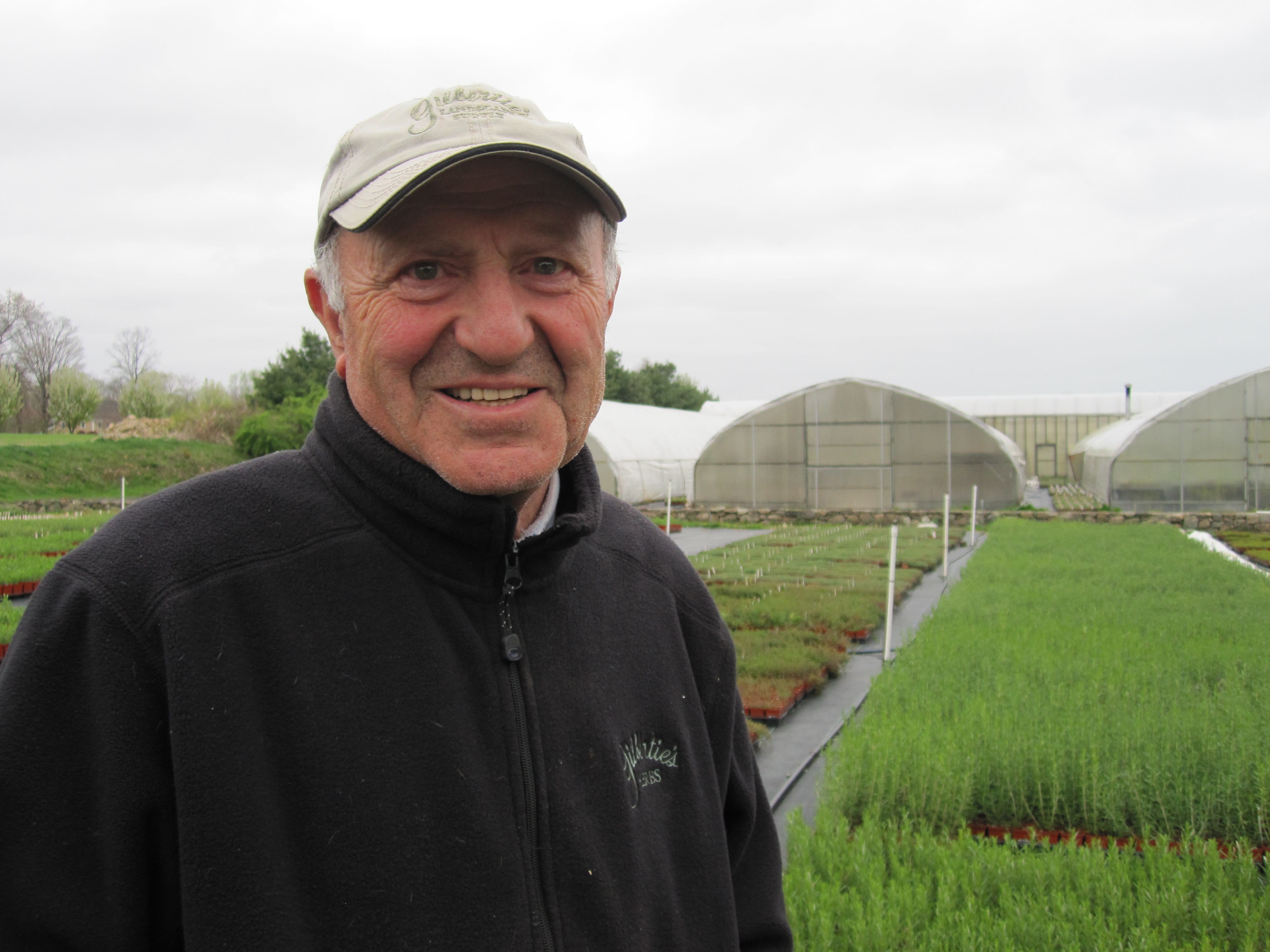
For 25 years, Sal Gilbertie has counted on Dutch air freight delivery of these and other beneficial insects to maintain his pesticide-free greenhouses in Easton where he cultivates organic herbs sold retail at Gilbertie's Herbs on Sylvan Avenue in Westport and wholesale up and down the East Coast.
The weekly trans-Atlantic insect deliveries have been halted this week because of the ash-clouded skies and it's a cause for concern, Gilbertie said during a visit on Friday to his facilities on 37 acres, formerly known as Keller's Dairy Farm.
Find out what's happening in Westportfor free with the latest updates from Patch.
The greenhouse staff had already dispersed the previous week's insect eggs among the greenhouses where 400 varieties of herbs are cultivated; still, the resilient, voracious aphids and other pests that can ruin a season are never far away.
But this third-generation horticulturalist, whose grandfather Antonio arrived in Westport from Naples in 1901 to establish the family cut-flower business that blossomed into the largest producer of herbs in the country, is nothing if not resilient himself.
Find out what's happening in Westportfor free with the latest updates from Patch.
He was born with a green soul, not to mention green thumbs.
Gilbertie shares his secrets for small-plot, high-yield organic gardening in his new book by the same title Small-Plot, High-Yield Gardening published by Ten Speed Press. He collaborated with writer Larry Sheehan to produce this, his sixth book on horticulture.
The book had an unofficial launch on Martha Stewart's show in February, which caused it to shoot to the best-selling list at Amazon.com.
Gilbertie generously shares his secrets to organic gardening success in his latest book and anyone who is serious about producing food in their own backyard is well-advised to pay attention.
"The eye of the farmer makes the pig fat," is one of Gilbertie's favorite sayings, borrowed from an Old Country acquaintance who understood that to be a successful farmer, one needs to pay attention to details.
Gilbertie shares winning techniques which enable him to raise as many as 170 tomatoes from one plant in a single season.
"If your garden has a rich soil, each of your tomato plants should provide you with 60 to 90 tomatoes, minimum," Gilbertie writes, calculating that a 3,000-square foot garden can produce $7,486 worth of produce in 2009 market values.
Gilbertie's secrets are techniques he has developed during a lifetime of gardening that began when he was strapped to his mother Teresa's back in a papoose pack as she weeded.
Raised bedding is paramount to optimize productivity; it enables the gardener to customize soil conditions for different species of plant, conserve water and achieve other efficiencies.
Gilbertie's second-ranking technique: raise rabbits.
Growing up, it was his job to feed table scraps to the several dozen rabbits the Gilberties kept for their pellet-shaped manure. Rabbit droppings provide the most effective natural fertilizer for garden soils, Gilbertie writes, as the odorless pellets are rich in nitrogen, phosphorus and potassium.
"Rabbits are the best thing to raise, more like pets than farm animals. They grow pretty fast and they taste very good," he said, recalling the World War II days when folks who didn't raise their own food would go hungry.
"We had rabbit every week," he said.
Gilbertie no longer keeps rabbits because his own children — the rabbit-feeders —are grown and the Bridgeport slaughterhouse that dressed their rabbits for years no longer does so.
While Gilbertie relies on organic rabbit manure substitutes these days, "nothing has produced the bounty in our gardening projects that the rabbit manure has."
Gilbertie's book takes the reader all the way through a season of gardening, from soil preparation to seed selection and planting, and into succeeding seasons.
One tip especially signifies what has connected Gilbertie to the soil and nurtured his lifetime love of growing.
He encourages gardeners to intersperse cutting flowers in their vegetable gardens, such as sunflowers at the back of the garden (to avoid shading other plants as they grow tall) and snapdragons and zinnias between rows of lettuce or beans.
"Making regular visits to collect bouquets for the home encourages the gardener to stay in touch with progress - or problems - in the vegetable patch itself," he writes.
"The flowers make only a slight dent in kitchen garden productivity, and they serve as one more motivating factor to be out and about in the kingdom of plants," he said.