Home & Garden
'Is Your Beach Safe for Swimming?'
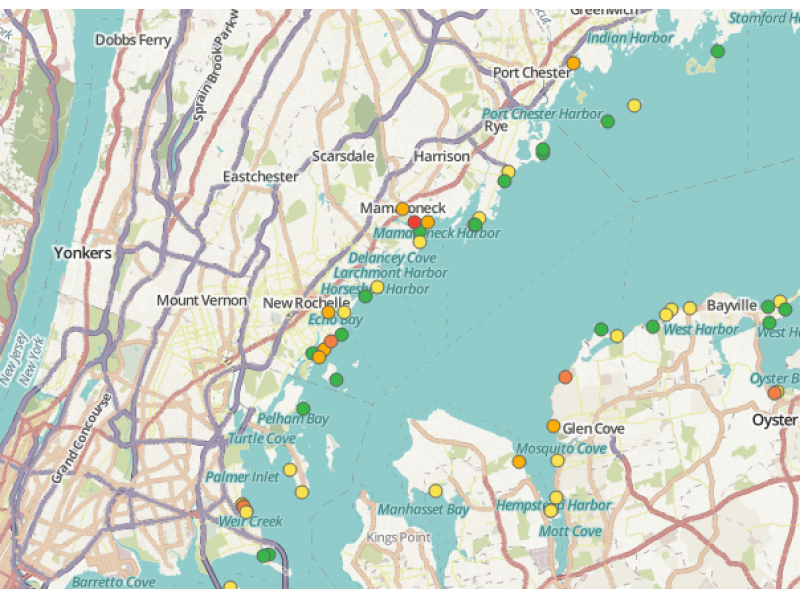
A new interactive map from Save the Sound grades the public and private beaches along both sides of Long Island Sound.


Editor’s note: We previously ran this story, but are bringing it back in case you missed it.
By LANNING TALIAFERRO (Patch Staff)
Save the Sound has launched the Sound Health Explorer as a tool to increase understanding of water quality conditions in Long Island Sound.
Find out what's happening in Westportfor free with the latest updates from Patch.
The site lets you review the health of any beach on Long Island Sound—with data about bacterial contamination going back five years. It examines the water-quality testing data. And it grades the Sound’s public and private beaches in New York and Connecticut.
It’s important: Exposure to fecal contaminated water can lead to a variety of illnesses including viral, parasitic, and bacterial infections. The Environmental Protection Agency estimates that between 1.8 and 3.5 million people get sick from recreational contact with fecal contaminated water each year.
Find out what's happening in Westportfor free with the latest updates from Patch.
So it can be used by someone wanting to find out about a particular beach, or to check historical patterns of contamination, or to examine the big picture about pollution in the Sound.
Sound Health Explorer grades beaches on how frequently they get closed for failing mandated water quality tests. Those tests measure bacterial pollution to U.S. Environmental Protection Agency standards.
“In Westchester, Glen Island Park in New Rochelle and Rye Town Beach in Rye are among the most reliably clean beaches, while Shore Acres in Mamaroneck and Surf Club in New Rochelle both frequently exceed bacteria limits and received a failing grade,” the site says. “Common pollution sources in Westchester include sanitary sewer overflows, where sewage is discharged into the environment before treatment at a sewage treatment plant. Old, cracked pipes and broken-down sewage infrastructure are major problems that contribute to fecal bacteria in the Sound.”
Save the Sound also offers ways individuals can help:
- Share your concern about water pollution and support for solutions with your local elected officials and Department of Health.
- Make sure the sewer line connected to your home, septic system, or cesspool is in good working condition and properly maintained.
- Support investment in local wastewater infrastructure – keep the sewage in the pipes!
- Keep stormwater on your property by planting rain gardens.
- Support local green infrastructure projects that will let stormwater soak into the ground and lessen runoff.
- Be a Citizen Watchdog. If you see sewage leaks or overflows, take pictures and send the documentation to pollution@savethesound.org.
Get more local news delivered straight to your inbox. Sign up for free Patch newsletters and alerts.