Community Corner
Windsor Locks Teen Visits South Africa with CREC
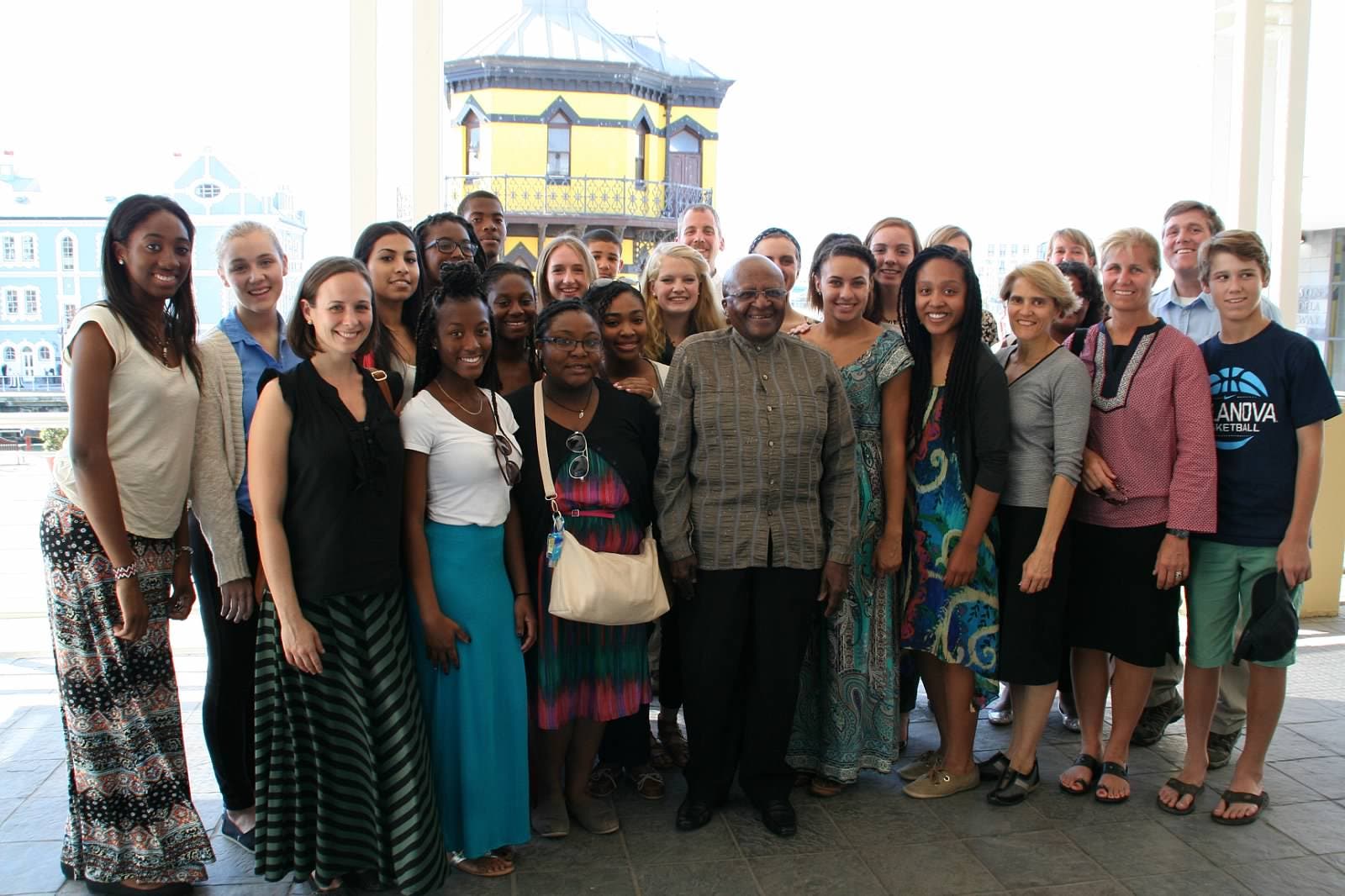
Brittany Dias, a student at the CREC Metropolitan Learning Center for Global and International Studies, recently visited South Africa.
By Brittany Dias
Windsor Locks, Connecticut
CREC Metropolitan Learning Center for Global and International Studies
Find out what's happening in Windsor Locks-East Windsorfor free with the latest updates from Patch.
I went through a rigorous application process to attend a field study to South Africa in my senior year. This trip was with seven other students from the CREC Metropolitan Learning Center for Global and International Studies in Bloomfield and eight students from the Ethel Walker School in Simsbury.
Find out what's happening in Windsor Locks-East Windsorfor free with the latest updates from Patch.
The field study entailed a semester-long course that taught the history and the culture of South Africa. It, along with numerous educational meetings over the summer, also taught me about post-apartheid in South Africa and about conflict resolution amongst Zimbabwean and South African youth.
Apartheid was a governmentally enforced system that promoted racial segregation. The government placed the people of South Africa into racial categories, such as white, colored, and black based on the color of their skin. With South Africa’s population of 80 percent black, such a system easily left scars in the hearts of many—not just emotionally, but economically. Those who were categorized as white still hold the majority of power today, and many of those categorized as either black or colored are continuing to struggle due to the unequal distribution of wealth that came with the end of apartheid. However, there was a sense of happiness amongst each and every person that I met.
I could speak more about the wealth gap in South Africa, but that would not accurately reflect what I took away from my trip. Although the wealth gap is important, there is a part of my trip that I can distinctly remember and may possibly have had a life altering impact. It was when we visited the Central Methodist Church, which houses Zimbabwean refugees.
Similar to the increase of immigrants from Central America to North America, the Zimbabwean refugees come to South Africa for a better quality education, for better living standards, and for better overall opportunities. However, due to their lack of immigration papers, which may have been hard to carry while crossing a crocodile-infested river, they are not recognized by the government. The majority of the refugees I met were unaccompanied minors. Because they have no papers, they are not allowed to attend public schools in South Africa. Most attend the Albert Street School where a surprising 100 percent of the students pass their Cambridge exams, which are their equivalent to the United States’ SAT.
At first, I wondered what kind of threats were presented to the students for them to do so well academically, but after visiting their “home” at the Central United Methodist Mission I began to understand their drive to succeed in life. After smelling the pee ingrained in the rugs and the drugs in the stair wells; after seeing the flies living within the ceilings and the broken glass being walked on by barefoot children, I realized that their drive and thirst for success came from wanting better in life.
When I asked them how they survive and how their parents feel about the situation, I was informed that many of their parents actually have no idea where they are. Many of these students decided to leave home unannounced because there was no chance of getting an education.
When I asked how they cope with life without the help of their parents or other family members, I was told that they do have a family. They have each other and rely upon one another for support. This reinforced an old African proverb that I heard earlier that day, “If you want to walk fast; walk alone. If you want to walk far; walk together.” I know they will all walk far, because they truly do walk together.
The message I now want to spread is the power of friendship. In South Africa, I saw the impact that the power of friendship is able to have. With absent parents and gruesome living environments, these students still manage to always smile, and it is truly amazing and inspirational. If a group of refugees can use their situation to uplift one another, why do we in America not do the same? Instead of holding the hands of our neighbors, we are in constant competition.
The lesson I took home from my trip to South Africa would be that no matter the circumstance, not allowing a smile to leave your face is very beneficial. We all need someone to walk with so that we can walk far rather than fast.