Crime & Safety
Grandparents Unknowingly Supply Drugs to Children; Prescription Drug Drop-Offs Taking Place
Police say prescription drugs are responsible for an increase in crime and are the leading cause of death for people under the age of 45 Connecticut.

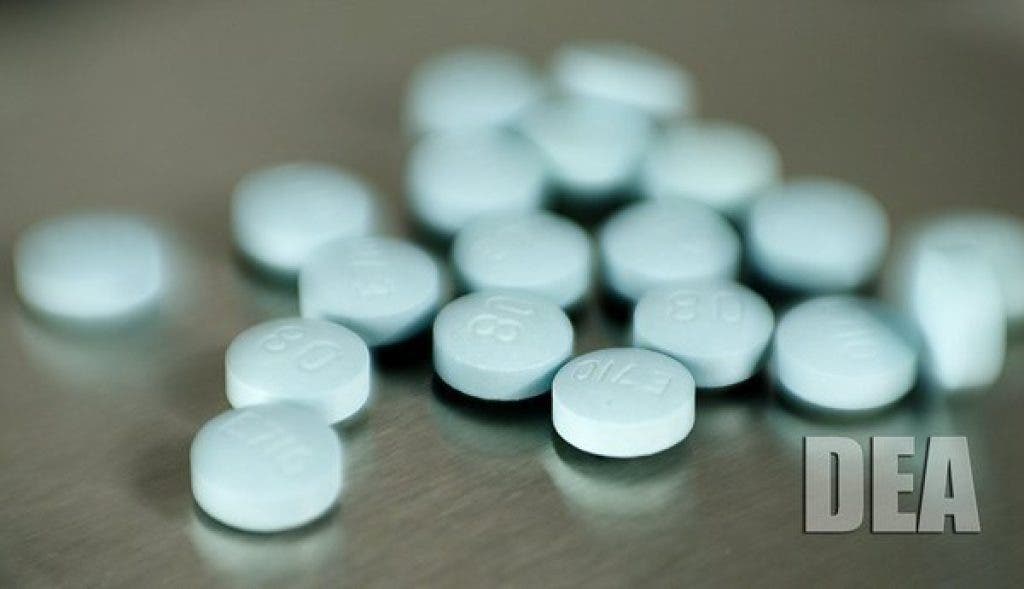
Imagine that your children's grandparents are providing them with an endless supply of addictive narcotics that will lead them directly to heroin addiction.
In too many cases, according to experts and local police departments, this is happening in a home near you.
Find out what's happening in Woodbury-Middleburyfor free with the latest updates from Patch.
At a seminar for the misuse of prescription drugs, Allison Fulton, executive director for the said that in this area, most young people cannot really afford to buy expensive pills, but can readily get the drugs from family members.
"Grandparents do not realize that they are drug dealers," Fulton said. "Many leave their prescription drugs out on the kitchen counter. Older people don't have an understanding of kids' mindsets."
Find out what's happening in Woodbury-Middleburyfor free with the latest updates from Patch.
Commonly prescribed drugs like OxyContin and oxycodone are opiates and are derived from the same source as heroin.
Prescription Drug Drop-Offs
One way to discourage the use of illicit use of prescription drugs is to remove them from the home when they are no longer being used medicinally.
Last year, police departments hosted events for people to drop off their narcotic prescription drugs. The following statistics detail how many pounds of drugs were collected:
- : 46.2 pounds
- 198.4 pounds
- : 98 pounds
- : 182.16 pounds
- : 133.8 pounds
- : 75.4 pounds
From 10 a.m. to 2 p.m. Saturday, April 28, prescription medications can be dropped off at the Bethel, Brookfield, Southbury and Woodbury police stations.
The is located at 271 Main St. South and can be reached at 203-263-3400.
In Newtown, medication can be dropped off at any time, all year round. Pills that are dropped off will be picked up by the Drug Enforcement Agency and destroyed.
More information on the proper disposal of prescription drugs can be found on the state Department of Consumer Protection website.
Det. Sgt. James Wright of the noted a video, entitled The Oxycontin Express, that highlights 'pill mills' in Florida. Minimal requirements for purchasing these regulated narcotics have resulted in areas in Florida that have become a major resource for drug traffickers.
The impact in Connecticut was seen in 2011 when three Florida Transportation Security Administration and a Connecticut law enforcement official were arrested at the Westchester airport with tens of thousands of pills marked for distribution in the Stamford area.
Prescription drug addiction has changed the stereotype of the drug addict.
"You used to know what the heroin addict looked like but today, it is not like that -- It's anybody," Wright said.
With drug addiction comes crime and Wright said, "In 2011, there were 298 larcenies, which is up from 151 the year before. That's quite a bit."
Wright did not believe the rise in crime had anything to do with the economy.
"The people we are arresting have an addiction; they are not people who lost their jobs," he said. "We have made a lot of arrests and we found a lot of people have an addiction to heroin, OxyContin, any opium based drug, hydrocodone, morphines. Heroin is opium. These prescription drugs are opiates."
In agreed.
"With oxys, that addiction is expensive to maintain and it becomes a heroin addiction," said Trohalis. "It could cost $25 for a 25 gram pill, but they can buy a bag of heroin for $7 to $20."
Danbury Police Det Lt. James Fischer said there has always been a correlation between drug addicts and burglaries and robberies.
"And there has been a definite increase in the last six years," he said.
In a 2001 press release from Attorney General Richard Blumenthal, law enforcement and physicians were just beginning to understand how addictive these drugs are.
"The use of OxyContin and its abuse, prevalent in other areas of the country, is on the rise in Connecticut," the press release stated. "Prescriptions for all common opioid pain relievers (codeine, hydrocodone, morphine, hydromorphone) increased 23 percent from 1996-2000. During the same time period, prescriptions for OxyContin increased 1,800 percent.”
In 2001, six deaths in Connecticut were attributed to OxyCodone, according to that release. Ten years later, accidental prescription overdose became the leading cause of accidental death for people under the age of 45 in eleven states, including Connecticut, according to the Center for Disease Control.
"Sometimes people who were just taking it for pain will have a drink, mix it with alcohol," said Liz Jorgensen of Insight Counseling in Ridgefield. "Sometimes they don't remember when they last took it. This correlates with many accidental deaths."
Know of a local police department hosting a drop-off event not listed in the article? Tell us in the comments.
Get more local news delivered straight to your inbox. Sign up for free Patch newsletters and alerts.