Politics & Government
Giant Snails Under Attack in South Florida
The state reports it's gaining ground in its fight against the massive, disease-carrying creatures.


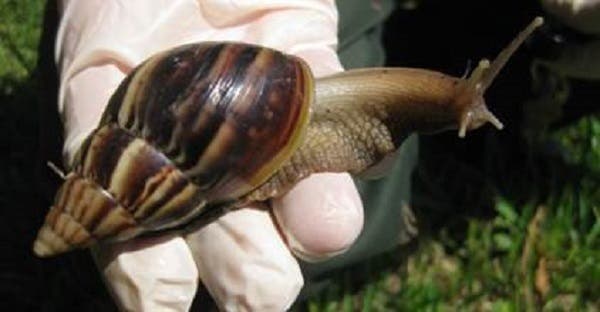
The war is far from over, but the state of Florida has announced it is gaining ground in its ongoing battle against a creepy, crawly invasive species that’s known to carry disease and chomp its way through crops and even stucco.
Since Florida declared war on giant African land snails, known as GALS for short, more than 159,000 of the creatures have been eliminated, Adam H. Putnam, Florida’s commissioner of agriculture announced Wednesday.
“Giant African land snails threaten the crops, structures and residents of Florida, and we’ve gone to great lengths to find and eradicate them,” Putnam said. “We’ve eliminated more than 159,000 of these invasive pests, but only with the continued help of the residents of South Florida can we completely rid Florida of the giant African land snail.”
Find out what's happening in Bradentonfor free with the latest updates from Patch.
See Also:
- Snail-Sniffing Dogs on the Trail of Giant Pests
- Florida’s Battle Against Giant Snails Gets Federal Boost
- Giant, Poisonous Toads Pose Continued Threat in Florida
GALS are giant mollusks that were first discovered in Florida about four years ago. They are known to eat more than 500 different types of plants and also seem to have a taste for plaster and stucco. To make matters worse, the creatures can carry a parasite that’s been linked to the spread of such human diseases as meningitis, the Florida Department of Agriculture and Consumer Affairs reports.
Find out what's happening in Bradentonfor free with the latest updates from Patch.
Since the eradication program began, the numbers of snails collected has dropped from thousands a week to single digits. The state has created two teams of snail-sniffing dogs to ferret out the creatures and also relies on residents to report them whenever they are seen.
GALS are native to East Africa and are considered one of the largest snails in the world. they can grow up to 8 inches in length and have a lifespan of about 9 years, the state says. The critters are especially difficult to eliminate because they have no natural predators. Breeding snails are able to reproduce at an alarming rate of more than 1,000 snails a year, the state said.
Found primarily in South Florida, the critters have become such a concern, the state has set up a hotline for reporting sightings. That number is 888-397-1517. Since they are known disease carriers, residents are advised to only handle them personally with gloved hands and place them in zip-top bags.
“Do not touch the snails or release them in a different location,” the state warns.
Earlier this year, the USDA awarded Florida a $7.3 million grant to help remove invasive species, including GALS, from the Sunshine State.
To find out more about GALS, visit the Florida Department of Agriculture and Consumer Services’ website.
Photo courtesy of the Florida Department of Agriculture and Consumer Services
Get more local news delivered straight to your inbox. Sign up for free Patch newsletters and alerts.