Arts & Entertainment
Bradenton Photographer Travels To Poland To Document Experiences Of Ukrainian Refugees
Allan Mestel, who has photographed migrant camps at the U.S.-Mexico border, captured heartbreaking images of Ukrainian refugees in Poland.


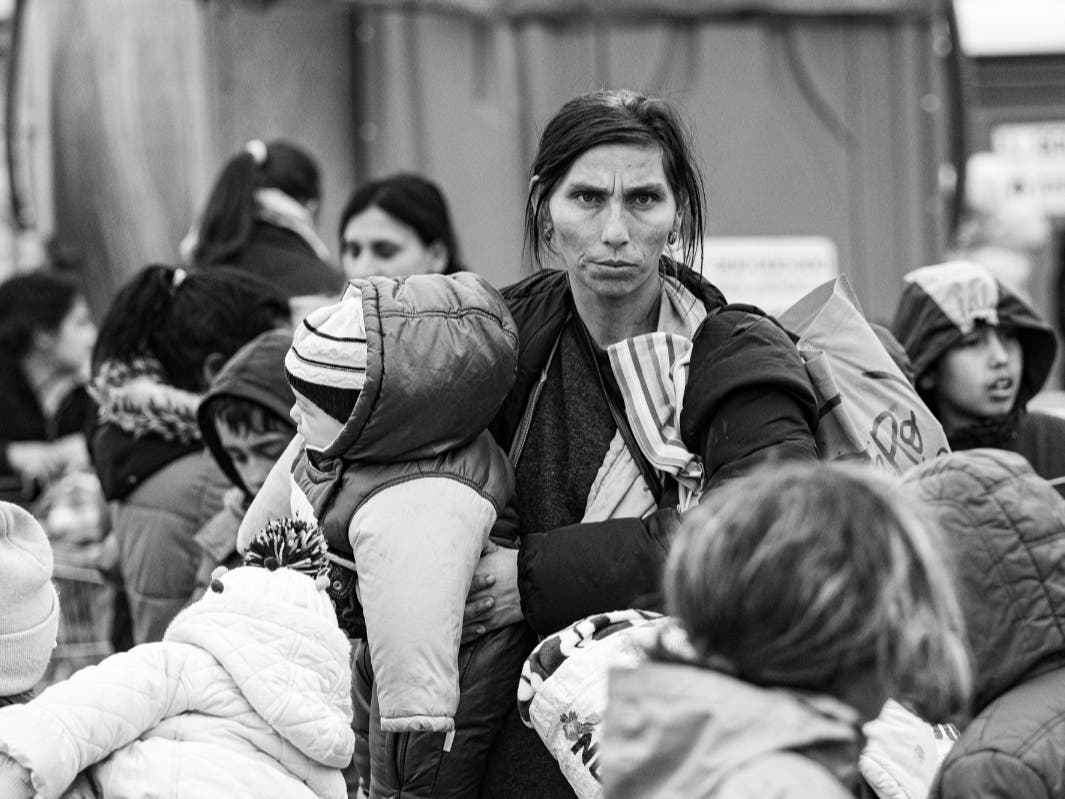


BRADENTON, FL — When Russia launched its invasion of Ukraine at the end of February, Bradenton photographer Allan Mestel immediately knew he wanted to travel to Poland to capture images of refugees escaping the war-torn country.
“It was a calling,” he told Patch. “A need.”
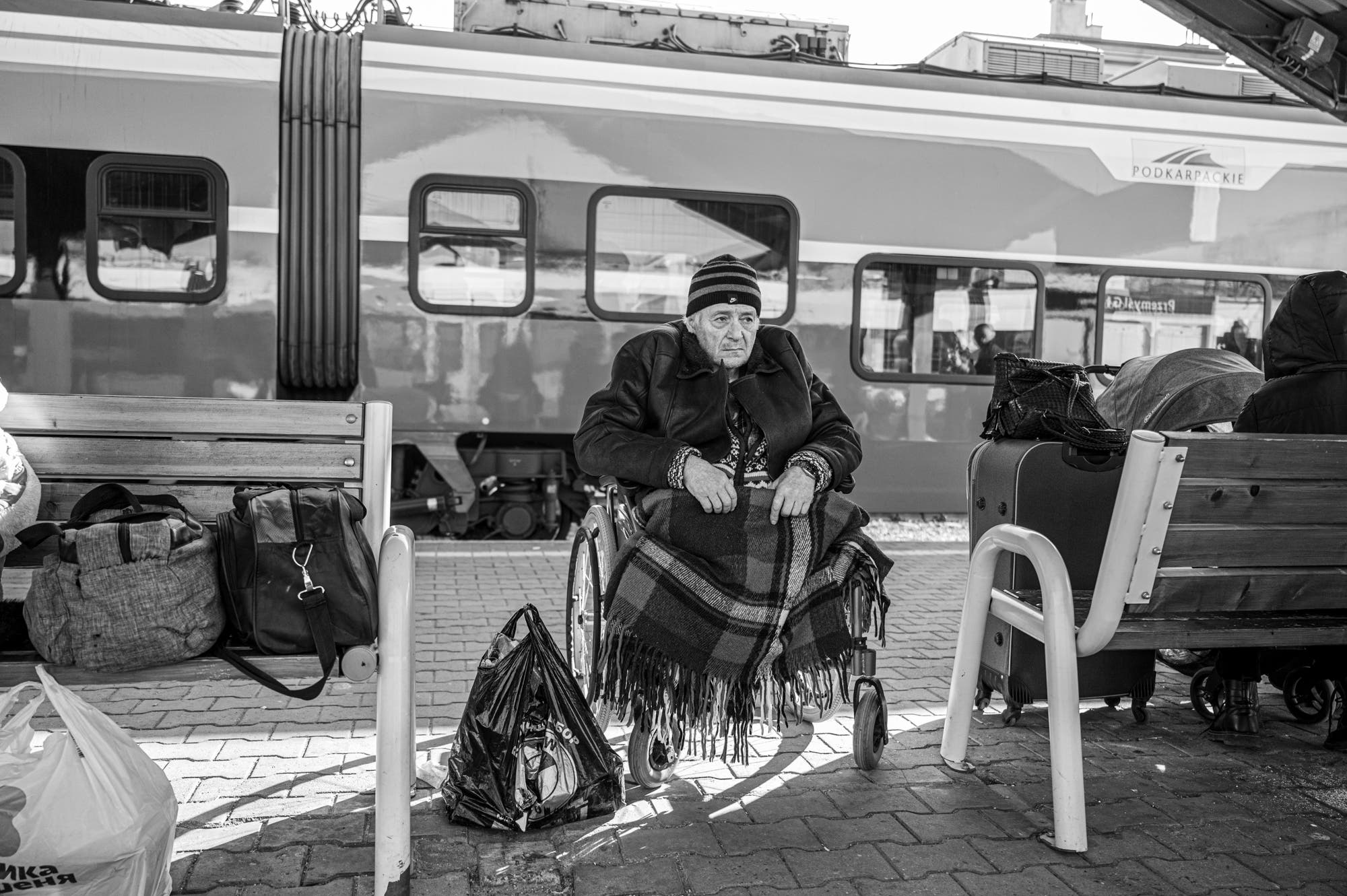
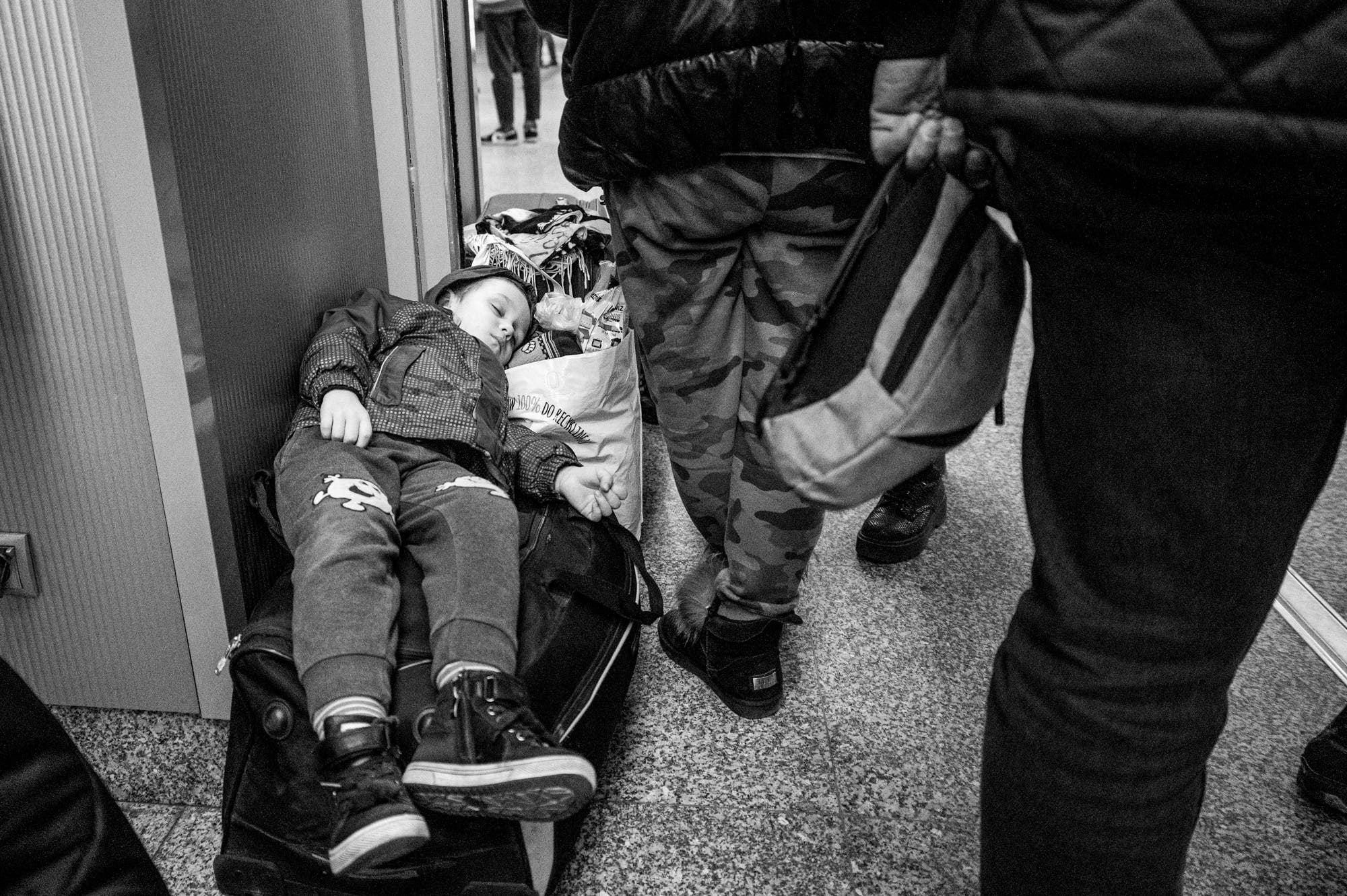
Wanting to show how Russia’s aggression in Ukraine has affected real people, Mestel traveled to the Polish city of Medyka on the Ukraine-Poland border on March 11 and spent a week capturing heartbreaking images of refugees escaping the violence in their homeland. He plans to eventually organize a showcase of his work.
Find out what's happening in Bradentonfor free with the latest updates from Patch.
Since Russia, led by President Vladimir Putin, first invaded Ukraine on Feb. 24, more than 10 million civilians have been displaced from their homes, CBS News reported. More than 2 million of them have found their way to nearby Poland, where the army has established a refugee camp, according to DW.
While Mestel was there, “the stream of refugees was constant,” he said. “They came through the border crossing at Medyka. Buses, on foot, in private automobiles. It was a stream.”
Find out what's happening in Bradentonfor free with the latest updates from Patch.
He watched daily as “very, very courageous people,” volunteers from all over the world, helped the Ukrainian refugees get the assistance they needed once they crossed the border. Some volunteers even went into Ukraine to find civilians who needed help getting to safety.
“Not large organizations. I mean individuals, small (nonprofits), small organizations, informal organizations, with convoys of cars, buses, minibuses, traveling into Ukraine,” he said. “Some had pre-arranged pick-ups to do. Others were just looking for people to pick up on the side of the highway that were making their way to Poland.”
More than a week after returning from Europe, Mestel is still processing what he saw and the stories he heard from Ukrainians seeking safety.
“There were a lot of stories of individuals — I haven’t done anything with the stories, but I have them in my head — and every individual story is a story of pain and suffering and displacement and disbelief at what’s happening,” he said. “And all caused by the megalomaniacal ambition of one twisted man (Putin). It’s incredible to think that a single human being can cause so much suffering and so much anguish and so much pain.”
He recalls one woman, a mother who drove to Poland from the Netherlands when war broke out, as her son lives in Ukraine. She hadn’t been able to contact him since the start of the invasion.
Each day that he photographed refugees, she stood at the border hoping she might see him crossing over into safety and asking every relief vehicle driver who passed her “to look out for a small, gray car with Dutch plates,” said Mestel. “And if they saw her son, the message she had was that she’s here and she’s waiting for him. And it was pretty heartbreaking. But a mother’s love would do that. The chances would be one in a million that any of those drivers would see her son. She just hoped that he was making for the border and that he was OK. She was gonna wait for him as long as it took.”
He added, “That got me. That got me right in the feels.”
Watching the Ukraine war play out on social media and covered by news outlets worldwide, the photographer wasn’t surprised by what he saw once he arrived in Poland.
“I kind of knew what to expect. It was just the scale that surprised me, the number of refugees,” he said. “It wasn’t just the border. It was the railway stations were full and not just in the Przemysl, which is the nearest city to Medyka, When I was in Krakow, the railway station, the main railway station in Krakow, was just a refugee center.”
Documenting humanitarian crises is nothing new for Mestel, a studio photographer and director and editor of national TV commercials who is originally from Canada.
When former President Donald Trump took office, he dedicated his photography skills to furthering social causes.
“Back in 2016, I made a commitment that I was going to use whatever talent I had to contribute to progressive causes and to anything that I can do to try to generate some positivity around, to try to turn a negative into a positive,” Mestel said.
Mestel has worked with Black Lives Matter and co-founded Streets of Paradise, a grassroots outreach organization that feeds homeless people in the Sarasota area. He also shot a photography series of the same name that offered a deeper look at the lives of the city’s homeless population.
Working with an organization called Witness at the Border, he’s also documented the makeshift migrant encampments established on the Mexican side of the U.S.-Mexico border, as well as U.S. border towns in Texas and deportations of Central American immigrants.
His trip to Ukraine is “an evolution of what I’ve been doing for the last few years in terms of just being so horrified by what’s happening to human rights and social justice in the U.S. and elsewhere,” he said.
An avid history buff, Mestel recognizes the global danger of what’s happening in Ukraine. Putin is “following Hitler’s playbook,” he said.“Hitler started off exactly the same way that Putin did."
The photographer added, “This is a hugely dangerous time in history. You’ve got a megalomaniac with imperialistic tendencies. … He (Putin) is living in a bygone era in his head. He’s living in an era that never truly existed, where Russia was great.”
Putin expected to take over Ukraine easily and to install a puppet government, Mestel said. As the war drags on, though, his ego is taking a hit, and nobody knows how the crisis will end. He’s worried the Russian leader could turn to chemical or tactical nuclear weapons.
“I just think people need to be aware that this is critically important, that what’s happening in Ukraine could easily, if things went wrong, could balloon and metastasize,” he said. “Like Shakespeare said, ‘Once you let slip the dogs of war’ all bets are off. No one knows how it’s gonna end. Putin doesn’t know how it’s gonna end. Nobody knows.”
Get more local news delivered straight to your inbox. Sign up for free Patch newsletters and alerts.