Community Corner
Sculptra vs. Filler: What Brandon Patients Should Know Before Choosing an Injectable
Sculptra interest is rising as patients look for natural-looking facial rejuvenation. But it works very differently from traditional filler.
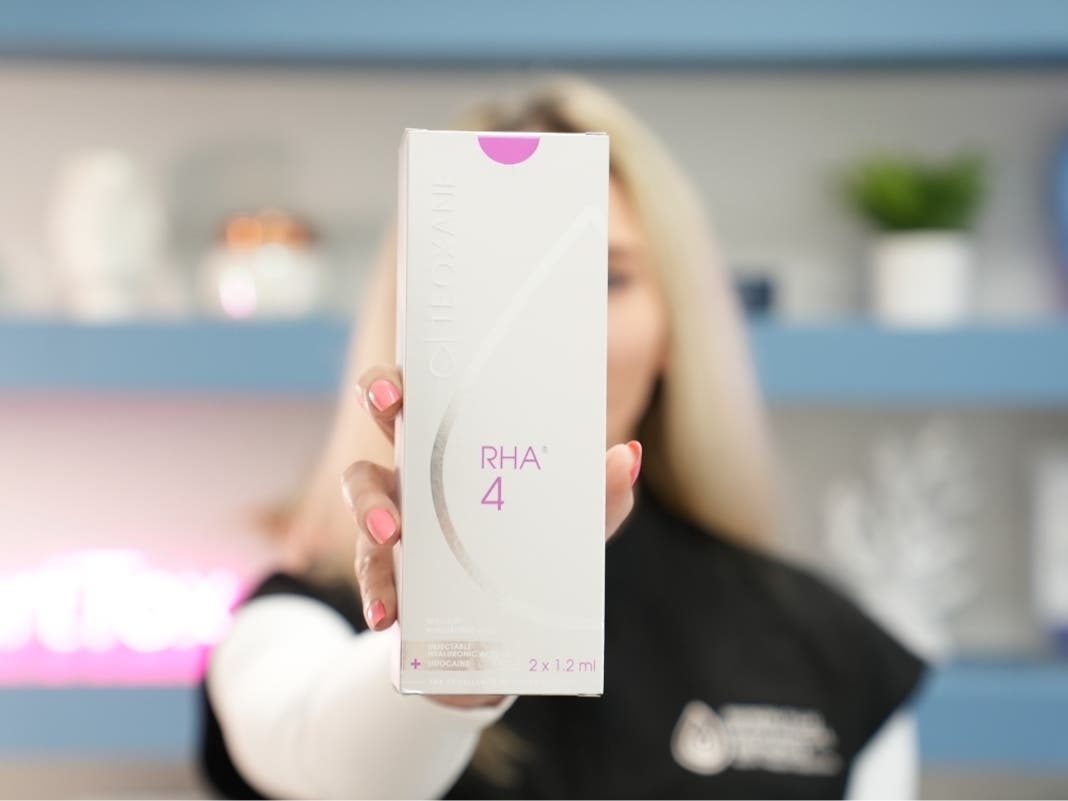
This is a paid post contributed by a Patch Community Partner. The views expressed in this post are the author's own, and the information presented has not been verified by Patch.
Sculptra and dermal fillers can both play a role in facial rejuvenation, but they are not interchangeable. One stimulates collagen gradually; the other can create more immediate, targeted volume. Refresh - Aesthetics & Wellness explains what patients in Brandon, Riverview, Plant City and surrounding Hillsborough County communities should know before choosing between them.
A major aesthetics shift is happening in 2026.
For years, facial rejuvenation was often discussed in two categories: Botox for wrinkles and filler for volume. That conversation is becoming more sophisticated.
Patients are increasingly asking about skin quality, collagen, facial structure and treatments that create gradual changes rather than an obviously "done" appearance. RealSelf reported that interest in Sculptra increased 25 percent in the first quarter of 2026, while broader aesthetic trends have continued moving toward subtle, natural-looking results.
That makes one question especially relevant for patients considering injectables in Brandon: What is the difference between Sculptra and traditional filler?
Quick Answer: Sculptra and Filler Do Different Jobs
Traditional hyaluronic acid dermal fillers are gels placed beneath the skin to add or restore volume. Depending on the product and treatment area, they can be used for concerns such as lip enhancement, cheek volume, chin contour or facial folds. The change is generally visible immediately, although swelling can temporarily affect the appearance after treatment. Sculptra works differently. It is made with poly-L-lactic acid and is designed to stimulate the body's own collagen production over time. The result develops gradually rather than appearing as an immediate final correction.

So the simplest distinction is this:
Why Is Sculptra Getting So Much Attention Now?
The answer has less to do with one product suddenly becoming fashionable and more to do with what patients now want from aesthetics.
The exaggerated cheeks, oversized lips and obvious facial changes that defined parts of the injectable market years ago are increasingly being replaced by a quieter goal: look better without looking obviously treated.
Sculptra fits naturally into that conversation because its changes develop gradually. Rather than creating a single dramatic moment of volume, treatment is intended to support collagen production over time.
The FDA has approved Sculptra for correction of fine lines and wrinkles in the cheek region in appropriate adults, and clinical data supporting that approval found results could remain visible for up to 24 months.
That does not mean every patient will get the same result or that Sculptra is automatically the better injectable. It means patients now have fundamentally different tools for different goals.
When Traditional Filler May Make More Sense
There are situations where immediate, precise correction is exactly what a patient wants. Someone seeking lip enhancement, more defined facial contour, or correction of a specific area may benefit from an appropriately selected hyaluronic acid filler. The provider can choose a product based on the location being treated, the tissue characteristics and the desired degree of structure or softness.
Another important difference is reversibility. Many commonly used hyaluronic acid fillers can be dissolved with hyaluronidase if medically appropriate. Sculptra cannot simply be dissolved in the same way once it has been injected.
That makes product selection, placement and provider judgment important regardless of which injectable is being considered.

When Sculptra May Enter the Conversation
Sculptra may be discussed when the concern is broader than one line or one small area. A patient may say that the face looks more tired, less supported or generally different than it did several years ago without being able to point to one wrinkle that needs to be filled. That is a different aesthetic problem from wanting a more defined lip border or targeted chin projection.
Because Sculptra works gradually, patients should also understand that it requires patience. The early post-treatment fullness is not the final result. Collagen remodeling develops over time, and treatment planning may involve more than one session depending on the patient's anatomy, goals and provider assessment.
Sculptra Is Not a Replacement for Everything
One of the easiest mistakes in aesthetics is expecting one treatment to solve every sign of facial aging.
Collagen loss is only one component. Facial aging can also involve muscle movement, pigmentation, sun damage, skin texture, vascular changes, laxity and changes in facial fat or bone structure.
That means a patient concerned about forehead movement may need a neuromodulator discussion. A patient concerned about brown spots may need a laser or light-based treatment discussion. Someone focused on texture may need resurfacing or microneedling. And someone seeking precise volume or contour may still be better suited for dermal filler. The strongest aesthetic plans are rarely built by asking, "What treatment is popular right now?"
They are built by asking, "What exactly changed, and which treatment actually addresses it?"
What About the Risk of Looking Overfilled?
Fear of looking overdone is one reason many patients hesitate to start injectable treatment. But an unnatural result is not an unavoidable consequence of filler. Dose, product selection, placement, treatment frequency and the provider's aesthetic judgment all matter. The same principle applies to Sculptra. More treatment is not automatically better treatment. Injectables are medical procedures. Potential risks can include swelling, bruising, tenderness, infection, lumps or nodules, and other complications. Dermal filler injections also carry rare but serious vascular risks. Patients should review the risks, benefits and alternatives with a qualified medical provider before treatment.

The Better Question Is Not "Which One Is Better?"
Sculptra and traditional filler are often compared as though one must win. That is the wrong comparison.
A patient who wants a subtle improvement in overall facial support over time may have very different needs from someone seeking immediate lip enhancement or targeted contour. In some treatment plans, the answer may even involve both approaches at different times because they are solving different problems.
The goal should not be to use the newest product, the most syringes or the treatment generating the most attention online.
The goal should be to use the least amount of treatment necessary to address the right problem while preserving the patient's natural features.
What Brandon-Area Patients Should Ask Before Booking
Patients comparing Sculptra, dermal fillers or other injectable treatments in Brandon, Bloomingdale-Riverview or Plant City should look beyond promotional pricing.
Ask who will perform the treatment, what product is being recommended, why that product fits the concern, whether the change should be immediate or gradual, how many treatments may be needed, what risks are involved and what alternatives should be considered. A qualified provider should also be willing to tell a patient when an injectable is not the right answer.
Aesthetics in Brandon and Eastern Hillsborough County
Refresh - Aesthetics & Wellness serves patients from its Brandon office at 1602 Oakfield Drive, Suite 105, Brandon, FL 33511.
Patients from Brandon, Riverview, Bloomingdale, Plant City and surrounding Hillsborough County communities can schedule an individualized aesthetic consultation to discuss facial goals, treatment history, skin quality and whether Sculptra, dermal filler, neuromodulators, skin treatments or another approach may be appropriate.
The direction aesthetics is moving in 2026 is not toward doing more.
It is toward understanding the face better.
For patients deciding between Sculptra and filler, the most useful question is not simply which treatment lasts longer or which one is trending.
It is: What does my face actually need?
Refresh - Aesthetics & Wellness provides personalized aesthetic consultations at its Brandon location. Treatment recommendations are individualized following provider assessment, and results vary.
This post is an advertorial piece contributed by a Patch Community Partner, a local brand partner. To learn more, click here.