Community Corner
5 FL Sea Turtles Saved, Released Thanks To Funding From License Plates
Through the sale of Helping Sea Turtles Survive license plates, the Clearwater aquarium received a $17,000 grant to rescue sea turtles.


CLEARWATER, FL — Pico was in rough shape when he arrived at the Clearwater Marine Aquarium.
A critically endangered Kemp’s ridley turtle, the juvenile was accidentally caught by a fisherman in Cedar Key on May 21 and ingested the fishhook.
Brought to the Clearwater Marine Aquarium for treatment by the University of Florida Marine Animal Rescue, staff veterinarian Dr. Shelly Marquardt was able to remove the hook without performing surgery, and Pico's wound healed in a few weeks.
Find out what's happening in Clearwaterfor free with the latest updates from Patch.
After receiving the go-ahead by Marquardt and the Florida Fish and Wildlife Commission, Pico was released back into waters off Cedar Key.
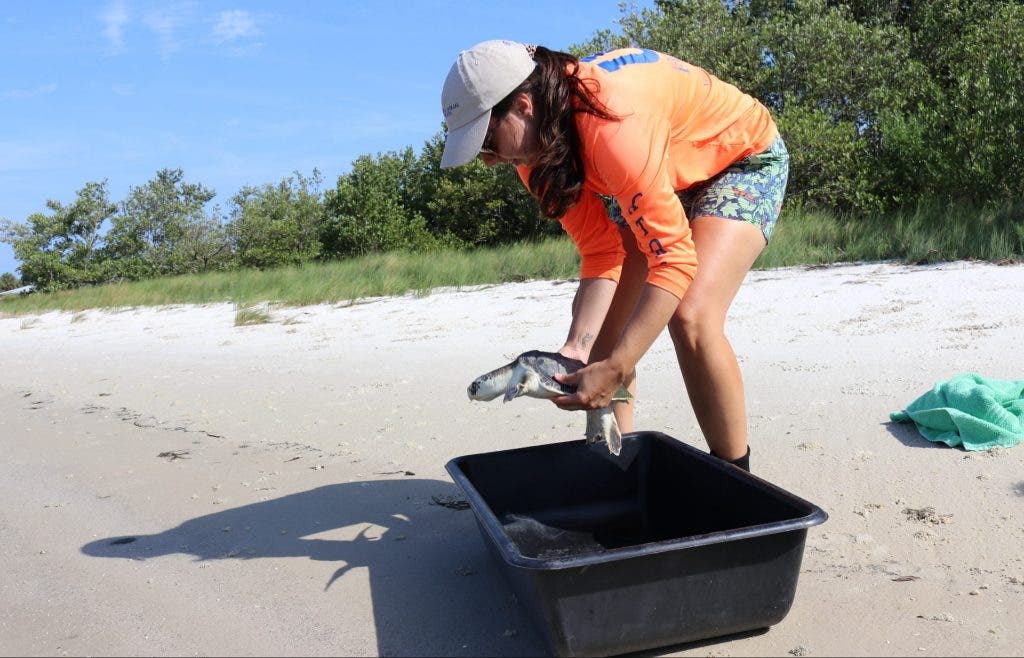
Pico flaps his arms, eager to get back to his friends and family in the ocean off Cedar Key.
Pico was among five sick or injured turtles released back into the ocean by the aquarium's rehab team last week, thanks in part to a $17,000 from Florida's Marine Turtle Protection Program in April.
Find out what's happening in Clearwaterfor free with the latest updates from Patch.
The money was used to purchase medical equipment for sea turtle rehabilitation, including a new surgical exam table, a single-head ceiling surgical light, a wound treatment machine and dressings, and a digital camera for intakes and necropsies.
Since installing this equipment, more than 75 sea turtles have been treated at the aquarium.
The Clearwater Marine Aquarium was chosen for the award through a competitive application process offered to coastal county governments, educational institutions and Florida-based nonprofit groups such as the aquarium that are rescuing sea turtles and conserving Florida turtle habitats.
Grants such as this are critical for nonprofit aquariums like the Clearwater Marine Aquarium to continue its work, said aquarium CEO Dr. Buddy Powell. The aquarium is depends on donations, grants and government funding to perform its rehabilitation work.
And that work has often been nonstop. Since 2010, the aquarium has rescued 1,600 sea turtles. Additionally, the aquarium rescues manatees, dolphin, otters, pelicans, sharks, stingrays — down to the tiniest seahorse.
While some marine animals are too injured to ever return to their natural environment, the aquarium has rehabilitated and released 850 animals since 2010.
Among them are four other sea turtles released last week.
Rescued on Easter, Jelly Bean is a large juvenile green sea turtle that was found floating near Honeymoon Island on April 17. She was having trouble staying submerged due to an old, healed injury to her shell that created gastrointestinal gas that caused buoyancy.
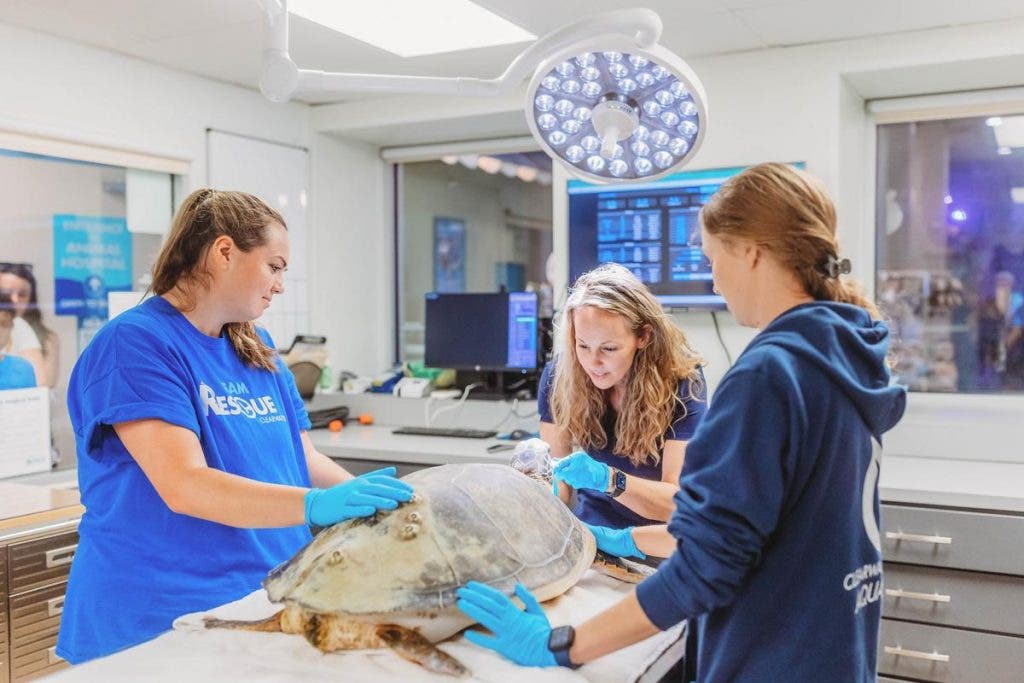
Aquarium veterinarian Dr. Shelly Marquardt works on Jelly Bean's damaged shell.
With the help of medication and a healthy diet, Jelly Bean’s buoyancy problem was resolved, and she started resting on the bottom consistently. On June 22, she was released back on Honeymoon Island.
Enchilada, a juvenile green sea turtle, washed ashore in Flagler County on Feb. 28 and was taken to Whitney Laboratory before being transferred to the Clearwater Marine Aquarium on March 2 by the Volusia County Marine Science Center.
Enchilada (lately, the aquarium staff has been on a food kick, named the turtles for favorite dishes and spices) was very debilitated when aquarium staff first received him
But after completing a regimen of antibiotics and receiving health foods for seven months, Enchilada looked like a completely different turtle. He was released off the East Coast on Thursday.
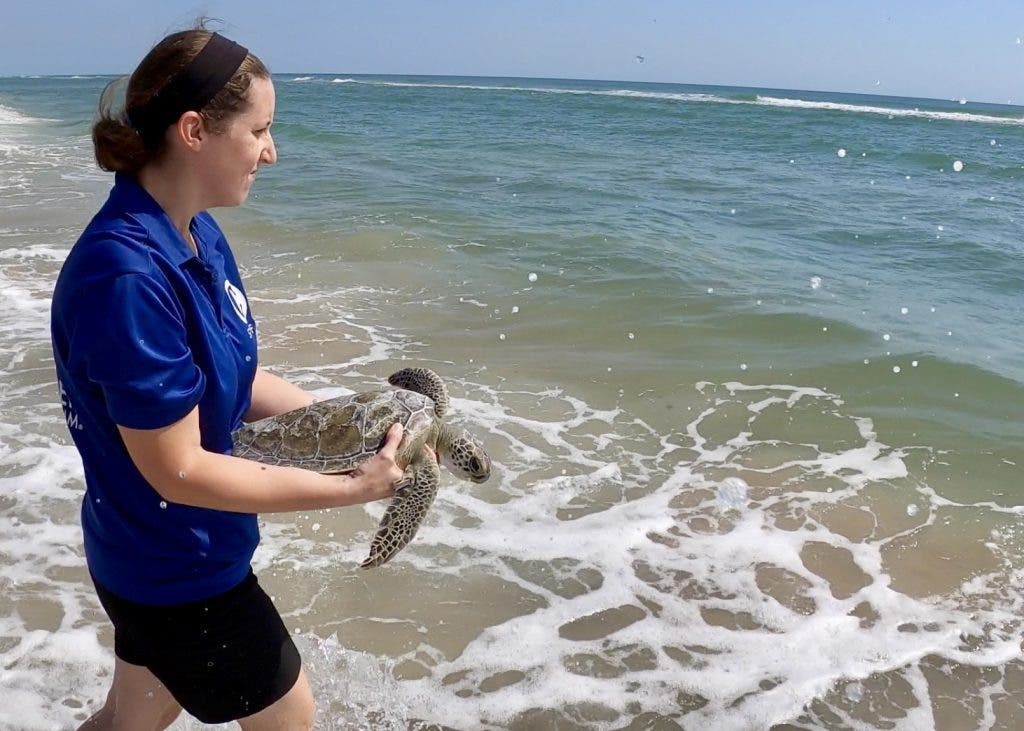
Looking like a different turtle after seven months of rehabilitation, Enchilada is returned to his home off Florida's East Coast.
Finally, Lucky 31 and Soldier are juvenile green sea turtles who came to the aquarium from the Brevard Zoo.
Lucky 31 was found washed ashore in Brevard County on Feb. 24. He had fibropapilloma tumors (pap tumors) on both eyes and several tumors on other areas of his body. All of his tumors were successfully removed through surgery.
Soldier was found entangled in a fishing line near Daytona on March 2. While at Brevard Zoo, Soldier successfully had all his pap tumors removed.
With their surgical incisions healed, the two turtles were released on the East Coast on Thursday.
The specialty license plates available through Florida Highway Safety and Motor Vehicles aren't just for show.
The Helping Sea Turtles Survive license plates, available for $23 a year, have raised more than $2.7 million since 2001 for research, education and conservation programs, including the $17,000 awarded to the Clearwater aquarium in April.

The aquarium also receives proceeds from the sale of other plates, including Protect Wild Dolphins and Save the Manatee.
For more information on specialty license plates, click here.
For more information on Sea Turtle Grants Program, click here.
Get more local news delivered straight to your inbox. Sign up for free Patch newsletters and alerts.