I'll admit it. When I first heard the term "Speed-Faithing" I was puzzled, then skeptical. I'd heard of speed skating and admired Olympian Apolo Ohno, and speed-dating (still not sure what that is), but how would you speed up your faith ...and why would you want to?
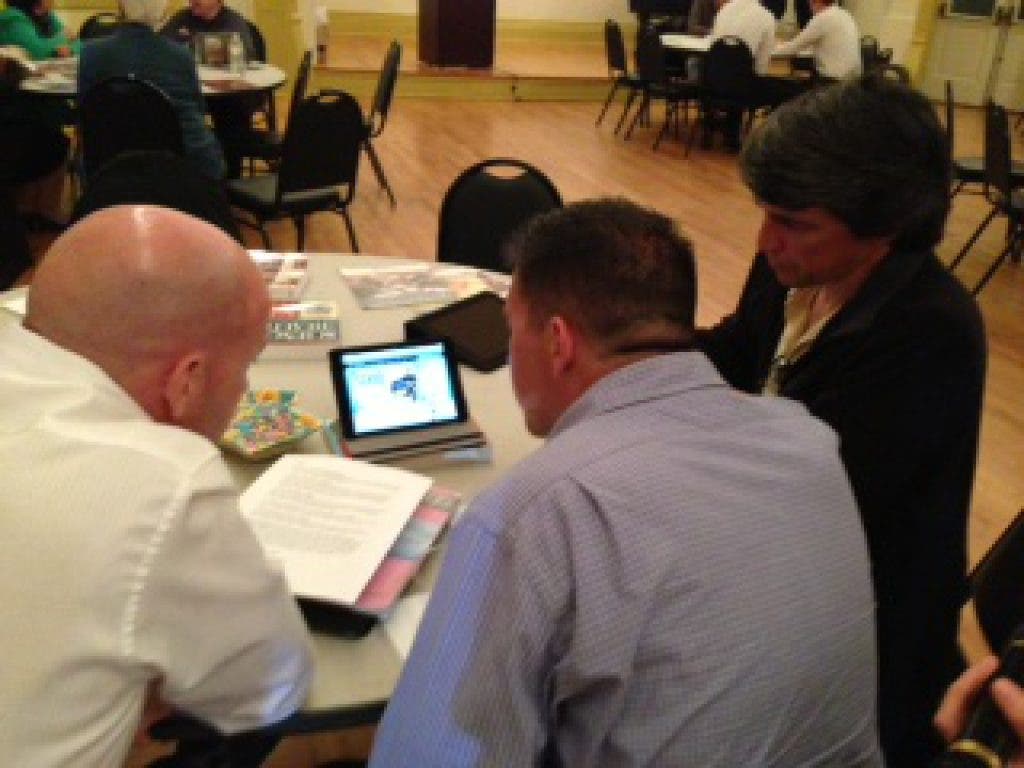
Last night at The University of Tampa I found out. My wife and I joined a fascinating group of fellow speed-faithers for two hours of discussion, questions and answers about an amazingly diverse variety of religious faith groups. We were representing Christian Science. Other religious groups included Mormon, Buddhist, Muslim, Baha'i, and Taoist.
Each group had a table with at least one representative from that faith. Students and visitors moved every 20 minutes to a new table, hopefully visiting each table during the two hour time frame. Surprisingly, 20 minutes actually seemed like plenty of time to give a brief description of your faith and answer some questions. I understand some speed-faithing events allow only 5 minutes per faith. This would be a good challenge, sort of like the discipline of a 140-character tweet. I've always liked British poet Robert Southey's take on brevity. He said, If you would be pungent, be brief; for it is with words as with sunbeams -- the more they are condensed, the deeper they burn.
Find out what's happening in Clearwaterfor free with the latest updates from Patch.
UT isn't the only university to try speed-faithing. Princeton University and University of Chicago are among a growing number who are experimenting with this quick way to gain a basic knowledge of world religions. It all started with Eboo Patel's Interfaith Youth Core in Chicago and spread from there. I met Patel years ago and was deeply impressed with his passionate belief that inter-faith understanding among young people is foundational to world peace. I think he's right, and I'm glad to be part of it.
Here's what I liked about speed-faithing:
Find out what's happening in Clearwaterfor free with the latest updates from Patch.
1. The adventure of meeting new people and the challenge of sharing religious experience.
2. Answering unanticipated but very good questions, and learning more about my own faith in the process.
3. The feeling of unity--sharing a few hours with others who are interested in how faith shapes experience.
It seems important, maybe even vital, for people of faith to reach out to people of a different faith, looking for common ground and considering different perspectives. There is far more that unites us than separates us, far more to be gained than lost, and we are, indeed, better together. I'm a believer.