Health & Fitness
Florida Tops Nation In Opioid Abuse: 21 Residents Die Every Day
Florida is among 18 states that have experienced a 50 percent increase in synthetic opioid overdose deaths.


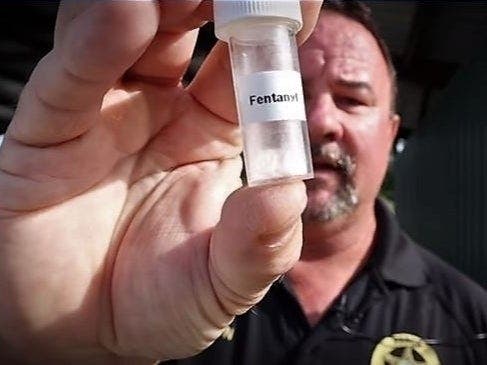
TAMPA BAY, FL — While it may dominate the news, coronavirus isn't the only health concern facing Floridians. A Tampa Bay task force has reported an alarming rise in opioid use and overdoses due to the deadly combination of the potent drug fentanyl, mixed with heroin and other illegal opioids.
From April 4 to 10, the Department of Health-Pinellas County and its partners in the Pinellas County Opioid Task Force documented a significant increase in non-fatal overdose encounters at emergency rooms throughout the county. During that week, the number of 911 transports for suspected overdoses totaled 207, surpassing all past years.
"It is likely that use of the illicit drug fentanyl, a powerful narcotic, is driving this trend," said Marianne Dean, Overdose Data to Action coordinator with the DOH-Pinellas Office of Overdose Prevention.
Find out what's happening in Clearwaterfor free with the latest updates from Patch.
She said fentanyl is being added to a number of recreational street drugs like cocaine, methamphetamine and heroine as well as counterfeit versions of pharmaceuticals such as oxycodone, hydrocodone and alprazolam.
Drug users are often unaware that the illegal drugs they've purchased have been laced with fentanyl and, subsequently, are overdosing in increasing numbers, Dean said.
Find out what's happening in Clearwaterfor free with the latest updates from Patch.
The Pasco County Sheriff's Office and Florida Department of Health-Pasco are reporting a similar trend in that county during the past year.
Pasco County experienced a 71 percent increase in overdose-related deaths in 2020 compared with 2019. Last year, Pasco deputies responded to 1,491 overdoses in which 268 people died.
The Centers for Disease Control and Prevention said the potent drug fentanyl added to illegal drugs to increase profits is responsible for more than 81,000 drug overdose deaths in the United States from May 2019 to May 2020. That's the highest number of drug overdose deaths recording in the country during a 12-month period.
Florida is among 18 states that have experienced a 50 percent increase in synthetic opioid overdose deaths.
Tampa Bay’s opioid overdose rate of 23.3 per 100,000 population is 9.75 percent higher than the statewide average and 50.5 percent higher than the national rate.
Nearly three people die every day in Tampa Bay from an opioid overdose, totaling 1,024 deaths in 2019, according to the recently organized Project Opioid Tampa Bay. The organization estimates that more than 1,200 people died of opioid-related deaths in Tampa Bay in 2020, a 36 percent increase over 2019.
Experts estimate that the economic impact of the opioid epidemic on Tampa Bay is roughly $25 billion lost each year in gross regional product, and 35,000 workers sidelined from the labor force.
For each opioid addict, the lives of at least five to 10 family and friends are also impacted.
The CDC has released data confirming the rise in fatal overdoses during the pandemic. CDC officials said the increase in calls to helplines across the country are indicative of growing anxiety, depression and trauma facing Americans as a result of the pandemic.
The COVID-19 pandemic and the corresponding economic crisis have been especially devastating in Black and Latino communities, which are experiencing a disproportionate number of COVID-19 infections and deaths as well as higher-than-average unemployment rates, said the CDC.
Biden Administration Responds
In response, the Biden Administration has sent nearly $2.5 billion in funding to states and territories to address the nation's increasing drug and mental health crisis in the wake of the coronavirus pandemic.
The Substance Abuse and Mental Health Services Administration at the U.S. Department of Health and Human Services is distributing the funds in the form of substance abuse prevention and treatment and community mental health services block grants to states to implement new programs to prevent and treat substance use disorders.
“We know multiple stressors during the pandemic – isolation, sickness, grief, job loss, food instability and loss of routines – have devastated many Americans and presented unprecedented challenges for behavioral health providers across the nation,” said Acting Assistant Secretary for Mental Health and Substance Use Tom Coderre. “During this time of increased urgency, we want to assure them that funding is in place to help states and territories provide pathways to prevention, intervention, treatment and recovery services, especially for underserved populations.”
While the country had mental health and substance abuse challenges before the pandemic, he said these problems have reached epidemic levels as a result of the pandemic.
Funds are also being dispersed to state and local law enforcement agencies to combat drug trafficking.
Proceeds From Lawsuit To Provide Treatment
Additionally, on Wednesday Florida Gov. Ron DeSantis announced a $21 billion multi-state agreement with AmerisourceBergen, Cardinal Health and McKesson, three of the nation’s largest pharmaceutical companies, to settle litigation related to the opioid crisis in America.
Johnson & Johnson also will pay up to $5 billion over nine years, with Florida receiving almost $300 million from that agreement.
DeSantis said all these funds will be used to treat Floridians addicted to opioids.
Former Florida Attorney General Pam Bondi filed the law suit against some of the nation's largest opioid manufacturers and distributors for their role in the opioid crisis in 2018.
State Cracks Down On Opioid Trafficking
Florida Attorney General Ashley Moody, who took office in January 2019, said she is now taking her fight to the streets, focusing on arresting and prosecuting drug traffickers.
Last month she announced the conviction of a notorious pair of sibling drug traffickers responsible for supplying much of the heroin and fentanyl distributed throughout Central Florida.
Hector Mojica Phipps ran the drug trafficking operation with the help of his sister, Dilcia Mojica Phipps.
“This sibling drug-trafficking team sold heroin and fentanyl, two key drugs at the heart of the nation’s opioid crisis—disgraceful," she said. "Thankfully, my statewide prosecutors, working with the Metropolitan Bureau of Investigation, dismantled their operation, and these poison pushers will harm Floridians no more. Let this serve as a message to any potential fentanyl traffickers: We will find you, we will arrest you and you will serve time for your crimes.”
The MBI is made up of 18 law enforcement agencies charged with dismantling criminal organizations that impact Central Florida. It began investigating the brother-sister drug traffickers in 2018 when they took over the family business after their siblings, Luis Mojica Phipps and Yajaira Mojica Phipps, were arrested for trafficking heroin and then convicted in June.
Since her election as the state's top cop, Moody has made the opioid epidemic her top priority.
"From the moment I started as a candidate, we were losing 14 people a day to the opioid epidemic in Florida alone," she said during a gathering of Florida lawmakers in March.
When she became Florida's 38th attorney general in 2019, that number rose to 17 people a day. Today, said Moody, 21 people die every day in Florida due to opioid abuse.
"And the projections are that is going to keep increasing unless we, as a state, can start making progress and using data-based approaches to aggressively attack this epidemic," she said. "We won't arrest our way out of this."
Statewide Task Force Recommendations
During her first week in office, Moody formed a statewide Opioid Abuse Working Group. Chaired by Seminole County Sheriff Dennis Lemma, the group brought together a team of experts from across the state and released its final report March 1, 2019, highlighting recommendations and best practices for fighting the opioid crisis in Florida.
Among the group's top recommendations was the formation of a 21-member Statewide Task Force on Opioid Abuse to implement education, prevention, treatment, recovery and law enforcement efforts.
Moody wasted no time following through on that recommendation. Gov. Ron DeSantis created the task force by Executive Order 19-97 in 2019.
Chaired by Moody, the task force includes mental health experts, law enforcement officers, legislators, a state attorney and public defender, as well as experts in the fields of addiction, education and social services.
With the support of the task force and the help of funding provided by the health insurer Florida Blue Foundation, the Tampa Bay Partnership, a coalition of Tampa Bay business leaders, launched Project Opioid Tampa Bay to mobilize businesses, philanthropic groups and faith leaders in Tampa Bay to reduce opioid deaths in the community.
In a report published in April, Project Opioid Tampa Bay, chaired by David Pizzo of Florida Blue, outlines the problem and looks at some evidence-based solutions that Tampa Bay communities can incorporate.
A New Tool To Find Treatment Options
Among them, the group announced that Floridians will soon have access to an easy-to-use database that highlights high-quality addiction treatment options available in the state called ATLAS (which stands for Addiction Treatment Locator, Assessment, and Standards platform).
Florida Blue and New Directions Behavioral Health will collaborate with Shatterproof, a national nonprofit organization dedicated to battling drug addiction, to bring the tool to Florida.
ATLAS is currently only available in six states. The platform displays information on all treatment providers for any substance use disorder in a state, including opioid use disorder. It evaluates addiction treatment providers’ use of evidence-based best practices and displays this information for those looking for treatment for themselves or a loved one.
People can search for and compare treatment options using criteria such as location, services offered and insurance accepted. ATLAS also allows patients to provide feedback on their treatment experience.
In addition to including a public search function, the platform also offers secure access to data for state policymakers, providers and insurance payers to increase accountability and transparency.
Another recommendation of Moody's working group that's endorsed by Project Opioid Tampa Bay is the distribution of emergency opioid drugs to all law enforcement, paramedics and other first responders.
Naloxone, or Narcan, is a life-saving drug that can be administered to people experiencing an overdose, instantly reversing the effects of the opioid. Many police and sheriff's agencies have already equipped patrol deputies and officers with naloxone to use when they come across someone who has overdosed.
To read the full report, "Florida’s Opioid Epidemic: Recommendations and Best Practices," click here.
See related stories:
Get more local news delivered straight to your inbox. Sign up for free Patch newsletters and alerts.