Community Corner
Protect Nesting Shorebirds, Sea Turtles This July 4th Weekend
Wildlife officials are urging those planning to go to the beach this Fourth of July weekend to take care not to disturb nests.


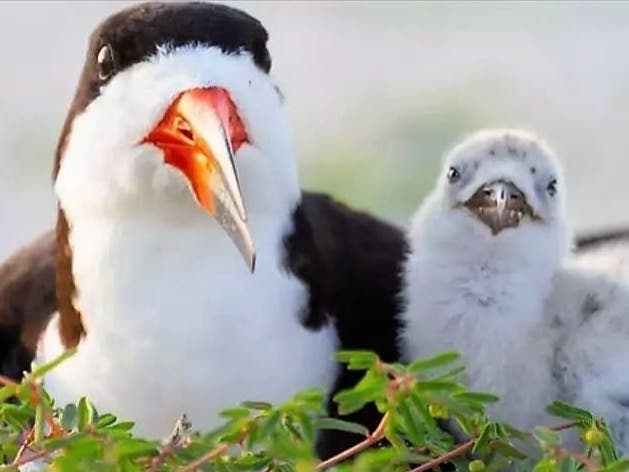
FLORIDA — Whether heading to the beach for a day relaxing in the sun or to watch fireworks displays, Florida residents and visits are reminded that Florida's beaches are also populated by nesting shorebirds, seabirds, wading birds and sea turtles during the summer.
Several species of shorebirds and seabirds as well as endangered sea turtles nest along the beaches of the Atlantic and Gulf coasts of Florida starting April 1 and continuing through the summer.
Habitat loss and degradation associated with coastal development has largely restricted many of these species to stretches of beach within parks and preserves. These birds and sea turtles are particularly sensitive to human disturbance since environmental conditions on beaches are already harsh and unpredictable.
Find out what's happening in Clearwaterfor free with the latest updates from Patch.
Two years ago, while walking on Lido Beach, Kylie Wilson of the Florida Shorebird Alliance, which posts and monitors shorebird nests for the Florida Fish and Wildlife Conservation Commission, noticed an adult least tern calling on the beach near some piles of sand.
"I walked over to investigate and, sure enough, there was a large hole with two chicks stuck inside," she said.
Find out what's happening in Clearwaterfor free with the latest updates from Patch.
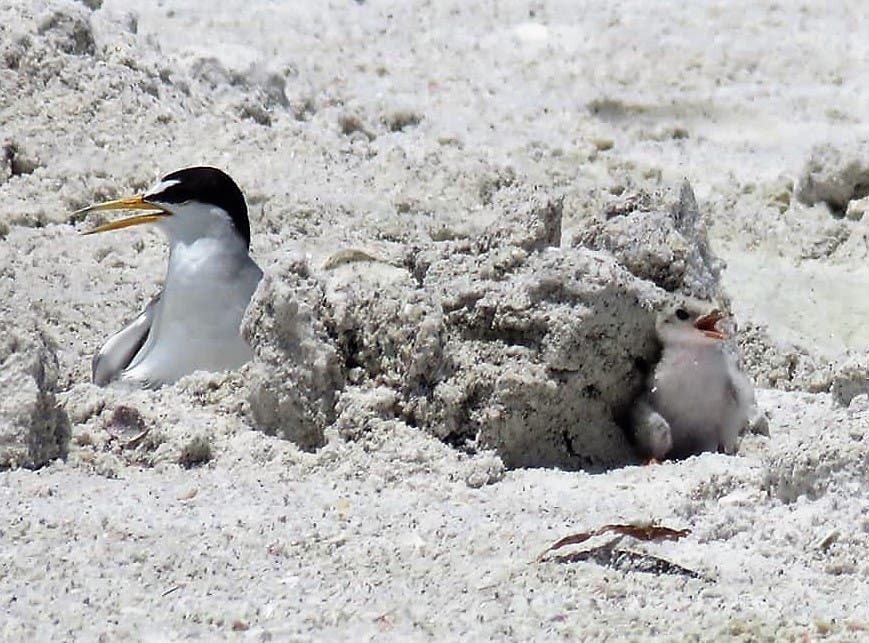
With one chick leaning against a sand pile, a mother least tern calls out for help for her other chick trapped in a hole a beach goer had left unfilled in the sand.

When Kylie Wilson looked in the hole, she said the chick the mother tern was crying for as well as another baby bird nearly old enough to take flight.
Someone had dug a hole on the beach and then left without filling it in. Shorebird chicks and baby sea turtles can easily fall into these holes and are unable to climb out.
"One was a downy chick and the other was nearly flighted," Wilson said. "I scooped both out and then quickly filled the hole. After I backed away, I saw the adult return to the downy chick and noticed its sibling was also there hiding in the shade of a sand pile."
Among the sea turtle species that nest along Florida's coastline are the threatened loggerhead and the endangered Kemp's ridley, hawksbill, leatherback and green sea turtles.
Seabirds and shorebirds nesting along Florida's coast include the snowy plover and Wilson's plover, the American oystercatcher, the willet, the black-necked stilt, the killdeer, the black skimmer, royal tern, least tern, Caspian tern, sandwich term, gull-billed tern, sooty tern, bridled tern, roseate tern, brown noddy, laughing gull, brown pelican, masked booby and magnificant frigatebird.
Flock-Friendly Fourth
Each spring and summer, shorebirds and seabirds rely on Florida’s sandy beaches for critical nesting habitat, according to the Florida Fish and Wildlife Conservation Commission. Beach goers can help protect vulnerable nesting birds by following these tips:
- Do the flock walk. Keep at least 300 feet from nesting birds, walk around flocks of birds and stay out of posted areas.
Getting too close to nesting shorebirds, seabirds and wading birds can cause them to flush from their breeding sites, leaving vulnerable eggs and chicks exposed to the elements and predators.
Egg temperatures can increase to lethal levels after just a few minutes of direct sun exposure.
Shorebirds and seabirds nest in shallow scrapes in the sand and their eggs and chicks are well-camouflaged, making them vulnerable to being stepped on unless people look out for them and walk around flocks of birds.
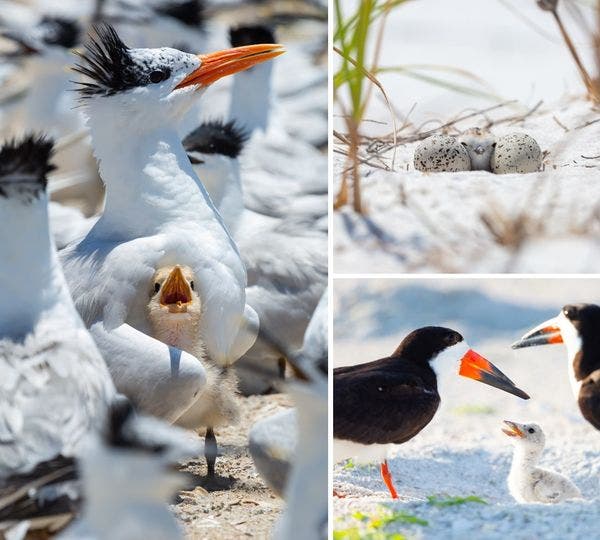
Black skimmers have laid eggs and are nesting with young chicks on Florida beaches throughout the summer.
- Look for Critical Wildlife Area closures. Be on the lookout for signs designating Critical Wildlife Areas on the beach or coastal islands. These areas are closed to public access to protect high concentrations of wading birds and shorebirds while they nest and raise their chicks.
Boaters and beach goers can help nesting birds by keeping their distance and keep noise volumes low.
- Keep Fido at home. Even well-behaved dogs can frighten shorebirds, causing them to abandon their eggs and chicks. If you bring your dog with you to the shore, go to a beach where they’re allowed and follow all leash laws.
One dog passing near a colony of nesting seabirds can cause all the birds to panic and subsequently leave their nests dangerously exposed to the boiling sun.
- Properly stash all trash. Trash and food scraps attract predators, such as raccoons and crows that prey on shorebird eggs and chicks. Litter on beaches and in the water can entangle birds, turtles and other wildlife.
Beach goers can help beach-nesting birds and other native wildlife by properly disposing of all trash, filling in human-made holes in the sand, and removing all personal gear from the beach before sunset.
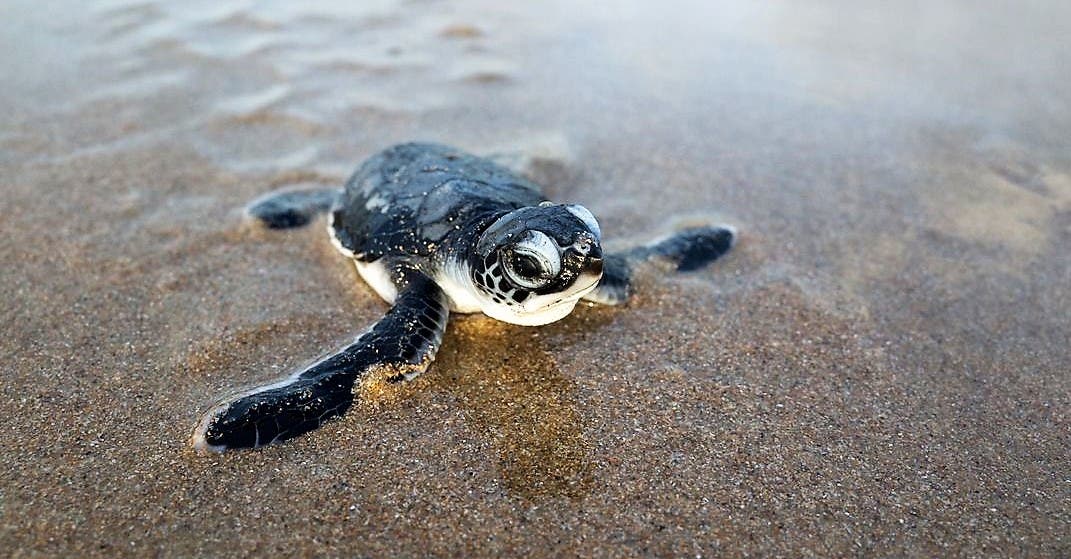
Sea turtle hatchlings can be startled by loud sounds and bright lights, causing them to lose direction on their journey from their nest to the ocean.
Fishing line can be deadly to waterbirds, sea turtles and other wildlife, so be sure to dispose of it properly. To find a monofilament recycling station near you, click here.
- Leave fireworks to the professionals. Keep personal fireworks off the beach and at home; attend an official event instead. The loud sounds and bright lights of personal fireworks on Florida's beaches and waterways can have catastrophic effects on nesting birds and their chicks, as well as nesting sea turtles.
More Tips
- Never enter areas posted with shorebird, seabird or turtle nesting signs.
- Avoid driving on or beyond the upper beach.
- Drive slow enough to avoid running over chicks.
- Keep dogs on a leash and away from areas where birds may be nesting.
- Keep cats indoors, and do not feed stray cats.
- Properly dispose of trash to keep predators away.
- Do not fly kites near areas where birds may be nesting.
- When birds are aggravated, you are too close.
For more information on sharing the beach with nesting sea turtles, click here.
To report someone disturbing a sea turtle nest or an injured, dead or harassed sea turtle, call Wildlife Alert 888-404-FWCC (888-404-3922) or report it online. Cell phone users can also call *FWC or #FWC, or send a text to Tip@MyFWC.com.
Get more local news delivered straight to your inbox. Sign up for free Patch newsletters and alerts.