Neighbor News
20-Year ALS Survivor Challenges the U.S. Treatment Narrative
A 20-year ALS survivor is challenging the prevailing U.S. narrative that little can be done beyond limited FDA-approved treatments.

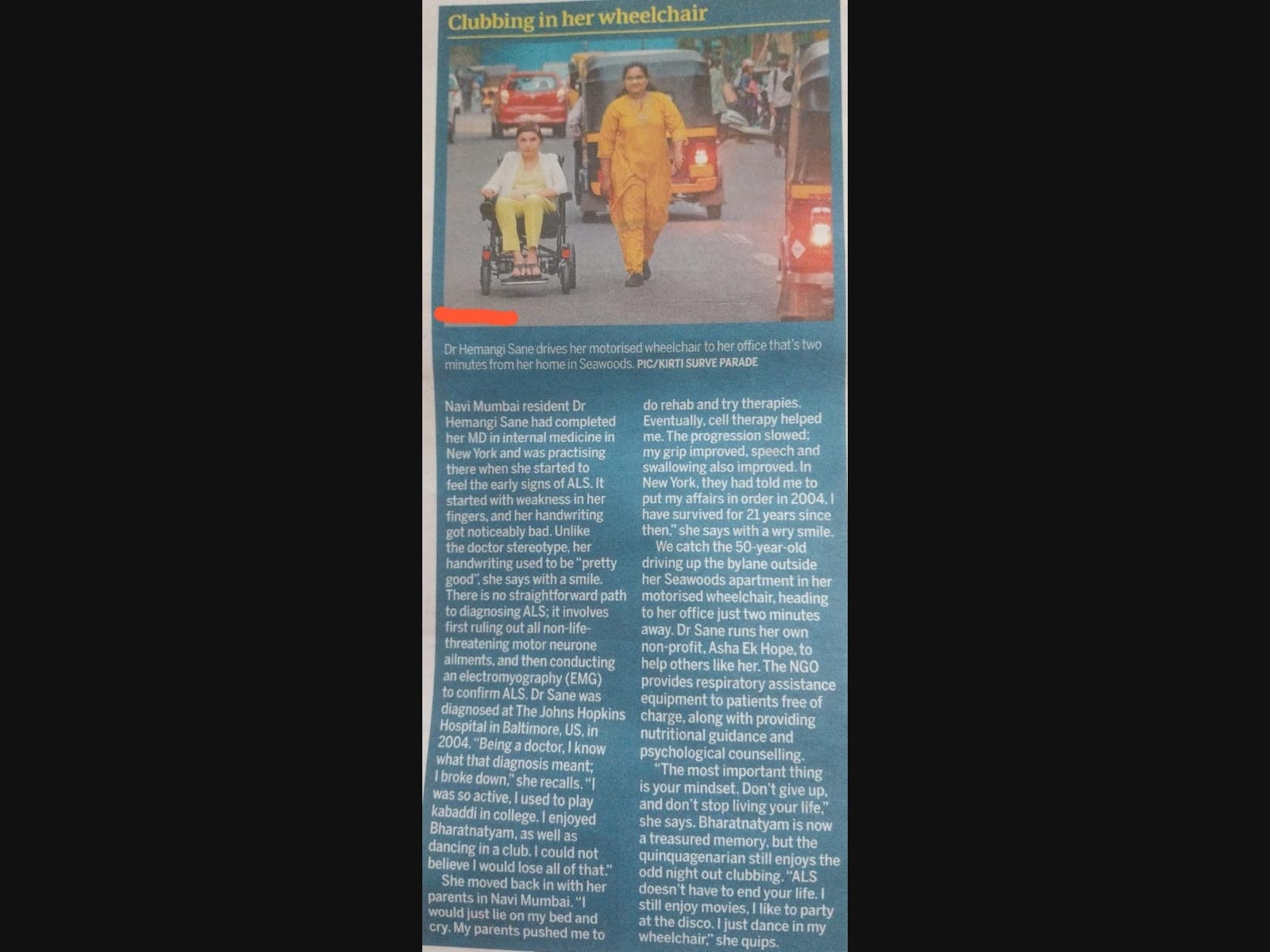
Recent national attention surrounding amyotrophic lateral sclerosis (ALS), including the diagnosis and death of actor Eric Dane, has once again spotlighted the devastating reality of this neurodegenerative disease. Yet beyond the headlines lies a deeper and largely unexamined question: Why are many ALS patients in the United States still told that little can be done beyond limited FDA-approved medications, while some patients internationally are pursuing broader symptom-targeted and cell-based approaches aimed at slowing progression and extending quality of life?
In 2004, Dr. Hemangi Sane was diagnosed with ALS at Johns Hopkins Hospital. Like many U.S. patients, she was advised to prepare for end-of-life care. Instead, she sought intensive rehabilitation and additional therapies abroad.
More than 20 years later, Dr. Sane is alive, professionally active, and contributing to the global ALS community.
Find out what's happening in Fish Hawkfor free with the latest updates from Patch.
She currently leads the Asha Ek Hope Foundation, where she supports ALS patients with access to respiratory equipment, counseling, and practical care resources. Despite diminished speech, she continues to present at international conferences, including ICAN USA, and remains engaged in scientific and patient advocacy discussions.
This is not a claim of cure. ALS remains a progressive and often fatal disease. However, Dr. Sane’s survival challenges the commonly accepted narrative that ALS progression is uniformly rapid and untreatable beyond minimal intervention.
Find out what's happening in Fish Hawkfor free with the latest updates from Patch.
Her case raises urgent public policy and scientific questions:
- Why is comprehensive symptom management beyond limited FDA-approved drugs not more aggressively studied or implemented in the United States?
- What is the current status of cell-based and regenerative therapies within the U.S. regulatory pipeline?
- How does the U.S. Food and Drug Administration’s approval framework for ALS treatments compare to international regulatory systems?
- Are expanded access and compassionate use pathways realistically accessible to most ALS patients?
- Why do some families feel compelled to leave the country to explore additional options?
Even in the absence of a cure, treatments that slow decline, manage symptoms, and improve quality of life matter. Extending meaningful years — not just months — is not a trivial outcome for patients and families navigating ALS.
Had Dr. Sane remained confined to the standard options presented at diagnosis in the United States, her outcome — and the support she now provides to others — might have been very different. The patients she assists today might have lost a powerful advocate.
This is not about promoting a specific therapy or circumventing safety standards. It is about examining whether innovation in ALS care is being limited by regulatory inertia, funding priorities, systemic barriers, or insufficient comparative investigation of international approaches.
ALS patients deserve transparency, scientific rigor, urgency, and open inquiry into every promising avenue — including therapies focused on symptom management and functional preservation.
We encourage further investigative reporting into the scientific, regulatory, and human dimensions of ALS treatment disparities. Patients and families deserve clear answers about the science, the risks, the protections in place, and the full range of options available to them.
For additional information or to connect with Dr. Hemangi Sane and the Asha Ek Hope Foundation.