One of the pleasures I get from my behavior practice is consulting with various rescues and shelters. From time to time they'll get an animal that is deaf. These animals present unique challenges with behavior issues and training but are such a joy when you start to see the lights go on in their minds.
Congenital deafness in dogs (or other animals) can be caused by intrauterine infections, ototoxic drugs like gentamicin, liver disorders, or other toxic exposures before or soon after birth, or it can be inherited. Inherited deafness can be caused by a gene defect. There are some 85 breeds that are especially sensitive but can potentially appear in any breed and especially in those with white pigmentation. In cats, white-haired, blue-eyed cats have a higher incidence of deafness than the general feline population.
Determining if an animal is completely deaf or has a certain deficit can be difficult. The only reliable method for determining deafness is the BAER test but this can be difficult and expensive. Some animals (like humans) might have a more significant loss at different frequencies. Deaf animals can be more prone to behavior issues given that they "see" the world with one of their senses impaired and especially if they were not worked with as puppies.
Find out what's happening in Gulfportfor free with the latest updates from Patch.
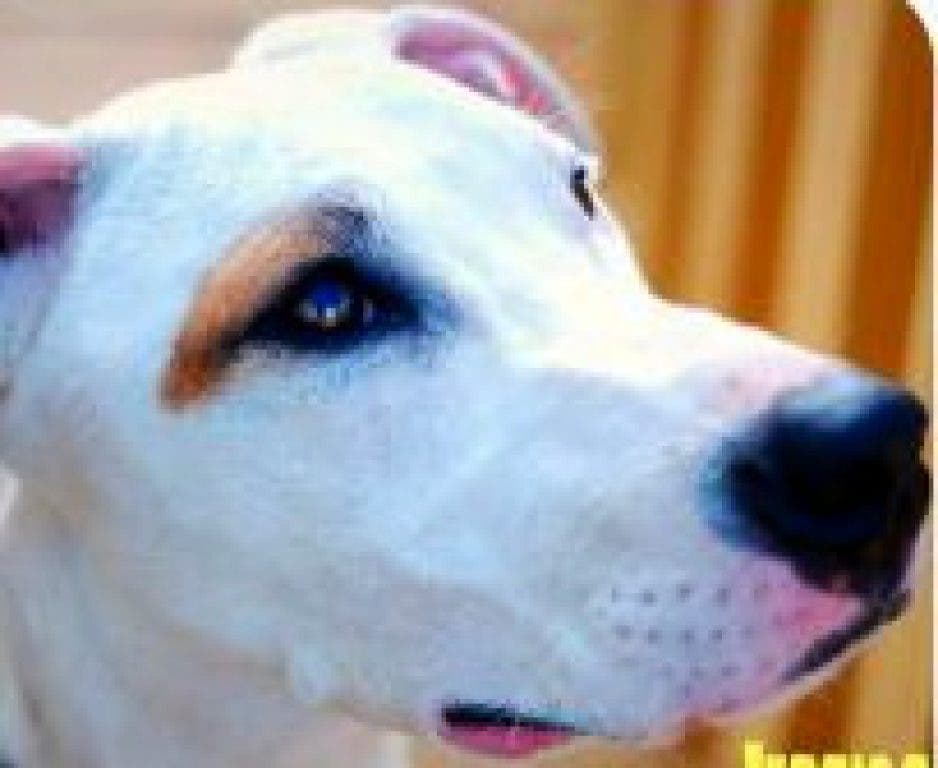
One dog I'm currently working with at Honor Animal Rescue is Patches. Patches is a lovely 1+ year old white hound mix. Patches can be fearful of people if they move in ways he doesn't understand or where he perceives they are invading his space. The behavior plan for Patches has four main components. The first is to establish a close working relationship with his primary handler. Luckily one of the volunteers at Honor has taken Patches on. By building a trusting relationship with one person, we hope to be able to teach Patches to defer to his human when he feels stressed or fearful. A major component of the training is lots and lots of eye contact exercises (if you've read my other posts you know by now how critical I feel this is).
The second component is to establish hand and facial expressions to indicate praise. For Patches we use a "thumbs-up" sign to mean, "Good Dog!". A simple smile is a "keep it up, you're doing fine". The third component is a way to call the Patches to us (recall) or to get his attention. We can't very well call his name although we still do it anyways! To accomplish this we use a remote vibration collar. This is not a shock collar (I don't believe in the use of them), but a vibration only collar. We condition Patches to associate the feeling of the vibration with a high value reward (he so likes pieces of chicken) and to come to us.
Find out what's happening in Gulfportfor free with the latest updates from Patch.
The final part of Patches' plan will be to start doing agility training with him on the shelter's agility field. While it's unlikely that Patches will ever actually compete (you never know), agility is a great way to build confidence in a dog and trust in the handler.
While this is Patches plan, much of this could be appropriate for any dog that sees the world as a scary place.