Schools
Gulfport Parents Share How Early Intervention Helped With Child Development Challenges
As Gulfport City Council Member Jennifer Salmon and her husband found in seeking help for their son in regards to developmental learning numerous programs are available, some right here in Gulfport. The key from the start is get your child tested.
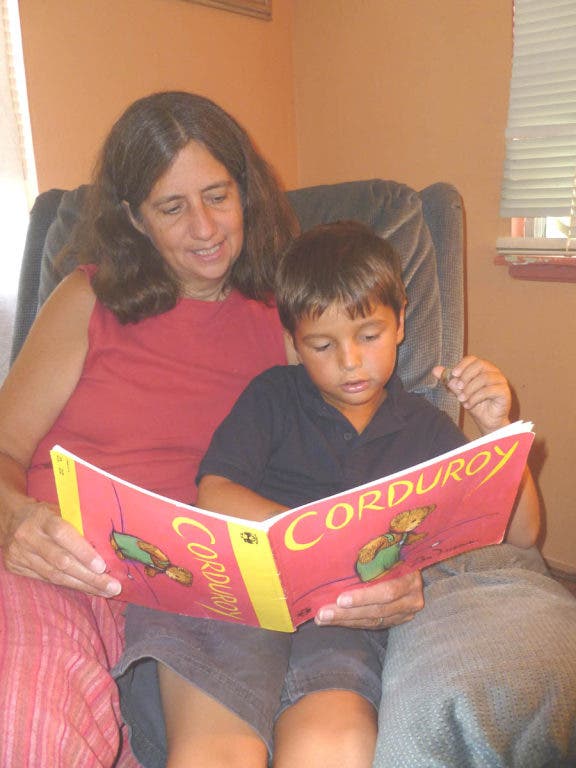
Thanks to friends with experience in childhood development Gulfport City Council Member Jennifer Salmon and her husband realized that their young son, Michael, may be what is known as “developmentally delayed.” The answer was to get Michael, then about two-and-a-half, tested. For the Salmons this led to bringing in an intervention specialist to work with him seeing how well he played with toys. But rather than having Michael play with his own toys on his own level (which is the new, more effective way of determining learning ability these days), the specialist brought in her own special toys. This led the Salmons, along with the ineffective results they were seeing, to “bail out” of the program.
However, the specialist did contribute to Michael’s learning development in a special way, by getting him to communicate via sign language. Salmon says while on vacation Michael one day saw a picture of a swing in the children’s picture book, “Good Dog Carl.” “Using the sign language for ‘more,’ he let me know he wanted to go on the swing outside at his grandparent’s house,” Salmon explained. “For the rest of the visit he used the more sign to show what he wanted to do and was communicating effectively that way.”
Upon returning from vacation the Salmons furthered their efforts to help their young son. This journey resulted in them finding resources (and often at no cost to the Salmons), both in and outside Gulfport, that prepared him for where he is today: just another typical child in kindergarten, no longer labeled as a “developmentally delayed” youngster. (Although his mother says he does get some assistance with speech and occupational therapy at Jamerson Elementary where he now attends).
Find out what's happening in Gulfportfor free with the latest updates from Patch.
Those resources included:
• Michael’s enrollment in the Gulfport Recreation Center’s “Tot-Time Program,” a preschool, hands-on initiative for children three to five years of age, and follows the school calendar year. Joanne McRoberts, a pre-kindergarten teacher with the program for the past 19 years, says her goal is to “provide children with a positive attitude towards learning and to help them in developing essential socialization skills.” To achieve this objective, she institutes a “play curriculum.” This curriculum is a theme for the school year, in which the children will learn through “hands-on” initiatives pertaining to that theme. As an example, she noted a current theme is “regions of the U.S.,” where kids create things related to a certain area of the country. Although children of non-Gulfport residents can participate in this program the cost is significantly higher than for Gulfport residents.
Find out what's happening in Gulfportfor free with the latest updates from Patch.
• The second program the Salmons took advantage of was the Gulfcoast Associate Center of Florida Diagnostic and Learning Resources Systems or FDLRS (pronounced as fiddlers) and its free “Child Find” initiative. The “Child Find Specialist,” who worked to help the Salmons and their son was Debbie Smalbach. Smalbach’s job is specifically to find children, like Michael, who are potentially eligible for services under the Individuals with Disabilities Education Act (IDEA) and links them with needed services. The program works to serve all children and youth, from birth through 21 years of age, who are not enrolled in public school, and who have or who are at risk of developing special or unique needs. However, the primary emphasis is on children three to five years of age. And, Salmon says, it was through FDLRS that she and her husband learned of other “methods of helping children (the new way)” rather than using traditional procedures and about other agencies and programs, which address developmental issues.
• Thirdly, for the Salmons was the Gulfport Elementary VPK program, available to all four-year-old children to ensure youngsters “are intellectually, emotionally, physically and socially ready to enter school and ready to learn, fully recognizing the crucial role of parents as their child’s first teacher,” according to the program’s mission statement. Either a school year or summer program is available and one of the distinct advantages of this program is the low student to teacher ratios. In addition, as pointed out, by Lori Westland, with Pinellas County Schools and formerly with the program at Gulfport Elementary who worked extensively with Michael, this initiative features a “blended class,” with half of the students needing special needs and the other half “regular, typical” students, resulting in a much more normal environment for special needs children to grow. Heavily “language activities” focused, with lots of “pre-reading skills” introduced. Westland says the program has proven very effective in helping youngsters overcome learning disabilities, noting that Michael is an excellent example as evident by the huge “progress” he made while in the program.
(Please note the Gulfport Recreation Center is as of this fall offers a VPK Program is that is free, but parents must apply at Coordinated Child Care of Pinellas (see website address below) to receive a Certificate of Eligibility. The program is limited to ten children, but there are still some openings. Program hours are only from 8:30 a.m. to 12:30 p.m., where as Gulfport Elementary’s VPK initiative offers a longer hours programming option. Call 893-1068 for more information.)
Other resources available to parents like the Salmons, which FDLRS Gulfcoast staff often recommends, for help with children’s learning developmental issues are:
- Coordinated Child Care of Pinellas; www.childcarepinellas.org
- Directions For Mental Health, Inc.; www.directionsmh.org
- Pinellas County Head Start; www.pinellascountyheadstart.org
- Pinellas County Schools; www.pcsb.org
- West Central Early Steps; www.allkids.org/earlysteps
- Lighthouse of Pinellas; www.lighthouseofpinellas.org
- Early Learning Coalition; www.elcpinellas.org (A key component with this agency is its Free Early Childhood Development Screenings – call (727) 548-1439, ext. 226 for more information.)
The bottom line? Perhaps Salmon said it best, "Early intervention works. If you think your child may be delayed, get her or him tested. If something is not working for your child, ask for more or different help. (After all), you are your child’s best advocate.”