Politics & Government
A Brief History of Labor Day and Modern Insights for Employees and Pay
Evidence-based insights into the why and how employees can earn more money and get more affordable housing. Learn more to earn more.


Britannica may use British English at times, which spells some words differently than in U.S. English, which explains this usage of “honouring” vs. “honoring” in their insights into the first Monday in September as Labor Day. “Labor Day, in the United States and Canada, holiday (first Monday in September) honouring workers and recognizing their contributions to society. “
“The origins of Labor Day can be traced to the labor movement of the late 19th century in the United States,” according to Britannica. “There is some uncertainty as to who deserves credit for the idea; most cite either Peter J. McGuire, a union leader who founded the United Brotherhood of Carpenters in 1881, or Matthew Maguire, a machinist and secretary of the Central Labor Union (CLU). One of the men suggested to the CLU that there be a celebration honoring American workers. On September 5, 1882, some 10,000 workers, under the sponsorship of the Knights of Labor, held a parade in New York City. There was no particular significance to the date. McGuire said that it was chosen because it fell roughly halfway between the Fourth of July holiday and Thanksgiving. In 1884 the Knights of Labor adopted a resolution that the first Monday in September be considered Labor Day. The idea quickly spread, and by the following year Labor Day celebrations were being held in a number of states.” That is also per Britannica, as is the next paragraph.
“In 1884 the Knights of Labor adopted a resolution that the first Monday in September be considered Labor Day. The idea quickly spread, and by the following year Labor Day celebrations were being held in a number of states. Oregon became the first state, in 1887, to grant legal status to the holiday (although the state initially celebrated it on the first Saturday in June). That same year Colorado, New York, Massachusetts, and New Jersey established the holiday on the first Monday in September, and other states soon followed. In 1894 the Pullman strike in Illinois, as well as a series of unemployed workers’ riots on May Day in Cleveland, prompted U.S. Pres. Grover Cleveland to propose a bill that would make Labor Day a national public holiday. The bill, which was crafted in part to deflect attention from May Day (an unofficial observance rooted in socialist movements), was signed into law in June of that year.”
Find out what's happening in Lakelandfor free with the latest updates from Patch.
Cleveland was a Democrat. As Wikipedia puts it: “Cleveland was the first Democrat to win the presidency after the Civil War, and was one of two Democratic presidents, followed by Woodrow Wilson in 1912, in an era when Republicans dominated the presidency between 1869 and 1933.”
“Every world leader has their controversies, and are judged by history as to their successes and failure. President Woodrow Wilson is no exception. Progressives today often look at Wilson as the first truly modern reformer and benchmark Democrat. More objective observers look to his record of selective persecution and segregation, and his handling of the United States entering World War I. Regardless of where one may fall, in their opinions, Woodrow Wilson was a very complex man.”
Find out what's happening in Lakelandfor free with the latest updates from Patch.
The video that follows is part of a series of videos by narrated by historian Colin Heaton, that he and his colleagues have dubbed “Forgotten History.” According to the U.S. Naval Institute (USNI.org) website, here is a brief background into Heaton. “Colin D. Heaton is a professor of history, military history, and sociology at the American Military University and the author of three books and numerous articles on World War II. He lives in Southport, NC.” Heaton is quite correct in saying that every world leader has controversies, which is true in part because no human walking this earth since the time of Jesus can honestly claim to be perfect. Heaton named this video: “RACIST PROGRESSIVE: Woodrow Wilson.” The explanation for that is found in the video. The transcript for the video below is found at this link here.
As a multiple award-winning student of history myself, including the then coveted Lottinville Award in history earned as at the University of Oklahoma, to paraphrase Heaton, no political party, and no politician in this country is perfect. In this author’s view of history, there are bright and dark spots, highs and lows, ebbs and flows to people and organizations. As a political independent, I am seeking to lay out facts and evidence that may not be generally be well understood. I happen to like Heaton’s video series on history because he lays out names, dates, and events in a manner that someone can readily double check him for accuracy. Heaton doesn’t seem to do a lot of editorializing. As an FYI, an article on President Wilson and the Pujo Committee is linked here.
The labor movement in the U.S. has at times been championed by Democrats. But the struggle against big business interests and monopolization has often had Republican champions too. Let’s look.
The National Archive states that the Sherman Antitrust Act was “Approved July 2, 1890, The Sherman Anti-Trust Act was the first Federal act that outlawed monopolistic business practices.”
Britannica stated: “Sherman Antitrust Act, first legislation enacted by the U.S. Congress (1890) to curb concentrations of power that interfere with trade and reduce economic competition. It was named for U.S. Sen. John Sherman of Ohio, who was an expert on the regulation of commerce.” That same source said that John Sherman’s “Political Affiliation: Republican Party.”
The link between monopoly power, big government, and big business becomes more apparent the more someone looks into what’s behind the curtain in events and politics. Some people misunderstand monopolization as always being one firm or organization dominating a sector, but that isn’t necessarily true. There are times when multiple firms and/or organizations are involved in the practices of monopolization. When multiple firms are involved, it is called oligopoly style monopolization.
Investopedia explains.
“Oligopoly: An Overview. A monopoly and an oligopoly are market structures that exist when there is imperfect competition. A monopoly is when a single company produces goods with no close substitute, while an oligopoly is when a small number of relatively large companies produce similar but slightly different goods.”
Monopolization often leads to depressed wages or earning power. The U.S. Treasury Department produced research found here and here in 2022. It stated in its executive summary the following. “While most labor markets do not literally feature a single employer, a market with a small set of employers may mimic a monopsony by each engaging in practices that give them market power over workers. Concentration in particular industries and locations can lead to workers receiving less pay, fewer benefits, and worse conditions than what they would under conditions of greater competition.” It also said: “. As this report highlights, a careful review of credible academic studies places the decrease in wages at roughly 20 percent relative to the level in a fully competitive market. In some industries and occupations, like manufacturing, estimates of wage losses are even higher.”
What that means is that chances are good that your earnings potential is about 20 percent less than it would be because labor markets in the U.S., or other nations too, is less than competitive. Who says? While some of what is on this page is clearly political from the Biden-Harris White House Fact Sheet on Competition, what is quoted below is deemed generally well supported by other sources. It is sobering and relevant to Labor Day and grasping why wages and earning power in the U.S. is and has been depressed for decades. So, if you, or someone you know, is struggling financially, it is a good idea to lean into this informative information.
“For decades, corporate consolidation has been accelerating. In over 75% of U.S. industries, a smaller number of large companies now control more of the business than they did twenty years ago. This is true across healthcare, financial services, agriculture and more.
That lack of competition drives up prices for consumers. As fewer large players have controlled more of the market, mark-ups (charges over cost) have tripled. Families are paying higher prices for necessities—things like prescription drugs, hearing aids, and internet service.
Barriers to competition are also driving down wages for workers. When there are only a few employers in town, workers have less opportunity to bargain for a higher wage and to demand dignity and respect in the workplace. In fact, research shows that industry consolidation is decreasing advertised wages by as much as 17%. Tens of millions of Americans—including those working in construction and retail—are required to sign non-compete agreements as a condition of getting a job, which makes it harder for them to switch to better-paying options.
In total, higher prices and lower wages caused by lack of competition are now estimated to cost the median American household $5,000 per year.
Inadequate competition holds back economic growth and innovation. The rate of new business formation has fallen by almost 50% since the 1970s as large businesses make it harder for Americans with good ideas to break into markets. There are fewer opportunities for existing small and independent businesses to access markets and earn a fair return. Economists find that as competition declines, productivity growth slows, business investment and innovation decline, and income, wealth, and racial inequality widen.
When past presidents faced similar threats from growing corporate power, they took bold action. In the early 1900s, Teddy Roosevelt’s Administration broke up the trusts controlling the economy—Standard Oil, J.P. Morgan’s railroads, and others—giving the little guy a fighting chance.”
According to left-leaning Wikipedia, Roosevelt was a Republican. That source says Roosevelt “was the vice president under President William McKinley for six months in 1901, assuming the presidency after McKinley's assassination. As president, Roosevelt emerged as a leader of the Republican Party.”
Britannica stated this about Roosevelt and antitrust (meaning, anti-monopolization laws) the following: “Roosevelt managed to do enough in his first three years in office to build a platform for election in his own right. In 1902 he resurrected the nearly defunct Sherman Antitrust Act by bringing a lawsuit that led to the breakup of a huge railroad conglomerate, the Northern Securities Company. Roosevelt pursued this policy of “trust-busting” by initiating suits against 43 other major corporations during the next seven years. Early in his term, he also sought the creation of an agency that would have the power to investigate businesses engaged in interstate commerce (though without regulatory powers); the Bureau of Corporations was formally established in 1903.”
So, there were Democrats and Republicans that worked at various times and manners to improve the lot of the working class in America. More from the Britannica post on “the trust busting” President Teddy Roosevelt (R), who is one of the presidents memorialized on Mount Rushmore.
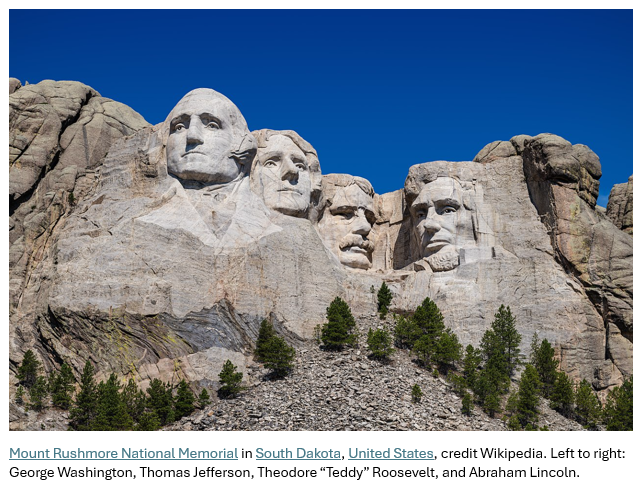
“In 1902 Roosevelt intervened in the anthracite coal strike when it threatened to cut off heating fuel for homes, schools, and hospitals. The president publicly asked representatives of capital and labor to meet in the White House and accept his mediation. He also talked about calling in the army to run the mines, and he got Wall Street investment houses to threaten to withhold credit to the coal companies and dump their stocks. The combination of tactics worked to end the strike and gain a modest pay hike for the miners. This was the first time that a president had publicly intervened in a labor dispute at least implicitly on the side of workers. Roosevelt characterized his actions as striving toward a “Square Deal” between capital and labor, and those words became his campaign slogan in the 1904 election.
Once he won that election—overwhelmingly defeating the Democratic contender Alton B. Parker by 336 to 140 electoral votes—Roosevelt put teeth into his Square Deal programs. He pushed Congress to grant powers to the Interstate Commerce Commission to regulate interstate railroad rates. The Hepburn Act of 1906 conveyed those powers and created the federal government’s first true regulatory agency. Also in 1906, Roosevelt pressed Congress to pass the Pure Food and Drug and Meat Inspection acts, which created agencies to assure protection to consumers. The “muckrakers,” investigative journalists of the era, had exposed the squalid conditions of food-processing industries.”
The above and other history make some things clearer. Laws can be enacted that don’t get properly enforced. Some laws get passed, regulatory systems are established, but then the regulatory agencies themselves don’t behave as lawmakers claimed or may have intended. This can include the phenomenon called “regulatory capture.”
Investopedia explains: “Regulatory capture is a process by which regulatory agencies may be dominated by the interests they regulate and not by the public interest.”
Earlier in this series of evidence-based op-ed articles on the Patch, we noted why there is an obvious affordable housing shortage in the U.S. After all, there are regulatory agencies whose mission is supposed to be the facilitation of more affordable housing. Per left-leaning Google’s artificial intelligence (AI) powered Gemini, which cited HUD: “The United States Department of Housing and Urban Development (HUD) was established on September 9, 1965, and its mission is to create strong, sustainable, and inclusive communities with quality affordable homes for all.”
So, Labor Day 2024 falls close to the same day that HUD was established. A reasonable person might ask. Why is it that nearly 60 years after HUD was established, there is still a lack of affordable, quality homes for all? Hold these thoughts, because they have practical implications on your life and that of the vast majority of Americans.
James A. “Jim” Schmitz Jr. is a senior economist for the Federal Reserve Bank of Minneapolis. From a page authored by Schmitz about himself is the following: “my great interest is monopoly. How do they behave? What costs do they inflict on society? I’ve been studying monopoly for more than 40 years.”
Schmitz said that among the “giants” of understanding the problems of monopoly power in the U.S. are Thurman Arnold to Henry Simons. Quoting.
“Some Important Readings by Giants in the Study of Monopoly:
- Simons, Henry Calvert. A Positive Program for Laissez Faire: Some Proposals for a Liberal Economic Policy. (1934). ###li Labor Against Itself. (1943).” ,>
Schmitz and his colleagues state that for the better part of a century, conventional ‘site builders’ have been subverting factory builders in the U.S. This in turn, argues Schmitz and his colleagues, has been an underlying factor in the affordable housing crisis.
A power point by on that topic by James A. Schmitz, Jr. Arilton Teixeira, and Mark L. J. Wright is linked here. I’ve been following their work since shortly after the item below was published close to four years ago. A previous, and still timely look at the topic by MHProNews is found at this link here.
"Solving the Housing Crisis Will Require Fighting Monopolies in Construction," to discuss some of the policy lessons from "Great Harm" in a more accessible form; Federal Reserve Bank of Minneapolis, Staff Report 773 (December 2020).

One may or may not agree with House Minority Whip James “Jim” Clyburn’s (SC-D) politics. But the wisdom of this statement about the importance of history by Congressman Clyburn is demonstrably true. “We study history in order to understand the present and prepare for the future. Because anything that has happened before can happen again.” To his credit, Clyburn admitted on left-leaning MSNBC that the current wave of inflation was fueled by policies that Democrats promoted and that Democratic leaders knew that inflation would be part of the outcome of their policies.

To truly understand the importance of the history of the struggle for affordable housing in America, that is naturally interwoven with numerous other dynamics at play in the U.S. over the years.
- The labor movement is part of that larger picture of why there is a lack of affordable housing.
- So too is the sometimes-obscured struggle against some form of monopoly power, which can manifest itself economically, in media, information (often influenced by big tech) and politically.
- Another aspect of the problem is regulatory failure caused in part by regulatory capture.
There is more to know about the lack of affordable housing. Schmitz and his colleagues are just some of those who have advocated for more factory-built housing and specifically more inherently affordable HUD Code manufactured homes. Dig into the linked reports below for now.
Waiting for Fed Rate Cut Before Buying a Home? Experts Say Think Twice
Frank Rolfe-Special Interests ‘Don’t Want to Solve Affordable Housing'
TARK-‘I’m a Teen and Know the Solution to Affordable Housing Crisis’
New-Certified “Half Price Homes” - Affordable Housing Solution Redux
Solution: “Would-Be Homebuyers Need 80% More Income Than 4 Years Ago”
Note that in this periodic series, you will see the source(s) for the information credited. You can double check the information sources yourself.
Among those sources cited thus far include the National Association of Home Builders (NAHB), the National Association of Realtors (NAR), the Manufactured Housing Institute (MHI), and the Manufactured Housing Association for Regulatory Reform (MHARR). Each of those sources, HUD have at various times and in various ways recognized the importance and need for more affordable manufactured housing. Trump-era HUD Secretary Ben Carson, M.D., and Biden-Harris era HUD Secretary Marcia Fudge have each praised and stressed the need for more manufactured homes.
As this relatively focused history of Labor Day, antitrust, and housing laws has already revealed, there is a challenge with getting consistency in law enforcement in the U.S. Special interests get involved in the system that is supposed to regulate them, and the regulations may be turned into something never stated or imagined by its proponents. More on that is planned in the days ahead.
If you are off today, or are working part of the day and will celebrate later, happy Labor Day 2024. ##
L. A. “Tony” Kovach and his family live in a manufactured home on private property in Winter Haven, FL. He is the co-founder of ManufacturedHomeLivingNews.com (MHLivingNews.com) and ManufacturedHomeProNews.com (MHProNews.com), trade publications serving segments of the manufactured home industry. Having worked in several segments of the manufactured home industry for over 3 decades, Kovach is a widely acknowledged and often praised expert on manufactured housing.