Health & Fitness
Shooting in the Dark
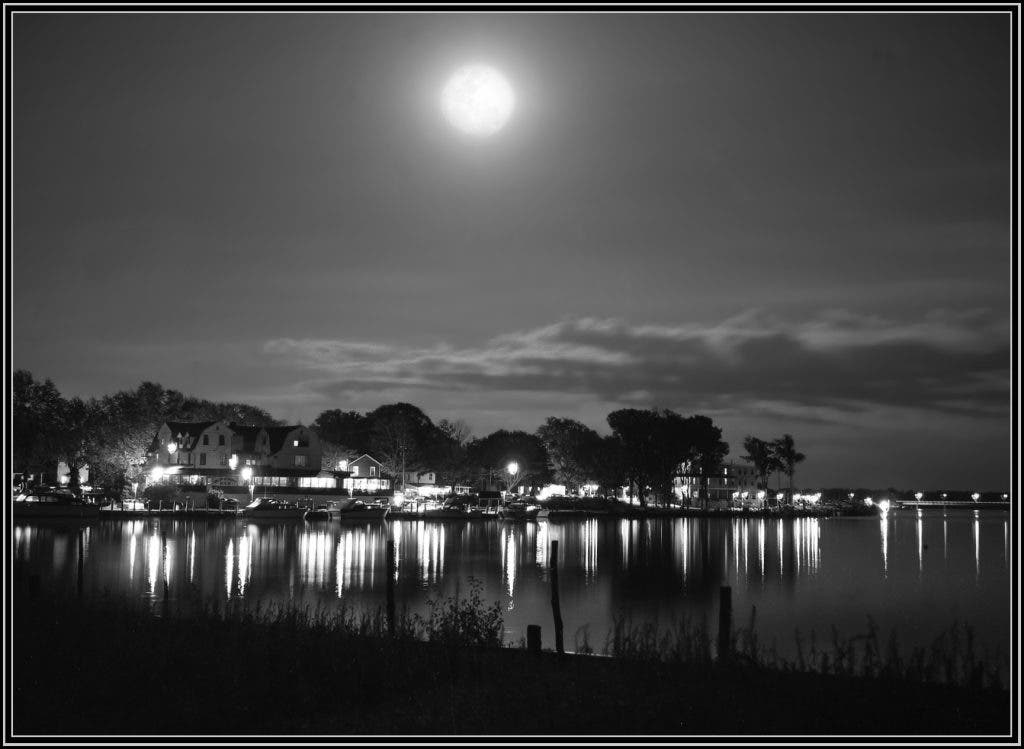
You can capture dramatic nighttime photos with your digital camera. Have a question about photography? Email Maury Griffith at info@con2000.com. He will answer select questions in future blog posts.
"How did you do that?" As an amateur magician, I get that question frequently. But I understand why the mystery of illusions needs to be something for most of us to wonder about. But as a photographer, when I am told, "What an awesome photo!" and then asked "What kind of camera did you use?", I never answer with the make and model of my camera. I frequently ask the inquirer if they would comment to an artist, "What an awesome painting! What kind of brush did you use?"
I'm not sharing the secrets of my illusions, but, as a photography instructor, I am very willing to share some secrets of good photography. Not that a good camera (or a good paintbrush) doesn't make a difference, but any of today's modern digital cameras can produce photos that wow. The basic ingredients are camera setting, composition, and the patience to take the time to properly capture that image.
Some of the most dramatic photographs are those taken at night, but few of us take photos in the dark. If you try, you may be surprised at the results. Here are my tips for capturing images at night:
Find out what's happening in Land O' Lakesfor free with the latest updates from Patch.
1. Pick a good subject. Fireworks are a favorite. Neon lights can be very impressive. City lights and county fairs offer night photo opportunities. Turn on the lights in your house and try a shot from the street.
2. Use a tripod. For good depth of field and low noise, you need a long exposure. A tripod is essential for time exposures.
Find out what's happening in Land O' Lakesfor free with the latest updates from Patch.
3. Turn your flash off. Your flash is generally not effective for night photography.
4. Don't use auto-exposure. Use your manual settings. Your light meter will expose for an average gray image. If your camera doesn't provide manual settings, use your nighttime scene setting.
5. Use a low ISO sensitivity setting. This will require longer exposure times, but nighttime photos are prone to high noise anyway and the use of a low ISO setting will reduce it.
6. Try several different exposure settings. Exposure for night photography is more of an art than a science. Don't be afraid of trial and error. Check your image on your display, adjust, and shoot again - and again - and again.
7. Bring a small flashlight. You will be doing more manual setting of your camera controls and will likely need a light to see them.
8. Ignore the weather. Dress appropriately, but don't be afraid to shoot in the rain or snow. Get a rain cover for your camera.
9. Don't touch the shutter release button. This may cause camera movement or vibration. Use a remote shutter release or self-timer. For SLRs, use the mirror lock-up option.
10. Focus manually. Your autofocus may not operate well in dim light. If it doesn't, don't hesitate to switch to manual focus.
11. Try shooting while there is still some daylight. Shooting at dusk or before sunrise may allow natural fill light and expose some details.
If you would like to learn more about digital photography and share ideas with other photo enthusiasts, join our Thursday night classes at the Land O' Lakes Community Center. The next class is March 29 when we will be discussing "Digital Images and Your Computer." Call 813-929-1229 or email info@con2000.com for more information.
Editor's note: Have a question about photography? Email Maury Griffith at info@con2000.com. He will answer select questions in future blog posts.