Community Corner
History Among The Headstones Of Mount Carmel Cemetery
Today, Mt. Carmel Cemetery is one of only four historic African-American cemeteries that still survive in Pasco County.
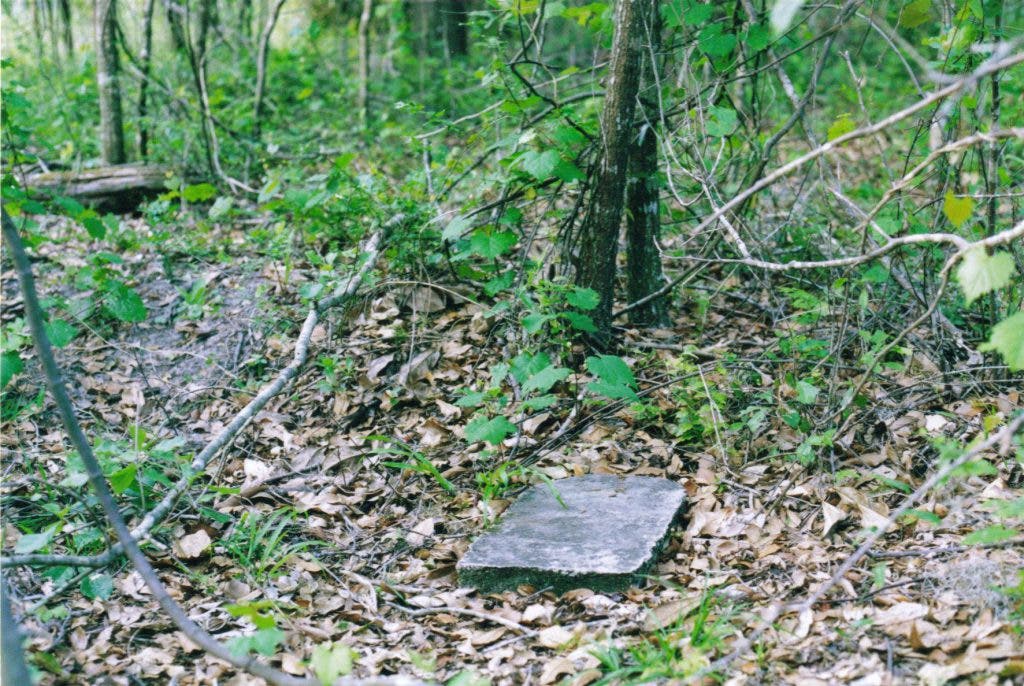


Located on the edge of a cow pasture in Land O’ Lakes, just off Ehren Cutoff Road, the historic Mount Carmel African-American Cemetery stands as a bleak reminder of the once active sawmill industry of Pasco County.
Approximately 1-acre in size, the cemetery, also known as the Ehren African-American Cemetery, was once part of a small community which sprang to life after the arrival of the Orange Belt Railroad to the area in 1888.
As the community grew, on November 28, 1889 ,local resident James J. Head applied to the postmaster general in Washington, D.C., to open a post office. He proposed to call the new office Ehren; the same name as the town’s new train station.
Find out what's happening in Land O' Lakesfor free with the latest updates from Patch.
According to the original application, Head indicated that his new post office would supply about 300 people with mail. On Jan. 17, 1890, his post office was granted.
For employment, residents of the small settlement mainly relied upon the area's turpentine stills and sawmills, which included the Gulf Cypress Lumber Company in the early to mid 1890s and the Ehren Pine Company in the mid to late 1890s, the latter owned by Frederick E. Mueller.
Find out what's happening in Land O' Lakesfor free with the latest updates from Patch.
Mueller’s Ehren sawmill soon became the center and principal employer of the community. By 1904, he is shown as owning at least 1,240 acres of land including the property now known as Mt. Carmel African-American Cemetery.
A portion of Mueller’s land contained what was considered the town-site of Ehren - complete with a commissary, hotel and company housing for his mill workers. Other lands containing the valuable pine and cypress were likely leased.
Typical of the times, the Ehren community was segregated with separate churches, schools, cemeteries, and housing for the respective white and black population.
Serving the African-American residents was the Mt. Carmel African Methodist Episcopal Church with its cemetery, and the Oak Grove Baptist Church with the Ehren Colored School situated next to it.
Although research has revealed a great deal of information about the sawmill town, there still remains that which we do not know.
The exact date the community’s Mt. Carmel Cemetery was established remains a mystery due to the absence of written records, although the earliest marked grave, the infant daughter of T. & M. Horton, is dated December 23, 1903.
Still evident on the property are also the remains of the small wood frame A.M.E. Church, from which the cemetery took its name. Records indicate that in 1909 Rev. J.S. Archie was assigned to the church. Other known ministers who served the small congregation include the Rev. Christopher Columbus Marshall and the Rev. Byrl Dawkins.
What we do know is that on March 28, 1920, the community suffered a great loss when the Ehren sawmill caught fire - started by high winds that carried hot brands from a nearby trash-pit fire. Within a few minutes, the sawmill was ablaze along with a large boarding house and two homes. Estimated losses were reported at $125,000.
Newspapers reported, “With the sawmill gone there is little left of Ehren, and its future depends largely upon whether Mr. Mueller and his associates rebuild or not.”
While it wasn’t the first fire at the mill, Mueller decided not to rebuild and afterwards the community began to decline.
Residents were forced to seek employment at mills in the nearby communities of Lutz, Odessa and Drexel. But, the Great Depression further strained the residents of Ehren and eventually, as the population began to dwindle, the Mt. Carmel Church closed.
By 1950, the small post office was relocated to a lot on U.S. 41, about six miles north of Lutz. This new location was locally known as Land O’ Lakes and on Sept. 1, 1950, the name of the office was officially changed.
Now serving as a community burial ground the last known interment at the Mt. Carmel Cemetery occurred in 1954 - the A.M.E. church was long gone by this time.
Following the 1950s, the historic cemetery fell into disrepair as families moved on and the lively days of Ehren became faded memories. Over the course of the next 30 years, the cemetery was allowed to return to nature and for a while was known as a local party spot.
County records show on May 23, 1985, the cemetery property was sold at auction for back taxes, the winning bid $1,900. Less than two months after the auction, on July 12, 1985, the new owners of the property quit claim deeded it to Pasco County, which still owns the land.
In January 1995, local volunteers led the first efforts to clean and preserve the historic cemetery. However, these efforts wouldn’t continue until 2005 when there was a renewed interest in the history of the cemetery and its residents.
When I first visited the cemetery in 2005, it was evident that it had not been cared for in some time. The underbrush was so thick it was extremely difficult to locate any of the headstones, and you certainly couldn’t find the remains of the old church. Cows from the nearby pastures had clearly taken shelter under a few of the moss covered oaks.
In September 2006, SDII Global conducted a ground penetrating radar survey of the cemetery. Results revealed approximately 40 graves, of which only seven were marked with traditional style headstones.
Since that time volunteer work has continued regularly under the stewardship of the Black Caucus of Pasco County, with support from other community organizations that have a common interest in preserving our history.
Eventually, caucus President Blanche Benford would like to see benches placed on the grounds, a pavilion built, a well dug, and other improvements made.
On June 20, 2009, the cemetery was officially designated a historic site by the county’s historic preservation committee and a historical marker erected - the first steps in Benford’s future vision for the site.
has been planned for June 18, 2011, from 8 a.m. to 2 p.m. and is being held in conjunction with local Juneteenth events. Volunteers are encouraged to attend.
Editor's note: Jeff Cannon is an author, local historian and director of the Pasco County Historical Preservation Society.