Crime & Safety
Human Trafficking: Hidden in Suburbia
Watchful neighbors are on the front lines in a fight to weed out these modern-day slavers.


Editor's Note: Each weekend, Patch shares a story sparking conversations beyond one town.
A teenage girl walking down the street in nothing but a bra and panties raised alarm bells for residents of suburban Lutz, Fla. The 13-year-old was a human trafficking victim from Maryland, brought to Florida.
Neighbors who spotted the girl wandering in nothing but her underwear on a fall day in 2010 alerted authorities, officials say.
Find out what's happening in Land O' Lakesfor free with the latest updates from Patch.
“The red flag was the neighbors,” Pacso County Sheriff’s Detective D. Boyer told Patch, pointing out the need for residents to report suspicious activity.
It was tips, again, that led to the arrest earlier this month of a man accused of using his home as a base of operations for human trafficking and prostitution, with at least eight victims identified.
Find out what's happening in Land O' Lakesfor free with the latest updates from Patch.
Pasco County Detective Siobhan Maseda began looking into the actions of Clent Ruffin, 59, in August 2015 after receiving information from concerned residents, she said. Other detectives investigating Ruffin on heroin-related charges also offered insights.
Of the eight victims identified victims, only four could be located or would even agree to speak in the case, Maseda said.
“The problem arises because these women do not see themselves as victims,” Maseda said. “They form an almost ‘Stockholm syndrome.’”
Drugs, Maseda said, are often used to manipulate victims. “Most are younger women and easily exploited,” she explained. “They think they are not victims because they choose to do the drugs, but don’t see how strong the addiction is and how it is being used against them.”
That is precisely what Ruffin has been accused of doing. The sheriff’s office has said Ruffin recruited victims from local strip clubs and harbored them at his Polk Street home in New Port Richey.
What makes the case human trafficking and not prostitution?
“(Ruffin) provided heroin for the purpose of coercion for commercial sexual activity, to wit: prostitution and sexually explicit performances,” Maseda said. “(He) knowingly drove the various victims to meet with customers for commercial sexual activity, and would receive any money made from these acts. The monies were used to satisfy continuous debts owed to the defendant.”
At least two of the victims identified said they had sexual relations with Ruffin or performed acts in front of him in exchange for heroin, Maseda said.
Ruffin’s arrest was announced May 11. While the investigation is still active, he has been formally charged with human trafficking. He also faces a number of drug-related charges including possession of cocaine and marijuana. Detectives also charged him with trafficking in heroin, morphine, opium and hydromorphone.
More Weekend Reads:
- Two Teachers Gunned Down by Their Partners
- Prince's Final Days: From Atlanta to Paisley Park
- Hot Car Death: Father's Mistake or Murder?
What is Human Trafficking?
“Here in this country, people are being bought, sold, and smuggled like modern-day slaves, often beaten, starved, and forced to work as prostitutes or to take jobs as migrant, domestic, restaurant, or factory workers with little or no pay,” the FBI explains on its website.
The FBI says human trafficking cases in the United States tend to fall into four different investigative areas:
- Domestic sex trafficking of adults – This involves adults who are compelled to engage in commercial sex acts, generally through force, fraud or coercion
- Sex trafficking of international adults and children – This involves foreign nationals who are brought into the country for the purpose of engaging in commercial sex acts
- Forced labor – This type of trafficking involves American citizens or foreign nationals who are made to perform work through force or coercion
- Domestic servitude – Trafficking of this type involves forcing or coercing citizens or foreign nationals to perform domestic work for households or families
How Big is the Problem?
The question isn’t as easy to answer as it might sound, law enforcement officials say.
The Florida Coalition Against Human Trafficking estimates there are 20.9 million people “enslaved throughout the world.” The National Human Trafficking Resource Center estimates it’s received 25,791 case reports since 2007. But, trying to pinpoint a set number of victims within America or even Florida or Tampa Bay just isn’t simple, authorities say.
“We don’t know,” said Florida Department of Law Enforcement Special Agent Jose A. Ramirez. “There’s no way to know today how many cases we have or are suspected to have in our state.”
Compiling accurate numbers is difficult, Ramirez said. The waters become muddied in doing so because different jurisdictions may define human trafficking differently. Stats available on the national level, he said, are skewed.
One such statistic states that Florida is No. 3 in the nation for human trafficking. That statistic is “a little inaccurate,” said Major David Dalton of the Clearwater Police Department. “That statistic is related to the number of tips.”
Florida and the Tampa Bay area, Dalton said, have been on the “forefront of the effort” to fight human trafficking. The Clearwater/Tampa Bay Area Task Force On Human Trafficking was founded by the Clearwater Police Department and other agencies back in 2006. The task force, which now covers seven counties, including Pinellas, Pasco, Hillsborough, Manatee and Sarasota, made awareness a priority from Day One.
That priority pays off with tips, but considering that No. 3 ranking, “we’re a little bit a victim of our own success,” Dalton said.
The human trafficking resource center, which serves as a clearinghouse for tips, has fielded 7,272 calls from Florida since 2007, resulting in 1,907 cases. So far in 2016, it has received 453 calls from the state with 136 human trafficking cases reported this year.
Dalton explained that “tips” may not necessarily lead to bona fide cases. Yet, they remain very important to law enforcement.
“We’ve almost always developed these cases through informants or citizen tips,” he said.
Dalton would rather investigate a tip and find out that it’s not human trafficking than not receive a tip that may have helped law enforcement recover a victim or victims.
When and Where to Report Suspicions
Anytime someone sees something that just doesn’t look or feel right, Dalton said it might be worth calling in a tip. In some cases, human trafficking victims can be very hard to identify – especially since many don’t see themselves as victims, Maseda pointed out.
Even so, Dalton stresses, “If you think something isn’t right, report it. That’s why we’re here. It’s our community, too. We’re happy to look into it.”
Maseda wholeheartedly agrees.
“I believe authorities should be notified any time a citizen sees something that concerns them.”
Human trafficking related tips can be called into local law enforcement agencies directly. The National Human Trafficking Resource Center also has a 24-hour-a-day hotline available at 1-888-373-7888.
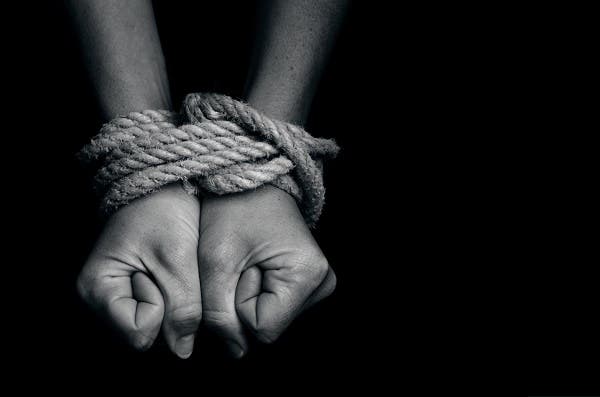
Image via Shutterstock
Get more local news delivered straight to your inbox. Sign up for free Patch newsletters and alerts.