Crime & Safety
‘John Doe Sand Key’ Identified 24 Years Later
The Northdale man's body was found in Clearwater, and his disappearance was solved by the Pasco County Sheriff's Office.




When a body was discovered floating off Clearwater Pass on Aug. 8, 1987, Pinellas County authorities were unable to determine who the person was.
The man was found after a week in the water. The medical examiner ruled it suicide by drowning, although both of the man’s wrists had been deeply slit.
Not able to do more, Pinellas County laid “John Doe Sand Key” to rest.
Find out what's happening in Land O' Lakesfor free with the latest updates from Patch.
Twenty-four years later, a cold case detective from the Pasco County Sheriff’s Office was able to close the case.
The Pasco Connection
Find out what's happening in Land O' Lakesfor free with the latest updates from Patch.
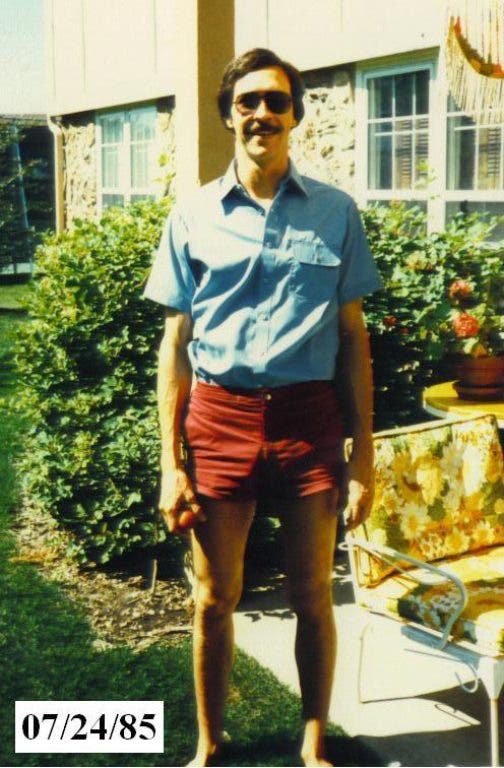
Gregory Greco moved to the Tampa area from Wisconsin in 1984 at the age of 33. He was a graduate of the University of Wisconsin and held a master’s from the University of Montpellier in France.
Described by officials from the Pasco County Sheriff’s Office as a “world traveler,” Greco worked for the Tampa Cigar Company and lived in the Lakes of Northdale.
Greco’s father, Michael Sr., had a home in Port Richey that he lived in seasonally. When Michael Sr. returned to Port Richey in the fall of 1987, he found Gregory’s car and a note that said, “I’ll be in touch.”
Assuming his son had decided to travel abroad, he thought little about the note or the car that was left behind, Pasco Detective David Boyer said during a Sept. 9 press conference.
Gregory, however, wasn’t traveling abroad, and he was never heard from again.
On the Trail
Believing Gregory had moved out of the country and started a new life, family members didn’t report him missing.
That remained the case until June 2010, when Gregory’s brother Michael Jr. contacted Rose Sacchetti, a regional senior specialist for the National Missing and Unidentified Persons System, NamUS.gov.
Since Gregory’s car was left behind in Pasco County, Sacchetti contacted Boyer at the sheriff’s office. A case was opened, and Boyer began looking into the disappearance.
At first, he admitted, he thought the family’s hunch that Gregory had left the country might be right. The more he dug into the case, however, the more it seemed likely that Gregory had never left America.
Using the NamUS.gov database, Boyer began to search for unidentified bodies that fit the criteria surrounding the Gregory Greco case.
“(It) automatically populated 388 possible matches,” Boyer said.
Undaunted, he kept narrowing down the search. The NamUS system finally returned a Clearwater unidentified person case that bore similarities to Gregory Greco.
Thinking he was on to something, Boyer asked for DNA samples from both Michael Sr. and Jr. Pinellas County authorities exhumed the body of “John Doe Siesta Key” and took a DNA sample from a femur bone.
About three weeks ago, the University of North Texas Center for Human Identification confirmed a match between the Grecos and “John Doe,” Boyer said.
Boyer contacted Michael Jr. immediately. Michael Sr., now 90, was contacted a few days ago.
Boyer said the family is still coming to grips with the death of Gregory.
“At first, the family wished they hadn’t dug this up,” he said. “In follow up conversations, they’re more and more coming to a sense of closure.”
Boyer said he’s glad he was able to close the case, but wishes the outcome had been different.
“I hoped I’d be able to track Gregory down and that he had gone overseas,” he said. “Based on his history,” that wasn’t out of the realm of possibilities.
As to the question of why Gregory Greco committed suicide, Boyer said, “I believe that question will always remain unsolved.”
About NamUS
NamUS.gov is a grant-funded program through the National Institute of Justice. The NamUS database is accessible to anyone and is designed to enable family members, law enforcement and medical examiners to create profiles for missing persons and unidentified body cases. The system can then be used to search for potential matches, which is what Boyer did. He describes it like a "Facebook" for missing persons cases.
NamUS went online in 2009. So far, the database has helped close about 200 cases nationwide, Sacchetti said.
The grant that funds NamUS is currently up for renewal. If it is approved on the federal level, the Largo-based operation will be able to continue to provide free matching services to law enforcement, medical examiners and families from all over the country.
For more information, visit the NamUS site online.
Get more local news delivered straight to your inbox. Sign up for free Patch newsletters and alerts.