Kids & Family
Solar Eclipse Wows Miami
Patch brings you our exclusive photo gallery of the 2017 Great American Eclipse in Miami.


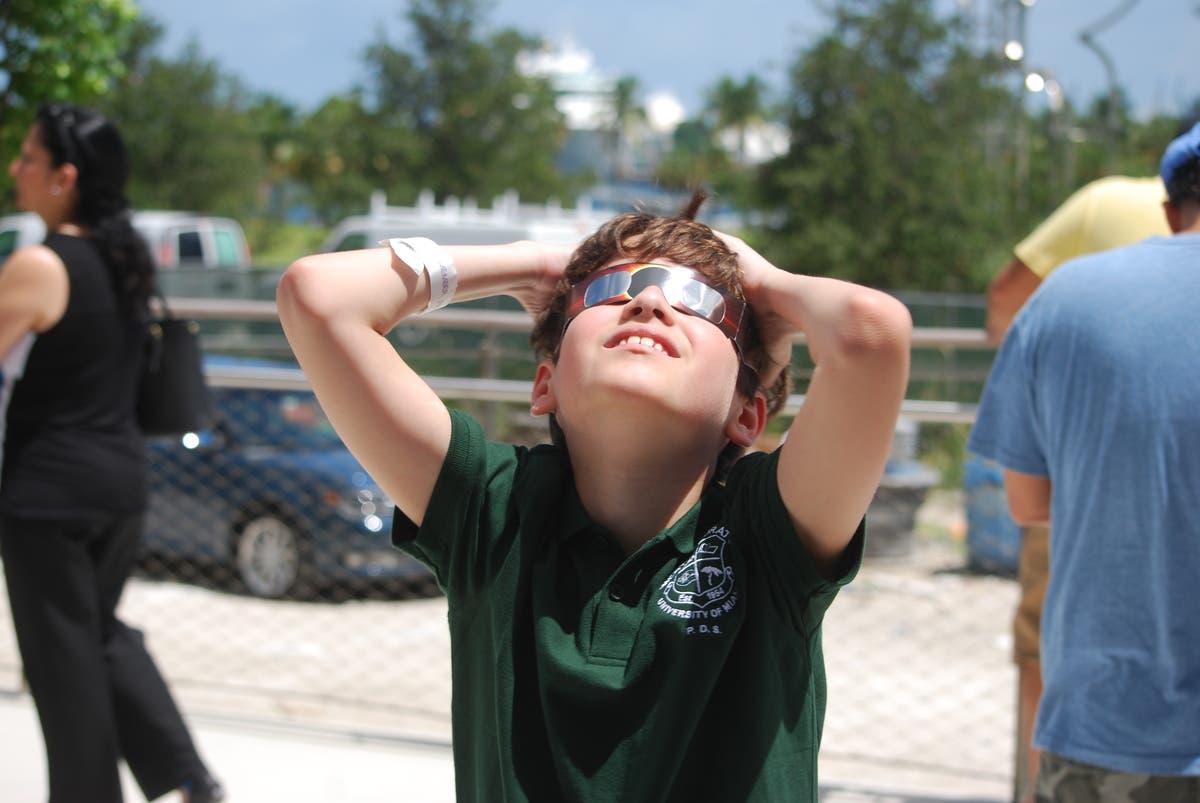


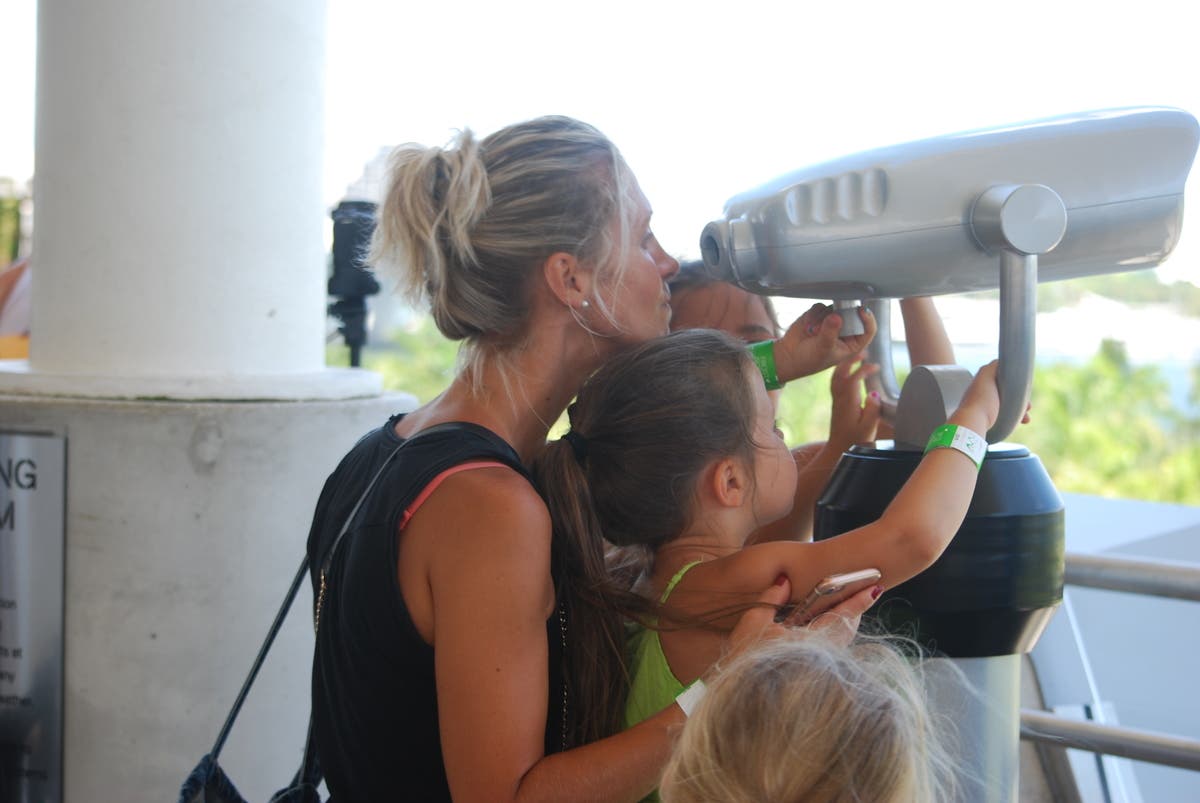


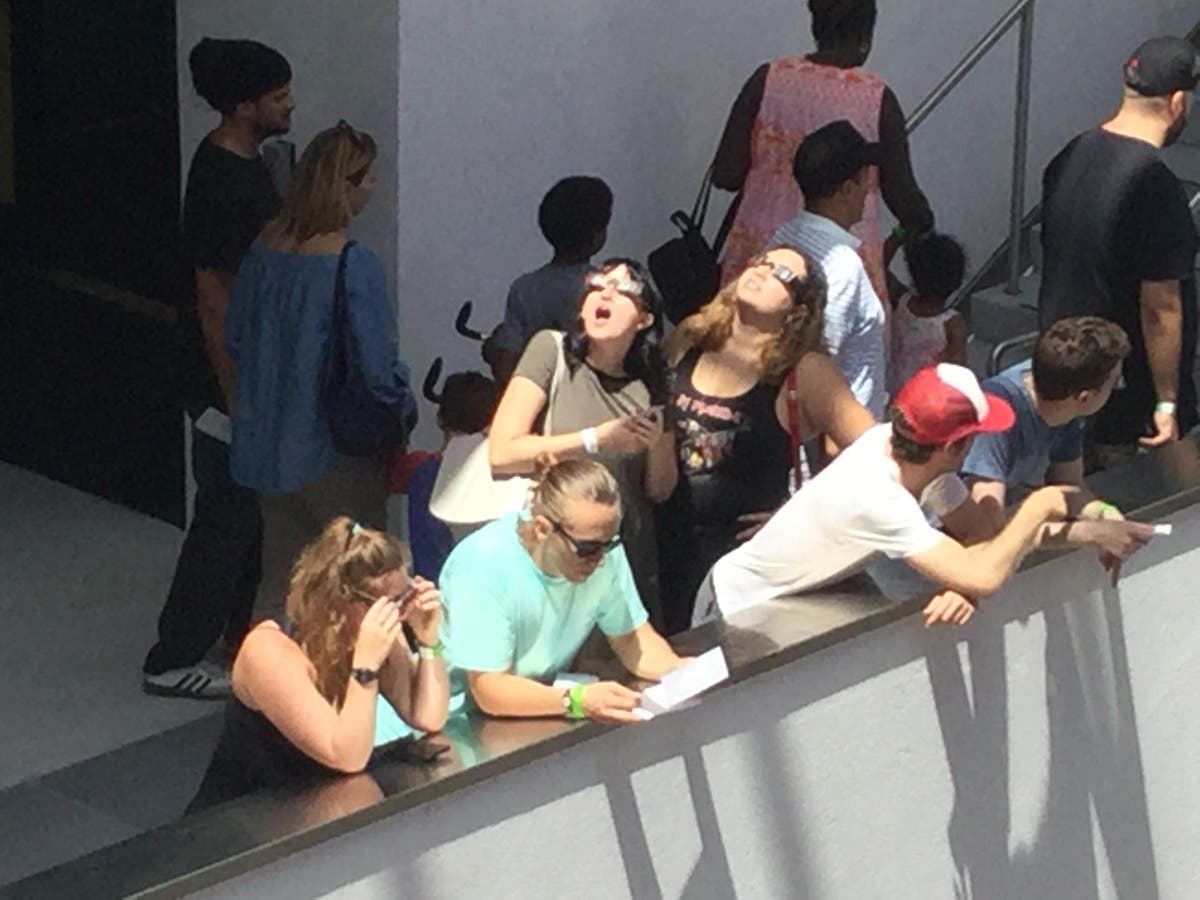
MIAMI, FL — The Great American Eclipse wowed thousands in the Miami area as people flocked downtown to watch the spectacle unfold high above the Phillip and Patricia Frost Museum of Science and other locations. With South Florida's relatively flat geography, there were lots of great places to see the celestial spectacle on Aug. 21. But if you missed Monday's show, the next performance won't be until April 8, 2024.
Frost Science Museum reported that about 6,000 people arrived by morning to view the afternoon eclipse. At one point officials had to temporarily stop accepting visitors. (Sign up for our free Daily Newsletters and Breaking News Alerts for the Miami Patch.)
Lindsay Bartholomew, director of technology and youth development with the museum said that even she was in awe of the spectacle.
Find out what's happening in Miamifor free with the latest updates from Patch.
"I knew what I was going to see and I still gasped when I looked up at it the first time," she told Patch. "The last solar eclipse that went across the United States was 99 years ago. It's so exciting for us to see the excitement around this. I think it's inspiring the next generation of scientists right now."
Now that the eclipse has passed, it's probably okay to mention that it's never a good idea to look straight into the sun, not just during an eclipse.
Find out what's happening in Miamifor free with the latest updates from Patch.
"Whether it's yesterday, today or tomorrow it's always dangerous to look," explained Bartholomew, who said that eye damage can occur in a second. "I think it's more of a problem today because people are more interested to look at the sun than they would be otherwise."
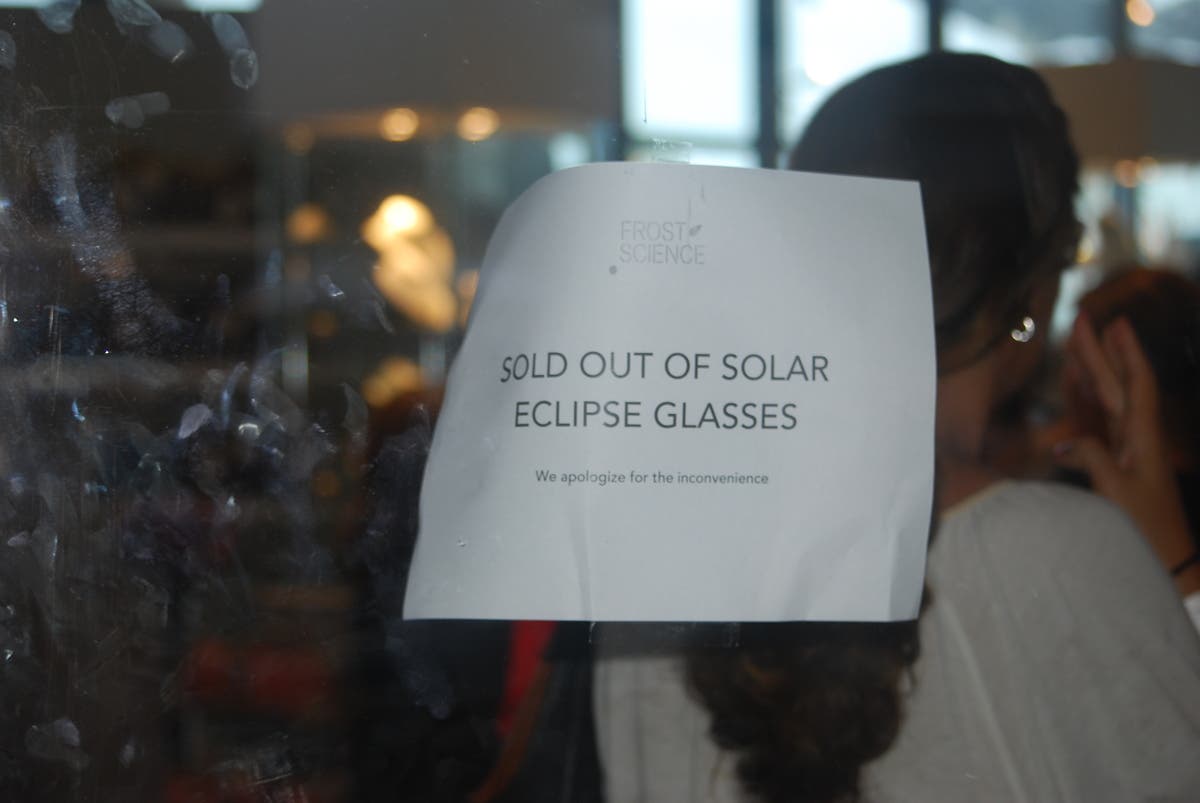
The museum had given away thousands of pairs of glasses by the time the eclipse got underway in the Miami area at 1:26 p.m. Many people were content to watch from the plaza and some purchased glasses from a young boy who managed to score a supply. Even the museum gift shop ran out and had to post a sign.
"It was hysterical. Twenty dollars for one pair," lamented Anna Robiou of South Miami, who said that she gladly paid the child — at least for one pair. She and her children took turns looking through the paper glasses. "I didn't know what to expect. I thought it was going to be total darkness."
Anna Fernandez was also surprised by what she saw through the glasses. "It was orange like you would never see the sun," she told Patch, adding that her children enjoyed the experience. "It beats being stuck in school all day."
"The coolest part is when the clouds went over it," added 13-year-old Miranda Navarro of El Portal.
Eleven-year-old Sophia was visiting the Miami area from Venezuela along with her nine-year-old sister, Samantha, and their parents.
"I got to see the sun that looked like the moon," she said with a big smile. "It was a fun experience."
Miami-Dade County Schools spokeswoman Daisy Gonzalez said that the district chose not to alter its dismissal times for the eclipse on what was the opening day of classes. Officials planned to move most outdoor classes and activities inside between the hours of 1 p.m. to 4:30 p.m. This included physical education, recess after-care programs, sports, band practice, field trips and extra-curricular activities. Some "safe"activities continued outside as planned.
School officials asked parents to speak with their children about the dangers of looking at the sun, especially if they were planning to walk home from school
Catholic school students in the Miami area had the afternoon off to watch the eclipse with their families.
Some 20 astronomy club members and alumni watched the eclipse with a series of telescopes modified to safely observe the phenomenon at Belen Jesuit Preparatory School. This event was not open to the public.
Belen is one of only a few schools in South Florida with an observatory. It has an array of 11 telescopes, and is the only school in the United States equipped with a 16” telescope with a digital camera for astrophotography. The observatory was accessible only to Belen’s student astronomers and faculty during the eclipse.
The maximum eclipse was visible in the Miami area at 2:58 p.m.
"Anyone within the path of totality can see one of nature’s most awe inspiring sights — a total solar eclipse," promised NASA's special eclipse website leading up to Monday. "This path, where the moon will completely cover the sun and the sun's tenuous atmosphere — the corona — can be seen, will stretch from Salem, Oregon to Charleston, South Carolina."
Here was the hour-by-hour weather forecast for Miami, according to Darksky.net:
- 12 p.m. - Mostly cloudy, 90 degrees, chance of precipitation: 0 percent. Wind 13 mph from the E.
- 1 p.m. - Partly cloudy, 90 degrees, chance of precipitation: 0 percent. Wind 13 mph from the E.
- 2 p.m. - Mostly cloudy, 90 degrees, chance of precipitation: 0 percent. Wind 14 mph from the E.
- 3 p.m. - Partly cloudy, 90 degrees chance of precipitation: 0 percent. Wind 14 mph from the ENE.
- 4 p.m. - Partly cloudy, 90 degrees, chance of precipitation: 0 percent. Wind 14 mph from the ENE.
NASA said that people viewing the eclipse outside of this path were still able to see a partial solar eclipse where the moon covered only part of the sun's disk. Click here to see the path of the 2017 total solar eclipse on NASA's website.
The Phillip and Patricia Frost Museum of Science held a watch party from 1:20 p.m. to 4:20 p.m. on the museum's Science Plaza. The event was included with the normal price of admission along with the special protective glasses.
A solar eclipse occurs when the moon passes between the Earth and the sun, causing the moon to temporarily cast its shadow on Earth, according to Frost.
"Solar eclipses happen about twice a year — although not all of them are total — and total eclipses are only visible to those located in the path of the moon’s shadow as it crosses the Earth," Frost officials added.
The museum's Bartholomew said that many people wanted to know why solar eclipses are so infrequent.
"If the moon goes around the earth every month then why don't we get an eclipse every month," she said of the questions. "The answer of course is that the moon's orbit around the earth is tilted so it has to be in a real special alignment for it to be between the earth and the moon but not too high, and not too low."
FIU's free solar eclipse watch party took over the Stocker AstroScience Center from 12 p.m. to 3 p.m. at FIU. The on-campus observatory was open to the public and FIU astronomy faculty members were on hand to explain the astronomical phenomenon. Telescopes and a limited number of NASA-approved eclipse viewing glasses will be available.
Researchers in the College of Arts, Sciences & Education and the College of Engineering & Computing also seized this rare opportunity to examine the eclipse’s effect on solar energy.
The watch party was free and open to the community. Refreshments were provided
If you've come away from the Great American Eclipse with an astronomy bug, AT&T has compiled a list of apps that will help you navigate the final frontier.
- Solar Eclipse Timer: ($1.99) – This is the only “talking” timer app specifically for total solar eclipses. The app will get you into the path of the solar eclipse, and then with just two taps on your device, it will talk you through the eclipse. Voice countdowns guide you precisely to the four contact times of the eclipse. You also receive announcements at the proper times to tell you to observe for interesting things during the partial phases, such as the temperature drop, lighting changes, animal behavior and shadow bands. The app also tells you when it is safe to take your solar glasses off and then when you must put them back on. And, to practice on your photography for the big event, the app has a demo session that plays a totality movie synchronized with the timers.
- SkySafari 5: ($2.99) – SkySafari 5 shows you 119,000 stars, 220 of the best-know star clusters, nebulae, and galaxies in the sky, including all of the solar system’s major planets and moons, and more than 500 asteroids, comets and satellites. The app simulates the sky up to 10,000 years in the past or future.
- The Great Photo App: ($2.99) – The Great Photo App provides interactive photography lessons. You will learn about lighting, exposure, aperture, depth of field, white balancing, and much more. You also may want to check out this web site, www.photographyconcentrate.com. It provides an extensive guide on smartphone photography.
See why drivers had to be even more careful than usual during the eclipse:
See why eyewear was critical:
`
`
Photos at the Frost Science Museum by Paul Scicchitano
Get more local news delivered straight to your inbox. Sign up for free Patch newsletters and alerts.