Crime & Safety
Fast DNA Results Likely Coming To Your Town
Rapid DNA analysis can eliminate suspects from murder investigations, missing child cases and other difficult crimes in under 2 hours.


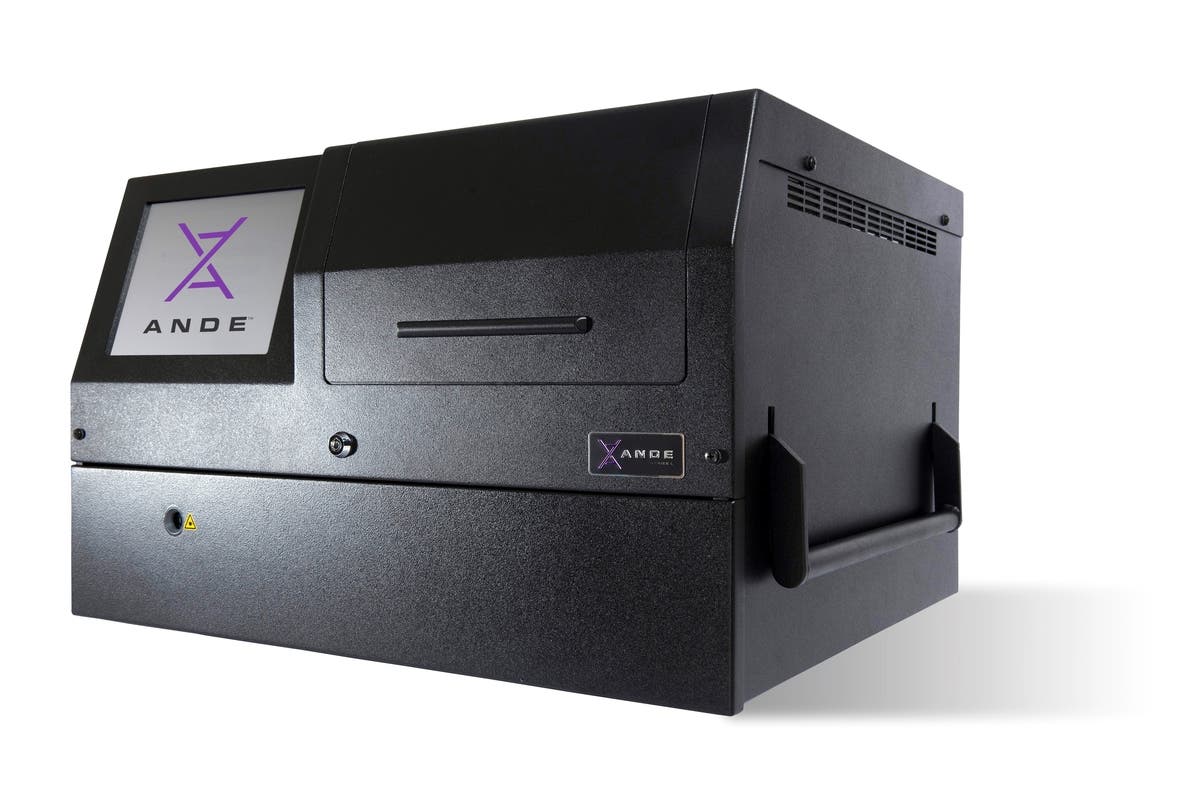
MIAMI BEACH, FL — When Miami Beach police recovered DNA evidence from a handgun believed to have been used in a Memorial Day shooting incident, they turned to a copier-like machine that has been sitting in the department's headquarters since April. In about 90 minutes officers had a match with a man who had been taken into custody on other evidence. The process took only a fraction of the time it would have ordinarily taken to obtain such results from the county crime lab.
This is not science fiction but part of a year-long test by Miami Beach police involving technology called rapid DNA analysis — a process that typically begins with a cheek swab that is then placed into a cartridge and slid into a machine about the size of an office copy machine. A DNA profile gets kicked out in approximately 90 minutes. (Sign up for our free Daily Newsletters and Breaking News Alerts for the Miami Beach Patch.)
Law enforcement officials say the use of such technology may in the very near future become a game changer in the way police departments of all sizes eliminate — or identify — suspects in murder investigations, missing child cases and other difficult crimes.
Find out what's happening in Miamifor free with the latest updates from Patch.
But given the relatively widespread availability that is projected, law enforcement experts believe that the same sophisticated DNA sampling that traditionally has been reserved for only the most consequential cases, will soon be put to work for automobile break-ins, thefts and other mundane offenses.
Find out what's happening in Miamifor free with the latest updates from Patch.
As a result, the technology has attracted its share of critics who fear that small DNA machines pose an enormous threat to privacy and may one day lead to a mass collection of DNA samples.
“This technology will change law enforcement over time," predicted Miami Beach Police Chief Daniel Oates, whose department is using ANDE Corporation's 6C Rapid DNA Analysis System. The machine has thus far proven impressive for its ability to quickly analyze DNA samples and help detectives process investigative leads. "We are thrilled to be testing it and to be collaborating with the Miami-Dade Crime Lab and the FBI to evaluate the best way to use rapid DNA analysis to solve crime as quickly as possible," the chief told Patch.
In addition to the Memorial Day shooting incident, Miami Beach police used the machine to match DNA found on an automobile gear shift in a hit-and-run accident investigation that involved the death of a pedestrian. As in the earlier case, the hit-and-run suspect had been taken into custody on the basis of other evidence, which is one of the ground rules of the Miami Beach pilot.
The department's Ernesto Rodriquez said that investigators are forbidden from basing their cases on rapid DNA technology.
"This is a secondary form of DNA testing,” Rodriguez emphasized. “Our first swab always goes to the crime lab and that’s what would be tested. And that’s what would actually be presented in court, not this rapid DNA portion. This is more of an investigative tool for our guys to follow up on leads."
Both houses of Congress recently passed legislation that is intended to remove statutory barriers to using rapid DNA analysis by local police in the same way that fingerprints have been used for decades.
Watch as then FBI Director James Comey testifies before a Senate committee on rapid DNA analysis:
"Currently, booking stations have to send their DNA samples off to state labs and wait weeks for the
results," according to the legislation approved by Congress. "This has created a backlog that impacts all criminal investigations using forensics, not just forensics used for identification purposes."
Officials anticipate that the use of rapid DNA technology will free up DNA profilers for more advanced forensic cases.
Ed Griffith of the Miami-Dade State Attorney's Office told Patch that he does not envision rapid DNA technology taking the place of traditional crime labs. "I would imagine that the primary source of DNA information — the lab determination — would always be the important piece of DNA evidence in a criminal case," he asserted.
In the case of ANDE's business model, police departments will be given machines without any up front cost. They will then pay for each test on a sliding scale that is comparable to traditional lab charges.
"ANDE provides answers in less than two hours. Most labs are currently overwhelmed — overloaded to a point they are turning away tests that might otherwise help investigations," company CEO George Heinrichs told Patch. "Backlogs in labs are frequently measured in months or years. As ANDE is deployed we expect the number of tests to increase substantially."
Heinrichs, whose company is headquartered in Waltham, Massachusetts, agrees that traditional labs will be better positioned to focus on difficult cases if police departments have their own DNA identification capability.
"We believe use of ANDE will ultimately result in substantial cost savings to police departments," he said. "On a per test basis, the cost for ANDE tests today is in the same range or lower than current lab costs."
Watch the product demo of the ANDE machine:
Image and demonstration video courtesy ANDE. Comey testimony courtesy of U.S. Senator Orrin Hatch (R-Utah), who sponsored legislation in the upper chamber to remove statutory impediments with respect to the use of rapid DNA analysis technology.
Get more local news delivered straight to your inbox. Sign up for free Patch newsletters and alerts.