Kids & Family
FIU App Targets Language Gap for Hispanic Babies
An FIU professor has developed an app called Háblame Bebé that hopes to close the language gap among Hispanic babies.


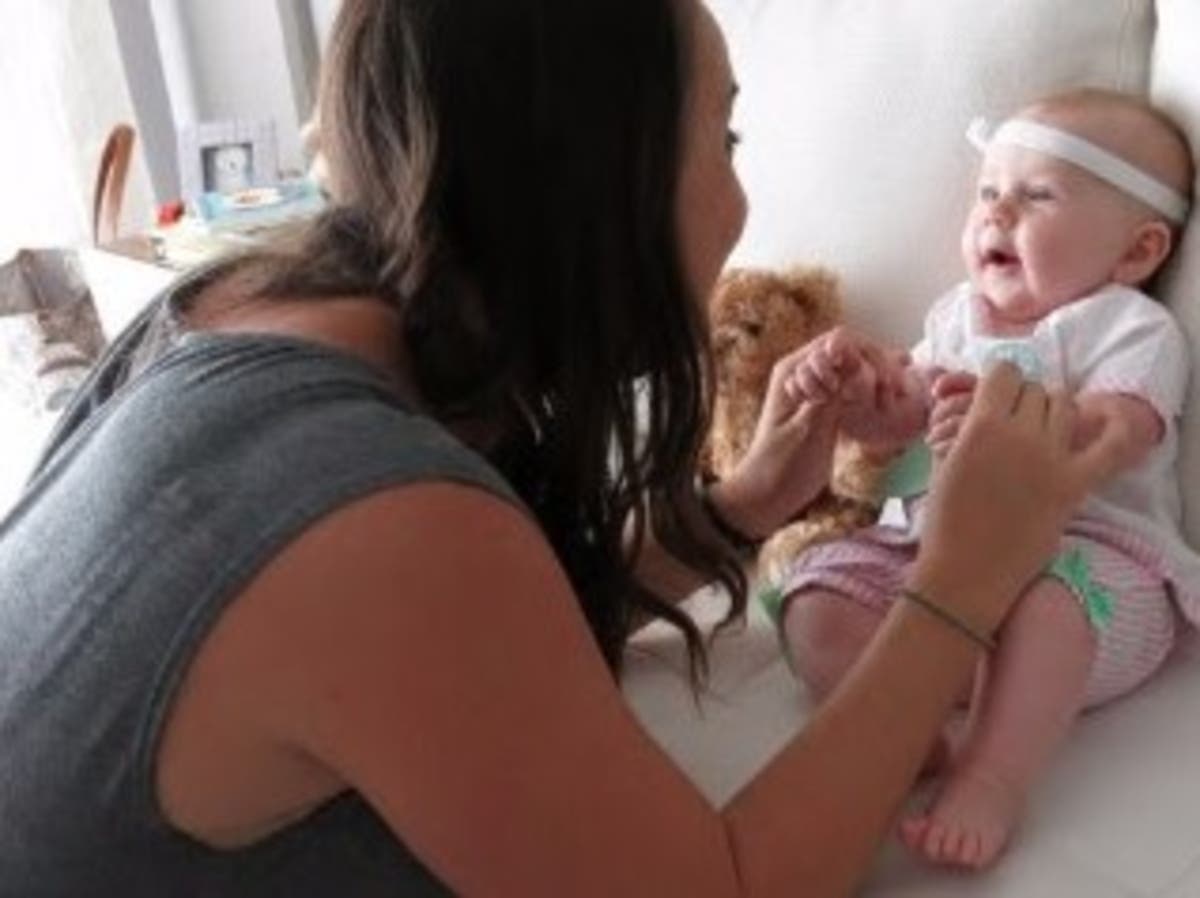
MIAMI, FL — Responding to a gap in the language skills of low-income Hispanic babies, an FIU professor has developed a new app to help parents track and improve their child’s vocabulary growth. The app is called Háblame Bebé, which is intended to help the problem. The app was selected from more than 100 entries across the United States to receive $75,000 in funding through the U.S. Health Resources and Services Administration.
The app, which literally translates into "Talk to Me Baby," will be funded through the Bridging the Word Gap Challenge, to support technology that improves early language development among low-income children. It will be available for free download later this year. (Sign up for our free Daily Newsletters and Breaking News Alerts for the Miami Patch.)
"When we talk to babies, we are growing neuronal connections in their brains,” said Melissa Baralt, an associate professor in FIU's Department of Modern Languages, who developed the app. “We must begin talking to infants as early as possible, even as early as the prenatal period. As parents are with babies in the most critical early months, they are baby’s first and best teachers."
Find out what's happening in Miamifor free with the latest updates from Patch.
Children from low-income families hear 30 million fewer words than those from higher-income families, according to FIU. This “word gap” widens over time and can have serious consequences for a child’s language proficiency, academic performance and, ultimately, career success.
To reduce the word gap among Hispanic children and promote bilingualism, FIU professor Baralt created a Háblame Bebé to help parents track and improve their child’s vocabulary growth.
Baralt, an affiliated faculty member in FIU’s Center for Children and Families, chose to focus on Hispanic children because of the benefits of bilingualism in linguistic development. In her research in Miami-Dade County daycare centers, she noticed that Spanish-speaking caregivers spoke only in English to children.
Encouraging parents and caregivers to speak to children in their native language can decrease the word gap and improve vocabulary, according to Baralt. Hers was the only project in the word gap challenge to focus on a minority population.
Háblame Bebé gives parents 20 daily routines to engage in “language nutrition,” or language-rich interactions, with their children, such as talking to the baby, narrating what is happening around the child and using varied syntax and words.
FIU said that the app includes a daily talk time tool to allow users to track the total time a child talks in Spanish and English. Users can rate and track what words the baby knows at various developmental stages. They also can share the baby’s progress through social media.
Ashley Darcy-Mahoney, a neonatal nurse practitioner from George Washington University, and Natalie Brito, a psychologist from Columbia University, also collaborated on the project. Háblame Bebé is similar to an English-only app developed in Atlanta called Talk With Me Baby, that targets public health workers, nurses and educators.
To view a demo of the app, click here. To learn more, follow Háblame Bebé on Facebook.
Find out what's happening in Miamifor free with the latest updates from Patch.
Photo courtesy of Florida International University
Get more local news delivered straight to your inbox. Sign up for free Patch newsletters and alerts.