Community Corner
Frost Museum's New Exhibit Blasts Off for Space
Frost Museum of Science welcomes 'Space: An Out-of-Gravity Experience' as a new interactive journey through the final frontier.


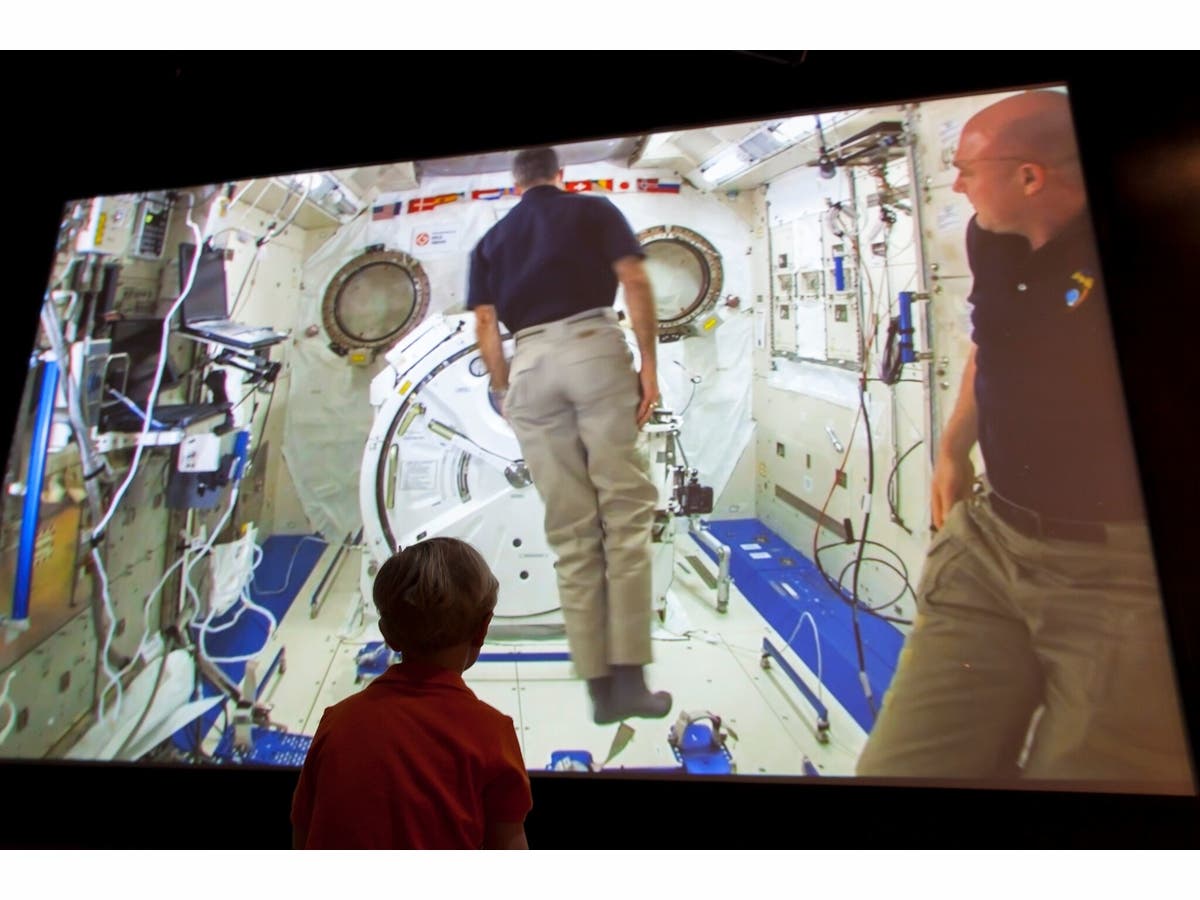
MIAMI, FL — The Phillip and Patricia Frost Museum of Science welcomes 'Space: An Out-of-Gravity Experience' on Saturday as a new interactive journey through the final frontier. Guests will get a glimpse of the challenges and triumphs of space exploration. The exhibit runs through Sunday, Sept. 10.
Museum officials said that the interactive exhibit is intended to show the extraordinary conditions of space exploration and the science that makes it successful. (Sign up for our free Daily Newsletters and Breaking News Alerts for the Miami Patch.)
"What lies ahead for human space flight? And what does it mean for life on Earth? Discover what is possible and what awaits in orbit and beyond," according to museum officials.
Find out what's happening in Miamifor free with the latest updates from Patch.
The exhibit was designed and developed by the Science Museum of Minnesota in partnership with the International Space Station Office of NASA’s Johnson Space Center, the California Science Center and partner museums.
Find out what's happening in Miamifor free with the latest updates from Patch.
Admission is included with museum tickets. Visit frostscience.org/space.
Highlights of the space exhibit include:
- Interactive and multimedia experiences: Touch graphics, vacuum bell jar, meteoroid shields, historic videos and spacesuit objects, among others.
- Learning topics: Newton’s third law of motion, methods of traveling to and in space, ion model engines, earth from space projection, orbital physics and artificial gravity.
Did you know?
- The International Space Station (ISS) is an artificial satellite that is suitable for supporting human life. It is a collaborative project among space agencies from the United States, Russia, Canada, Japan, and Europe. It serves as a microgravity and space research laboratory in low Earth orbit.
- With its massive solar array, the International Space Station is as big as a football field — end zones included. But on the inside, it’s about the size of a five-bedroom house.
- The International Space Station maintains an orbit between 205-270 miles above Earth’s surface and coasts forward at 17,500 miles per hour. It orbits Earth approximately 15.53 times per day.
- Without Earth’s blanket-like atmosphere to moderate them, temperatures on opposite sides of a spacecraft can vary by 500 degrees.
- Since the ISS orbits Earth more than 15 times per day, the astronauts on board can’t rely on normal sunrises and sunsets to help set their schedules. On top of that, heavy workloads, excitement, and motion sickness can also make it difficult for astronauts to get a full night’s sleep.
- The food on board the ISS is carefully engineered to be compact, healthy and tasty. The weightlessness of space makes cooking impossible (imagine trying to chop a floating carrot!), so the meals provided to the ISS crew are prepared and ready to be heated up. They also often contain sticky sauces to help hold the food together and prevent crumbs, which can float into crew members’ eyes, noses, and sensitive equipment!
- On board the ISS, astronauts urinate into a funnel. Suction pulls the urine into a collecting system, and it is recycled into drinking water. When they go out on space walks, which can last for several hours, they wear “maximum absorption garments,” otherwise known as diapers.
- On Earth, we get exercise just by moving the weight of our bodies. Astronauts in space are weightless. They need to exercise for two hours every day to keep their bodies healthy.
- The human spine stretches in weightlessness. That means that astronauts can come home from a stint living in space a few inches taller, and with serious back pain. Scientists are developing a “skin suit” that could potentially help with this hazard of space living. It mimics gravity by pulling the shoulders towards the feet, compressing the spine and keeping muscles and bones strong.
Photo courtesy of the Phillip and Patricia Frost Museum of Science
Get more local news delivered straight to your inbox. Sign up for free Patch newsletters and alerts.