Politics & Government
Haitians Demand Immigration Reform In Wake Of Cleared Camp
South Florida leaders, banding together, are calling out the discrepancies in the treatment of Black migrants, the report states.
Sep 28, 2021
A makeshift encampment under the Del Rio International Bridge in Texas that temporarily housed thousands of mostly Haitian migrants just days ago was cleared out by U.S. officials over the weekend.
Find out what's happening in Miamifor free with the latest updates from Patch.
Now the fate of some of those migrants, including pregnant women and small children who survived the monthslong trek there through Central America, is dependent on what happens next.
The Haitian diaspora and allies, rallying in support of the migrants, are calling for swift action from the Biden administration to improve U.S. immigration policy and address the unfair treatment of Black migrants, all the while preparing to assist and receive the wave of migrants looking to connect with family in the states.
Find out what's happening in Miamifor free with the latest updates from Patch.
Representatives from the Haitian Bridge Alliance, a civic and social organization advocating for Haitian migrants, and the National Haitian American Elected Officials Network (NHAEON) have been on the ground since the start of the crisis. NHAEON raised at least $15,000 to cover hotel expenses and shuttle migrants to airports and other destinations.
Of the reported 15,000 migrants that journeyed to the Texas border, 2,000 have been repatriated and more than 12,000 await proceedings in the U.S. for asylum, according to Department of Homeland Security Secretary Alejandro Mayorkas. A total of 17 deportation flights to Haiti were arranged.
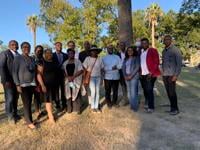
Haitian leaders from South Florida pose after a press conference in Texas addressing the Haitian migrant crisis.
(Courtesy of Kenny Felix)
Tuesday, NHAEON leaders held a press conference, requesting a list of the migrants released in order to start connecting migrants with pro bono immigration lawyers and provide additional assistance. They are also asking for an investigation into border patrol officers, and the end of Title 42.
“There is a respectful call for identification of human beings,” said Marie Flore Lindor-Latorture, an education professional and Haitian advocate who attended a protest last week on behalf of the migrants. “There are other Black people among the migrants who are not Haitian and are not being identified. Right now, there’s no way to track who was deported and who stayed.”
Other South Florida leaders who also have called out the discrepancies in the treatment of Black migrants are banding together to accumulate resources that could benefit the newly immigrated group.
“Haiti is not prepared for anyone being repatriated, it’s unconscionable,” said Congresswoman Frederica Wilson at a press conference she called last week, revealing plans to work with U.S. international development administrator Samantha Power to discuss legal avenues for immigration. “I’m not only concerned about the people [that were] at the border but also the people in Haiti who are victims of an earthquake, hurricane, political unrest and food (in)security.”

Rev. Kenny Felix, senior pastor of Bethel Evangelical Baptist Church in Miami Gardens, stands in front of a plane in Del Rio, Texas.
(Courtesy of Kenny Felix)
“We know that the bridge is cleared and that there’s no one there at the moment. Yes, [the border] is closed but the crisis is not over,” said Rev. Kenny Felix, senior pastor at Bethel Evangelical Baptist Church in Miami Gardens. “We want to continue to bring attention to the needs of the migrants. Unless there’s a significant change in the circumstances that led to this high migration, we will continue to see more of it.”
Sunday, Felix rounded up faith leaders, politicians and community activists for a call to action following a recent trip to the border last Thursday.
“We are working across denominational and faith lines to bring attention to the plight of our Haitian migrants,” he said. “The trip was an opportunity for the diaspora and advocates to strategize on how to respond to the crisis. We went there with the intention of getting a first look at what was happening.”
Like Felix, policy analyst and racial justice advocate Judy Lubin says the country is likely to see another wave of migrants. To avoid a repeat of what many witnessed with the government’s handling of the recent migrant crisis, there needs to be immigration reform.
“There has to be a strong commitment from the person on top so Congress has to act,” said Lubin, a Miami native and founder of the Center for Urban and Racial Equity. “Where we are right now is largely because Congress has not acted. We need to challenge the narrative about immigrants painted by one party that criminalizes migration.”
Lubin says change can start on the local level with leaders from the Haitian diaspora who share stories about their immigration journey and include their contributions to American society. Local politicians can also commit to not participating in the process to deport and detain immigrants in their cities.
“It’s critical to tell the story of families, what their hopes are and visions are,” she said.
That is why the diaspora is choosing to seek reform while meeting the immediate needs of the migrants, including demanding for the reinstatement of the Haitian Family Reunification Parole program and a stop in future deportations.
The call to action invites the creation of a national network of faith leaders, public servants, advocates and community members. The network is meant to provide lodging resources, financial and psychological support, access to legal advice and encourage policy to protect both Haitian and non-Haitian migrants.

Gepsie Metellus, executive director of Sant La Haitian Neighborhood Center, speaks at a press conference Thursday before departing for Texas.
(Johania Charles for The Miami Times)
Among the delegates who made the Texas trip were John Voltaire from the Florida Baptist Convention; District 108 Rep. Dotie Joseph; former North Miami Mayor Andre Pierre; Holy Family Catholic Church pastor Fitzner Bellonce; Notre Dame d’Haiti Catholic Church pastor Reginald Jean Mary; Family Action Network Movement executive director Marline Bastien; Sant La executive director Gepsie Metellus; an organizer from the Orlando-based Faith in Florida organization; and executive director of the Haitian Bridge Alliance, Guerline Jozef.
The trip, which was planned with guidance from Mayorkas and was meant to educate local efforts to aid the migrants, did not go as expected. The goal was to speak to migrants, provide translation support and ensure that they received fair treatment.
By the time the delegates arrived at the border late Friday, the area had already been cleared. Delegates were left with a site far different from what the world had witnessed through viral pictures. The little interaction that did take place with migrants happened in passing as many boarded flights at the airport.

A group of Haitian delegates meet with border patrol officers in Del Rio to discuss the Haitian migrant crisis and what happened to the asylum seekers who were camping under the bridge.
(Courtesy of Kenny Felix)
Some of the migrants mentioned having their belongings discarded by border patrol officers, had limited meals and clothing, and were only given foil blankets to stay warm inside the cold detention facilities. A father told one of the delegates that he had no choice but to ration the little he did receive so his child would not sleep hungry.
Migrants given the green light to remain in the U.S. for now headed to states like Florida, Massachusetts, New York and Indiana, relying on monetary support from Haitian American family members to secure plane tickets. Expensive hotel fares forced a few migrants to wait out their flight at the airport after being released from border control custody.
“What we saw at the airport were families not knowing where to go. They were given airline tickets but were not able to get to their flight and some still had issues with paperwork,” said Felix, revealing that he helped a few people locate their gate. “As some of these families are released, it’s clear that they need assistance from the Haitian diaspora, family and friends. A good majority of the people I saw were coming to South Florida.”
Local social service organizations are already preparing to meet their needs.
“For the past six months, we have been receiving clients paroled into the U.S. via the southern border. Our staff told me that our first client from Del Rio showed up on Friday while I was away,” said Metellus. “What Sant La does is assist those who are eligible in applying for Medicaid or food stamps. The rest is to ensure we connect them to clinics, especially pregnant women and those with children.”
Reinstating a similar program at the center during the U.S. arrival of Haitian migrants after the 2010 earthquake, Sant La will offer a series of orientation classes for migrants to adjust to their new environment and to familiarize them with the institutions they might come across.
“There’s got to be some intense counseling support too, to allow them to express what they’ve experienced,” added Metellus. “And we are going to come across the intense need for housing support; the best way to address that is to get family members to assist.”
Metellus says she is grateful to faith-based organizations that have already committed to join her efforts. She plans to provide stipends and distribute donated goods after launching a fundraiser.
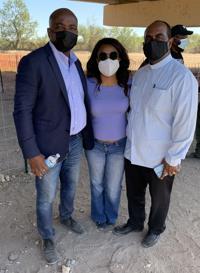
Rev. Kenny Felix, senior pastor of Bethel Evangelical Baptist Church in Miami Gardens, under the Del Rio International Bridge in Texas with Rep. Dotie Joseph and Father Reginald Jean-Mary of Notre Dame d'Haiti Catholic Church in Miami.
(Courtesy of Kenny Felix)
“There’s an urgency to not only provide supportive services but it’s also important to partner with professional organizations and institutions to support the migrants and guide them through the system,” she said. “Remember, these people traveled with just the clothes on their back.”
Sant La is currently welcoming donation items like clothes, baby supplies, toiletries and nonperishable food items.
“You really don’t have to be Haitian to support or to help,” said NHAEON member and North Miami Beach Commissioner Paule Villard, showing an interest in helping migrants connect with family members in the U.S. “I feel like it is a civic duty to really assist people with what’s going on right now. If I can sponsor one of the migrants, I definitely will.”
Felix says churches share a similar sense of obligation.
“When suffering occurs, and if we are people of faith or just people period, that should move us,” he said. “We cannot simply stand by. It's our obligation as a church to serve as advocates.”
The Miami Times is the largest Black-owned newspaper in the south serving Miami's Black community since 1923. The award-winning weekly is frequently recognized as the best Black newspaper in the country by the National Newspaper Publishers Association.