Community Corner
SPECIAL REPORT: License Plate Readers Help Miami Area Police, but May Pose Threat to Privacy
The increasingly popular technology is used in Miami Beach, Miami, Coral Gables and by the Florida Highway Patrol.


MIAMI BEACH — A city police officer was keeping watch over the thousands of tourists who flock to this urban beach town on an unusually cold, rainy day earlier this week when he got a hit on his laptop that a passing car had been flagged by a license plate reader as a likely stolen vehicle.
The officer, who was parked at 5 Street and Michigan Avenue, immediately summoned backup and within seconds the area was swarming with Miami Beach police officers.
“Thankfully, no one was seriously hurt,” Ernesto Rodriguez of the Miami Beach Police Department told Patch on Wednesday. One possible reason is that police had the benefit of knowing to approach the suspect’s vehicle with extreme caution because it had been flagged by the license plate reader mounted on the officer’s police vehicle.
Find out what's happening in Miamifor free with the latest updates from Patch.
“The outcome could have easily been different,” Rodriguez posited.
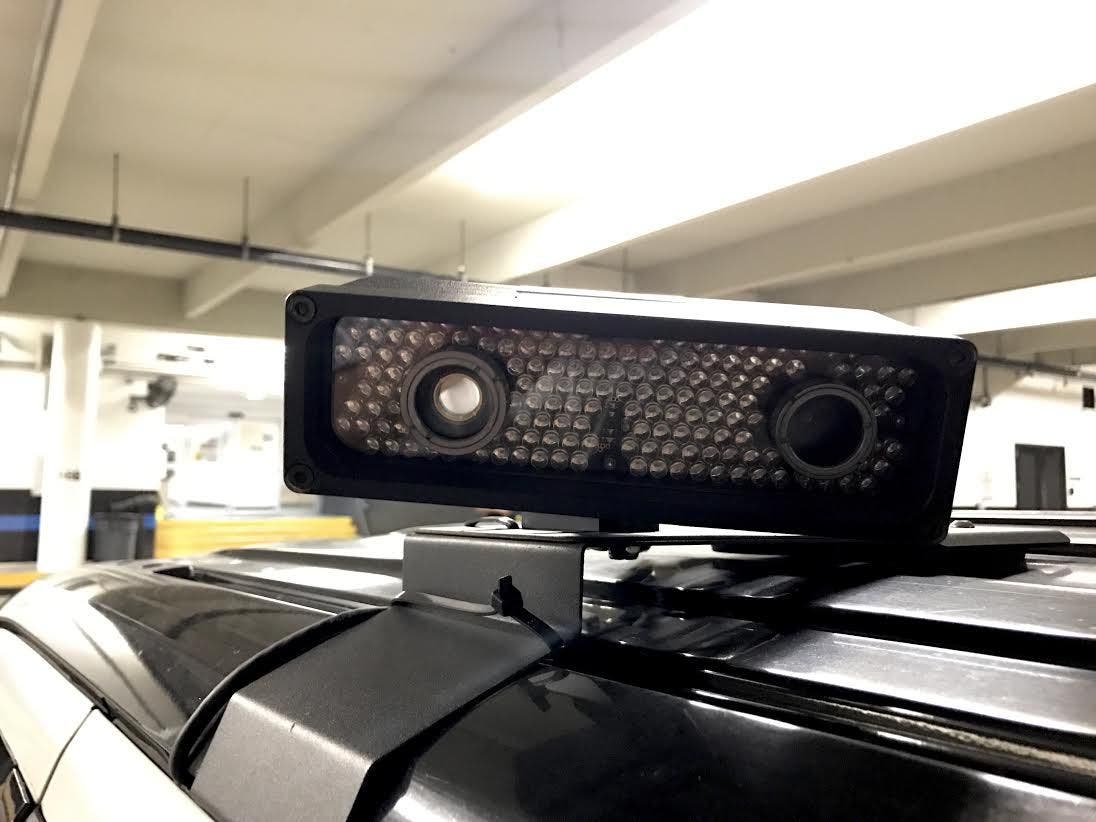
Sunday’s arrest highlights the growing use and interest in license plate readers by Miami area law enforcement agencies — essentially fixed or mounted devices that take an image of license plates when motorists pass by and then run those images through optical character recognition software.
Tag numbers are cross-referenced against the same law enforcement databases that officers access when they manually enter a license plate number, but in a fraction of the time and more of them than any one officer or group of officers could enter manually — lots more.
Find out what's happening in Miamifor free with the latest updates from Patch.

As Miami Beach police attempted to approach the driver at about 5:20 p.m. on Sunday, he abruptly took off, striking a bus and another vehicle in his botched getaway at 7 Street and Washington Avenue. Desperate to elude capture, he then started running along the busy South Beach commercial street.
When police finally caught up with the suspect, they learned that he was wanted by the FBI for an alleged bank robbery in New Jersey and by another law enforcement agency in Iowa for an alleged arson.
They recovered a stolen firearm in the ordeal.
Two women had to be taken to an area hospital as a result of the crash, but neither suffered life-threatening injuries.
Miami Beach police have eight such mobile devices as well as at least one fixed device on the Venetian Causeway. They hope to reach an agreement to mount two additional fixed devices on the six-lane MacArthur Causeway to downtown Miami and the 4.4-mile Julia Tuttle Causeway to Interstate 195.
Though law enforcement officials in the Miami area were quick to extol the benefits of such devices in interviews with Patch, some privacy experts fear that they might be used to disproportionately target low-income neighborhoods and erode the privacy of law-abiding citizens.
“There are legitimate uses for these tools, such as trying to identify a specific vehicle that was stolen or used in a crime, but unfortunately the data collected is usually not being limited to these legitimate uses,” cautioned Baylor Johnson of the American Civil Liberties Union in Miami. “Without proper safeguards, the default state of these surveillance tools is to collect and create enormous databases of automatically-harvested information on all of us — sometimes indefinitely.”
Johnson said that automatic license plate readers collect and store information on every single motorist that passes by its cameras.
In Miami Beach, the ACLU supports a proposed ordinance that would subject any new surveillance technology to a public hearing and vote.
“The goal is to make sure that the public knows about what policies are being put in place to guide the use of the technology and protect privacy, as well as to give the people’s elected representatives a voice in how these tools are being deployed,” he explained.
Police in Miami, Coral Gables and the Florida Highway Patrol told Patch that they employ similar technology around the Miami metropolitan area. Miami-Dade County police may also be using the technology, but they did not immediately respond to a request for information on Wednesday.
On Tuesday, Officer Kelly Denham of the Coral Gables Police Department spoke to a California man whose BMW was flagged by a license plate reader as being a likely stolen vehicle.
“We made sure it was taken out of the system,” Denham told Patch. The man said that his car was stolen at one time but recovered. The information never made it back into the national database that tracks stolen vehicles.
“Can you imagine if he’s pulled over by a police officer who thinks that car is stolen?” she wondered.
Unlike Miami Beach, which has limited access in and out of the city — mostly through its causeways — Coral Gables has the opposite problem.
“Our city is a cut-through city,” Denham acknowledged. That complicates the job of law enforcement in a city where much of the crime involves property. She said that Coral Gables police have three mounted devices on police vehicles, six fixed devices throughout the city and four mobile trailers that can be positioned in various locations as needed.
The trailers carry signs that alert motorists that their license tags are being recorded, not unlike the trailers and signs that tell motorists their speed. One trailer was purchased in 2014 at a cost of $38,185.
‘If we have a spike in crime somewhere, then we’ll move them up in that area,” she said of the mobile devices, adding that police have recovered a number of stolen vehicles that they might not otherwise have spotted through traditional policing methods.
Moreover, the devices have proven valuable to develop leads for crimes in which police did not otherwise have a suspect, or where they had only a partial description of the vehicle, something that is a dubious benefit in the eyes of privacy advocates.
“Even if you aren’t suspected of a crime, information collected about your movements can reveal many things about you, such as what people, doctors, political events, or even religious meetings you visit,” insisted the ACLU’s Johnson. “Clear regulations must be put in place to keep authorities from tracking our movements on a massive scale and from retaining the data from these scanners for long periods of time to ensure that they are only being used for legitimate law enforcement purposes.”
Without proper safeguards, Johnson said that such devices create “enormous databases” of information that can be held indefinitely by law enforcement agencies.
In Miami, Officer Christopher Bess confirmed that city police also use the technology.
“We have one SUV per district that our patrol guys utilize. They can check it in and out,” he said, noting that each of the specially equipped vehicles can capture license plate information in a 360-degree radius through a series of four cameras.
In addition to the SUVs in each of the three police districts — North, Central and South — the city also has a number of devices assigned to specialized units such as traffic homicide.
“They are used to make our city safe for vehicle or pedestrian traffic,” Bess explained. “They are used to identify stolen vehicles. It’s a great way to infuse technology with modern-day law enforcement.”
The Florida Highway Patrol has one or two patrol cars in the Miami area equipped with similar technology.
“Basically, it comes mounted on our patrol units and the devices read tags as the vehicle is in motion,” Lieutenant Yosdany Veloz said. “It’s good for the detection of stolen vehicles, expired tag registrations, tags not assigned, etc.”
The technology represents a huge advance from the days when Denham began her career in law enforcement more than two decades ago.
“The amount of data that it takes in every second, every minute is voluminous,” she said. “When I first started, we had to hand write our reports.”
Photos courtesy of Miami Beach Police Department
Get more local news delivered straight to your inbox. Sign up for free Patch newsletters and alerts.