Local Voices
Marko Dimitrijevic on Photography
From the birds of the sky to fish underwater, Marko Dimitrijevic gives photography tips he's learned along the way


Recently, a friend and I were talking gear. Really geeking out, truth be told on, about what is the best photo gear to pack for adventure photography.
The best gear is the kit that works for you. There are a lot of great cameras and lenses out there. Ihave been using Canon DLSRs for almost 20 years. Nikon makes great stuff and now Sony has come up with an excellent full frame camera. Each photographer has to try a variety of set ups and see what fits with them, and their budget.
Given that Canon’s not the most expensive gear out there (in 2016 the “award” for most expensive medium format DSLR went to the Hasselblad 5D 200MS at $44,000) nor is it the oldest camera company (that would be Kodak) and it’s not got the coolness cred of a Leica, the question is: why do I stick with Canon?
Find out what's happening in Miamifor free with the latest updates from Patch.
Part of the answer to that question is familiarity. I know how Canon gear operates. But there are also three other reasons I keep coming back to Canon: versatility, reliability and great lenses.
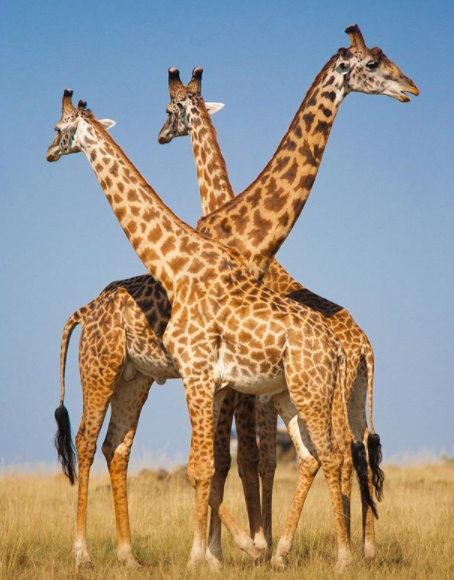
The Canon 5D Mark IV, which I use extensively, was hailed by Ken Rockwell as “the world's most universal DSLR.” So, I feel like I’m in good company when I say this is the camera body you want to pack no matter where you’re going and what you’re shooting. Portraits in plazas around the world? Check. Polar bears in the arctic? Check. Also (not in the Arctic) gorillas and big cats and giraffes.
Find out what's happening in Miamifor free with the latest updates from Patch.
Over the years I’ve also used the 5D, the 5DII and 5DIII; so, of course, the IV for me is a natural evolution. When photographing with the 5DS, which at 50 MP has amazing definition, I noticed that the dynamic range was much better on the Mark IV, not to mention that the speed at 7 fps is excellent.
About those great lenses—since, primarily, I’m a nature photographer, I need an excellent telephoto lens. My Canon EF 100-400mm f/4.5-5.6L IS II USM lives up to its reputation for great stabilization, so much so that I can shoot handheld (in dim light!) if needed at 400mm.
I also use the 24-105 f/4 II a lot. It’s versatile, going from portraits to landscape and anything in between. Plus, it’s my favorite for street photography.
Another favorite: the 16-35 f/2.8 III. This lens is outstanding—very sharp and at 2.8 very bright.
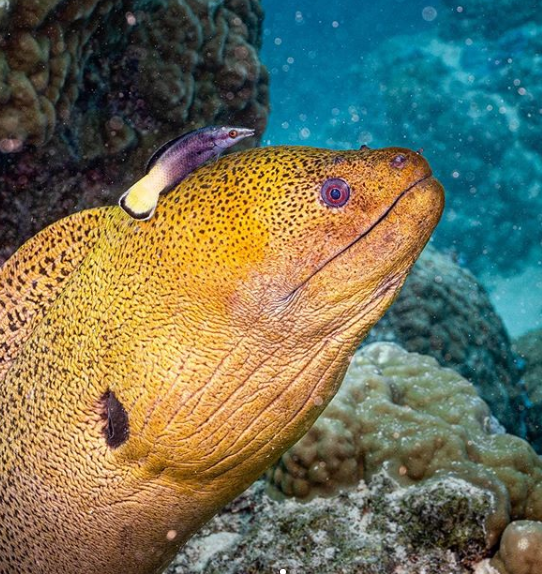
It’s fantastic for landscape and nighttime shooting in dim places (when you don’t want to use a flash). Anytime I take photos underwater, this lens is my go-to when paired with a Seacam underwater housing.
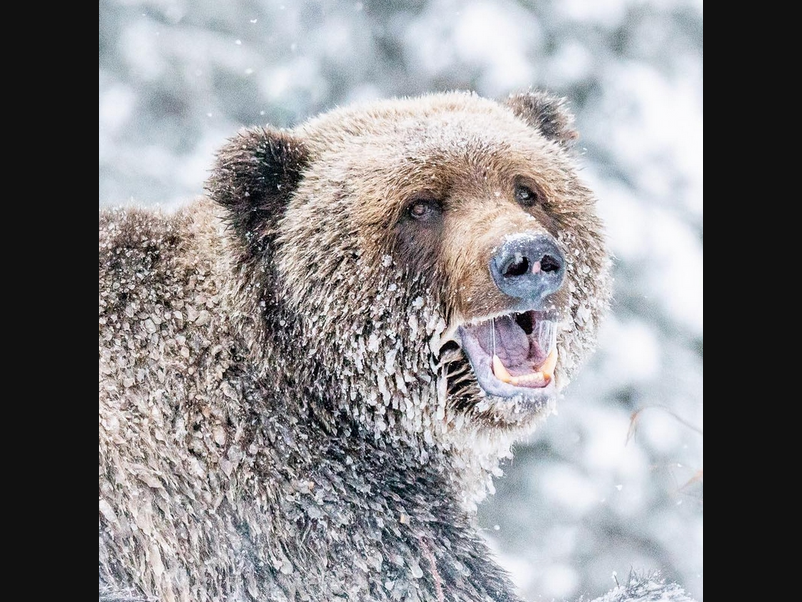
I have rented the Canon 600 f/4 and love the pictures I have taken with it. I’ve even used it with the 1.4x extender to get me to 840mm of focal length, which is definitely necessary when shooting bears, for example.
But versatile bodies with great lenses mean nothing unless they are reliable. I’ve shot in some pretty rough conditions, and I travel extensively, and through it all have found Canon to be very trustworthy. In particular I have had good experiences getting my camera bodies and lenses wet from rain (yes, really) and not had any damage because the equipment is so well-sealed.
This reliability (and durability) is absolutely key, in my opinion, when it comes to gear. After all, if you’ve spent 20 hours traveling and only have one morning to get out there, wherever “there” is, and get the shot, that is NOT the time for quirks, glitches and failures. How many times have we all seen that one photographer in the group fumbling with some interface trying to fix a setting, or popping a battery in-and-out of his camera, clearly desperate to get the thing to work?
I do “cheat” on my Canon gear in certain situations. When I want to travel lighter, for example in a crowded bazaar, or when I go hiking, I use the Sony a6300 which is an APS-C camera that delivers very good pictures from its 24 MP sensor. I use a Zeiss 16-70 f/4 lens with it which is equivalent to 24-105 in full frame cameras.
As long as we’re talking gear, it’s worth mentioning that sturdy tripods and monopods are handy. (I currently use Really Right Stuff ones which are very well made.) Also, gear is no good if it’s broken in transit, so to house my camera and lenses I use Pelican hard cases that are waterproof and very sturdy. And, of course, the lesson we all learn again and again, especially when traveling: make sure you have extra batteries, chargers and twice as many memory cards as you think you will need.
When you’re a travel photographer, you’re constantly on the move and in every imaginable environment, so your gear must always be good to go wherever you go.
A zoom with wide angle like the 24-105 enables the capture of panoramic landscapes, and here it’s set on 24mm. A long telephoto lens is useful for subjects that are hard or dangerous to approach. For this image, I used the 600mm with an 1.4x extender to give me a massive 840mm lens. Doing so allowed the subject to appear 16x closer than it would using a normal 50mm lens.
If you have any questions or comments about photography, I'd love to hear them. Please leave them below!