Politics & Government
Open letter to Commissioner Raquel Regalado from Calusa residents
Everyone is negatively affected when zoning decisions are "pay to play," resident input is dismissed, and developers have free rein

Dear Commissioner Raquel Regalado:
During your campaign for District 7 Commissioner, you said you would “be our voice on issues that matter to our District and our residents”, and that you would “help protect and enhance our green spaces”.
https://web.archive.org/web/20201029202618/https://www.raquelregalado.com/about
Find out what's happening in Miamifor free with the latest updates from Patch.
You will not be judged on campaign slogans, but rather on the decisions you make.
Residents do NOT feel you understand the devastating impact of your decision to support rezoning the former Calusa Golf Course to replace 168 acres of "parks and rec" designated green space and wildlife habitat.
Find out what's happening in Miamifor free with the latest updates from Patch.
Calusa residents have adopted the slogan “Our fight is your fight.” Everyone is negatively affected when zoning decisions are “pay to play,” resident input is be dismissed, wildlife studies are not required before appropriate land use is determined, and developers have free rein over our critical green space and wildlife habitat.
Covenant and property rights
When Facundo Bacardi purchased the golf course in 2003, he understood it was protected until 2067 under a land use restrictive covenant. What is the purpose of land use covenants if they can be influenced by financial compensation? While the legal requirements may have been fulfilled to release the covenant, the Commission should have also considered the ethical implications and precedence set because residents signed to release the covenant in exchange for a significant financial settlement.
Why weren’t the Trust homeowners, the 100 that vehemently opposed development on this property for years until they received a higher financial settlement, asked to explain their sudden support? Why should those 100 residents, all financially compensated, decide what is best for the entire 5600+ resident community?
Wildlife
The wildlife has received increased attention in the past 10 years since the owner chose to close the golf course, however, it has always been visibly present. Vast open space in an otherwise urban area even as a golf course supported wildlife habitat, and was a valuable community benefit. No, it wasn’t a public park, but it was available to residents as a community space until the owner allowed it to deteriorate and chose to close it.
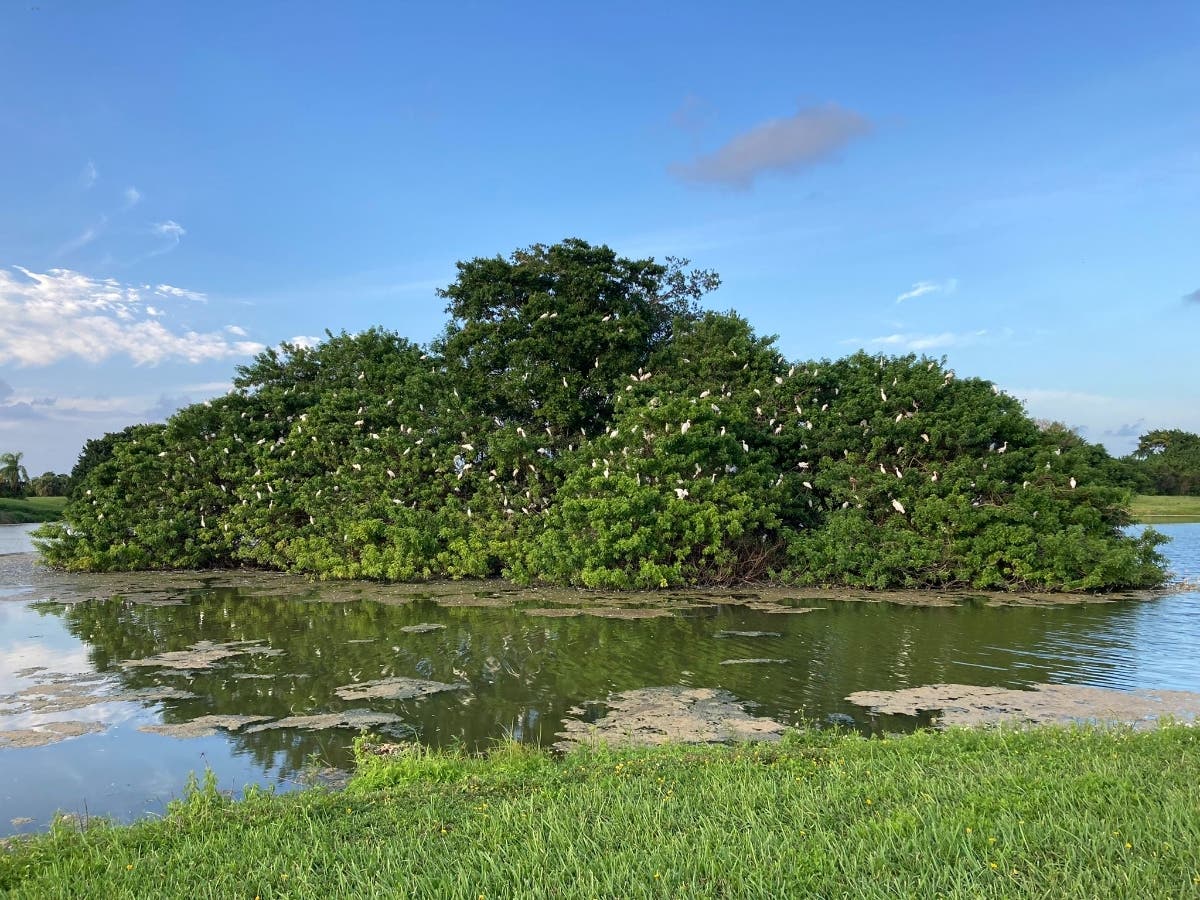
While DERM has clearly included requirements for monitoring the Calusa Rookery, staff recommendations contradict this and indicate “no rookeries were identified”. Why wasn’t the FWC recognition of the State Threatened tricolored heron nesting in the Calusa Rookery included in the staff recommendations? Why wasn’t the developer asked why they didn’t survey the rookery during nesting season? If they missed an entire rookery, what other wildlife was missed? Again, must residents prove listed species call Calusa home, or must the developer prove they do not?
Property Rights
Why did Commissioners tell the developer to work with the Trust neighbors? The developer should have been encouraged to sell the property if he was unwilling to use it as originally intended. Are Commissioners still operating under the misguided assumption that this situation is a casualty of golfs decline? Private property rights are indeed important, but are the developer’s rights more important than the homeowners’ rights in their immediate community?
Open Space
It is important to understand that the 40% open space includes the home buffer area around the ring that will be given only to those owners that signed to release the covenant, for their private use. This is part of their settlement and confirmed in County public records as buffer easement agreements. If you remove that portion, the common open space is only 31% and includes the sidewalks, swales, private rec area, and perimeter buffer area to separate the existing homes from the new development. None of this open space is available to the surrounding residents. Also, as per County code, any development on parks and rec land should maintain 75% open space.
While the developer intends to keep roughly 10% of the existing lakes, the current site plan includes the complete removal of the lake and Calusa Rookery. You cannot simply relocate nature because it isn’t conveniently located, in order to prioritize higher density and a lake view for the new community residents while ignoring the significant long-term consequences to our environment.
Parks
The County Parks memo states “there is a need for local parkland proximate to the proposed development. A public park conveyance as part of this project will serve residents of the development, as well as nearby existing residents.” It seems obvious there is a reasonable compromise where 168 acres could provide for both a large public park and wildlife habitat, along with reduced density more compatible with the surrounding community. The “terms of the settlement” don’t negate this possibility, they focus on maximum density and minimum lot sizes.
Residents practically begged the Commission to create an opportunity to hear concerns before the public hearing, and submitted detailed documentation in advance for consideration. Why is residents’ only opportunity to involve themselves in major decisions affecting their community minimized and so easily dismissed? Development must be done responsibility, with a County-wide view rather than attempting to argue that each and every available property must be appropriate for increased zoning based simply on housing demand and threat of moving the UDB. Just because the CDMP allows for higher density, doesn’t mean the developer is legally entitled to it. You cannot develop responsibly without balancing required transportation and infrastructure, open space and wildlife preservation, as well as potential long-term degradation of resident quality of life.
The wildlife utilization provided to County Commissioners accurate, and was NOT enough to make an informed decision. This is critical information for Commissioners to consider before making a significant zoning change. As home district commissioner, it is your responsibility to represent the unique potential and nature of this property and resident quality of life.
This was a missed opportunity- to listen your constituents and offer a more reasonable solution that balances interests on both sides for the greater good of the County. Instead this decision now sets a precedence that zoning can be influenced by financial interests, resident input can be dismissed, wildlife studies are not required before appropriate land use is determined, and residential development is more valuable than green space and wildlife habitat.
Sincerely,
Amanda Prieto, Calusa Community Advocate
David Winker, Esq.