Crime & Safety
Owner Of Miami Flight School Defends Safety Record
After back-to-back plane crashes in the Miami area, the founder of a local flight school defended his company's safety record.


MIAMI, FL — Facing heightened scrutiny after back-to-back plane crashes at public parks in the Miami area, the founder of Dean International Flight School defended his school's safety record on Tuesday and told Patch that the student who died in a July 6 crash disobeyed school safety rules. Robert Dean also said that the second crash eight days later was caused by debris in the fuel tank and not pilot error. The school has 50 aircraft and trains more than 350 students per year.
"We are dedicated to keep each and every one of our students and our instructors safe," insisted Dean on Tuesday. He owns the school that experienced the crashes in a span of less than two weeks. The school has graduated some 8,000 pilots from all around the world. "I am an instructor myself and teach my own son in these aircrafts." (Sign up for our free Daily Newsletters and Breaking News Alerts for the Miami Patch.)
Both of the crashes appear to have occurred under darkness just 13 days apart. The school is located at Miami Executive Airport, 14150 SW 129th St., Miami.
Find out what's happening in Miamifor free with the latest updates from Patch.
The student pilot who died was found in a remote area of Everglades National Park along with wreckage from his Cessna 152, single engine aircraft. The crash site was seven miles west of Homestead in a swampy area, where an alligator was also seen combing the wreckage. The student was identified as Nigerian-born Mark Ukaere.
Find out what's happening in Miamifor free with the latest updates from Patch.
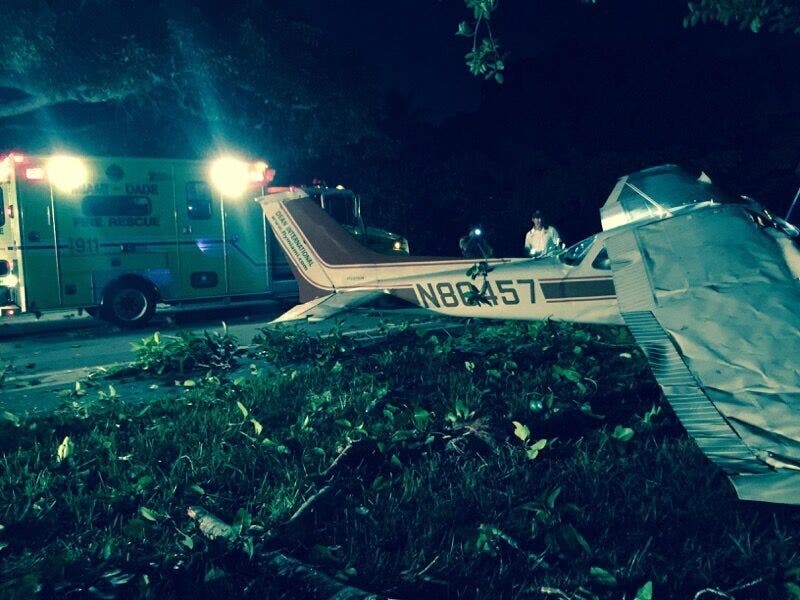
The second crash involved a Cessna C172 aircraft that made a late-night emergency landing on a road in Crandon Park after losing power. The aircraft struck a utility light during its descent.
"The first accident that took place was a pilot that did not follow our basic rules of not flying alone at night and not getting permission to fly," asserted Dean. "This is in our written agreement and signed by every student."
With respect to the Key Biscayne crash, Dean said that debris was blocking fuel from getting to the engine.
"We do not do our own fueling and pay other companies to to do it," he explained.
Federal Aviation Administration records obtained by Patch reveal that the school experienced a total of 23 safety incidents between March 2007 and November 2016 prior to the two most recent incidents.
In the case of the Key Biscayne crash, Dean said that the instructor and pilot followed proper protocol.
"The instructor and the pilot did exactly what we train for and walked away with a minor nose scratch," he explained. "Our ratio of accidents is far less then the other schools at our airport. Our aircrafts do approximately 50,000 flight hours per year compared to other schools that operate 10 to 15 aircraft per year and do 10,000 to 12,000 hours per year."
Dean said that his staff does everything it can to prevent accidents like the two that happened in recent weeks.
"We have the best flight school and maintenance department," he added. "We continue to strive for no accidents or incidents and pray for all students and instructors to follow the rules that we have in place to keep us all safe and sound."
Photo of the July 14 crash scene in Key Biscayne courtesy of Miami-Dade Fire Rescue
Get more local news delivered straight to your inbox. Sign up for free Patch newsletters and alerts.