Neighbor News
Projected El Niño poses disease risk to Florida’s $500 million-a-year strawberry industry
This new study is crucial to strawberry growers because Florida leads the nation in winter strawberry production.
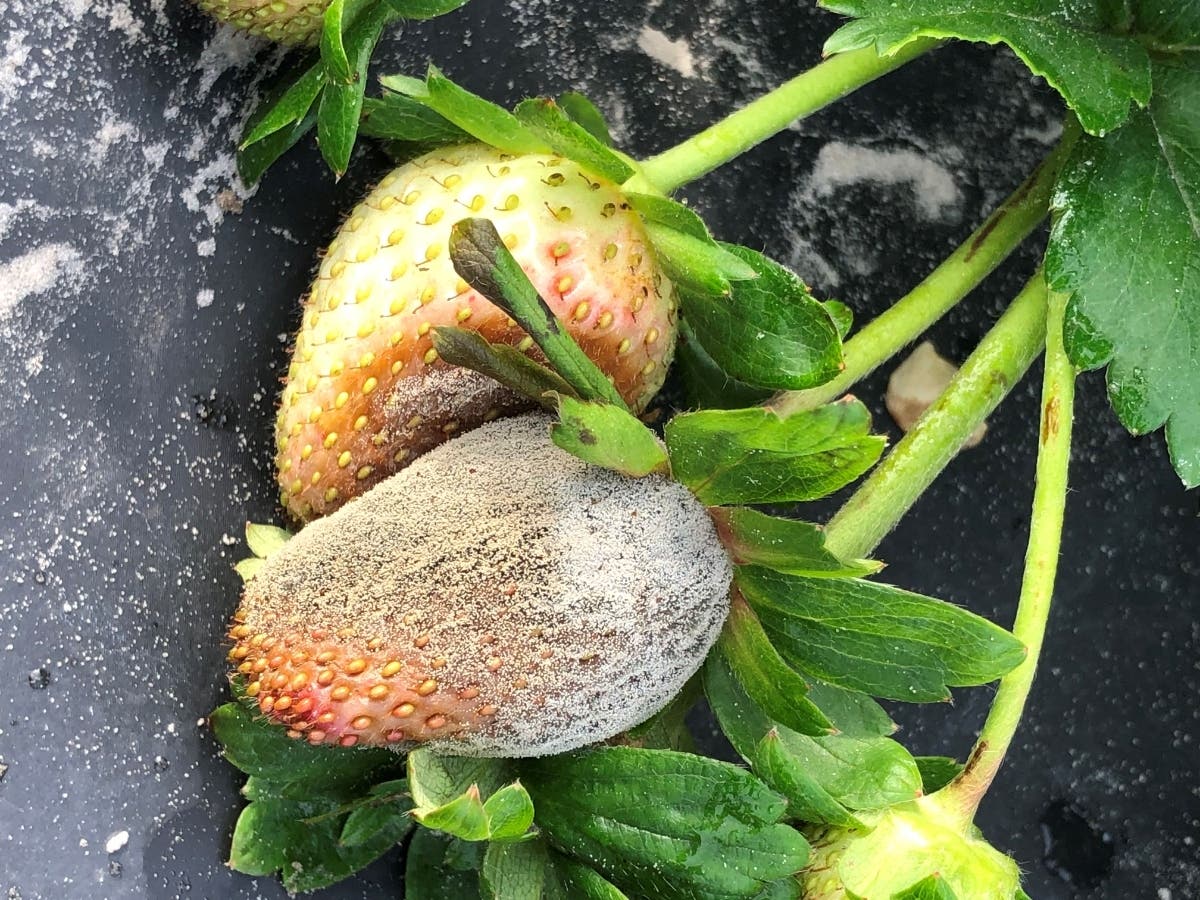
Farmers in Florida’s $500 million-a-year strawberry industry recently wrapped up a season, and already the next one is casting a shadow. Scientists are predicting a good chance of a pesky strawberry disease, all due to the predicted El Niño weather pattern.
An El Niño is forecast for the upcoming hurricane season, which starts June 1, and that means strawberry growers should brace for more moisture. That, in turn, increases the chances of disease, including Botrytis, said Vinicius Cerbaro, a University of Florida post-doctoral researcher. On the positive side, a system that tells growers when to spray for fungi could provide some relief.
Cerbaro presented research at the Florida AgriTech conference in Plant City on May 6.
Find out what's happening in Miamifor free with the latest updates from Patch.
The new study is crucial to strawberry growers because Florida leads the nation in winter strawberry production. The Florida strawberry season runs from November to April, and west-central Florida, particularly Hillsborough County, stands out as the most productive strawberry-growing region.
Data from Cerbaro and his colleagues at the UF Institute of Food and Agricultural Sciences (UF/IFAS) focuses on what’s called the El Niño Southern Oscillation (ENSO).
Find out what's happening in Miamifor free with the latest updates from Patch.
ENSO is a periodic, natural and irregular climate cycle (every two to seven years) involving fluctuations in ocean temperatures and atmospheric pressure over the tropical Pacific Ocean.
ENSO reaches peak activity in December and January — right in the middle of the Florida strawberry season. It manifests itself in three phases: El Niño, La Niña and neutral. During El Niño, the warmer ocean phase, Florida experiences above-average rainfall and below-average temperatures, fostering increased humidity and creating prime conditions for escalating fungal diseases.
In the study, UF/IFAS researchers examined 74 years (1950-2024) of climate data about how ENSO affects the risk of Botrytis fruit rot in Florida strawberries.
Here are the main findings from the study:
·During El Niño years, Botrytis risk in Hillsborough, Polk, Manatee and Hardee counties was above average about 70% of the time.
·In Hillsborough County, these conditions were associated with up to 50% more fungicide sprays by growers who use the Strawberry Advisory System (SAS).With SAS -- developed by UF/IFAS researchers -- growers don’t spray on a fixed calendar. Instead, the system tells them when weather conditions are favorable for disease, and each of those alerts can alert them it’s time to spray fungicide.
·La Niña years tend to reduce disease risk due to drier conditions, although an increase in temperatures favorable for disease can partially offset that reduction.
“There is currently about a 60% chance that El Niño will emerge between May and July and persist through the end of the year,” said Cerbaro, a researcher in the UF/IFAS agricultural and biological engineering department. “That means the upcoming strawberry growing season could be challenging for Florida growers, not only due to a potential lack of sunshine slowing ripening cycles or too much rain, which can be bad for some varieties, but also in terms of disease pressure.”
On the other hand, there is hope. Findings from this study could potentially be used to provide advanced notifications to growers ahead of the season, Cerbaro said. These alerts would give farmers an overview of expected conditions and could support them in optimizing their disease-management strategies.
“Those alerts would give farmers an overview of expected conditions and could support them in optimizing their disease-management strategies,” he said.
###
ABOUT UF/IFAS
The mission of the University of Florida Institute of Food and Agricultural Sciences (UF/IFAS) is to develop knowledge relevant to agricultural, human and natural resources and to make that knowledge available to sustain and enhance the quality of human life. With more than a dozen research facilities, 67 county Extension offices, and award-winning students and faculty in the UF College of Agricultural and Life Sciences, UF/IFAS brings science-based solutions to the state’s agricultural and natural resources industries, and all Florida residents.