Health & Fitness
Youth Boxing Teaching and Training
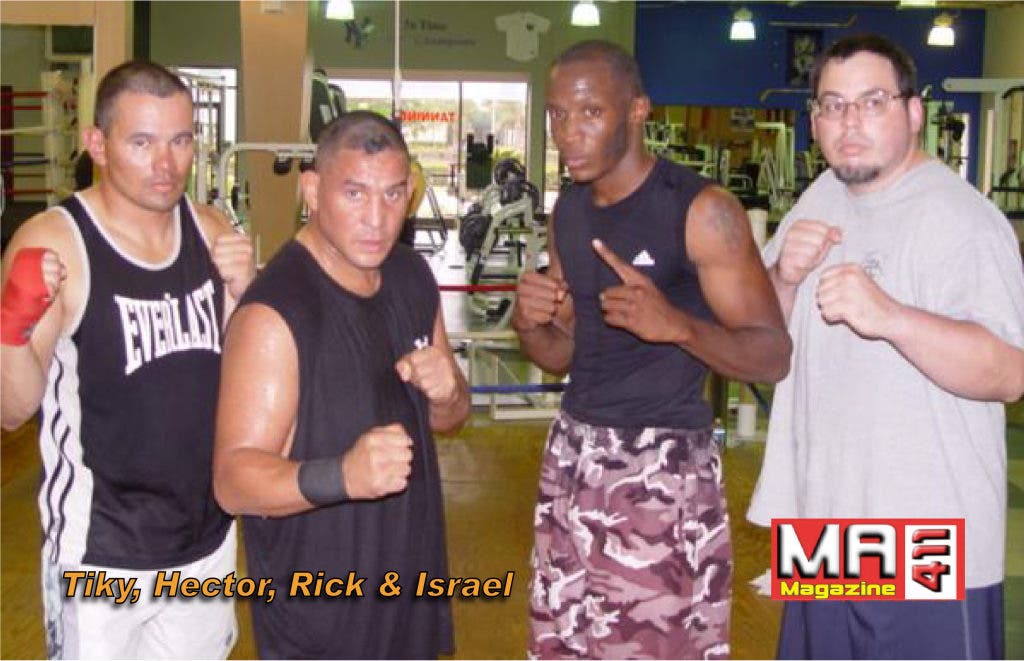
Wolfden Head Coach Israel Rodriguez gives us an insight on youth boxing teaching and trining. Wolfden MMA Training Center Wesley Chapel www.wolfsdenmma.com PH 813-417-6363
By: Israel Rodriguez
What is boxing?
Boxing is a combat sport that employees only the hands as weapons and is limited to striking with the front part of the close fist. Boxing belongs to an Olympic group of contact sports composed of Judo, Wrestling, Tae Kwon Do, Fencing and Boxing at an amateur level. For the purposes of this article we are going to concentrate on this amateur aspect since youth boxing is not a professional sport.
Find out what's happening in New Tampafor free with the latest updates from Patch.
Boxing vs other contact sports
There are major differences in these sports mentioned above. For example in Judo there are no strikes or percussion techniques and the objective of the sport is not to knock the opponent out as in boxing or tae Kwon Do. There are sports like Sport Karate which focus on controlled technique where precision of the strike is more important and excessive contact is penalized. This is done in an attempt to eliminate unnecessary injuries to the practitioners. In boxing there is a particular rule not seen in any other combat sport, the 10 second protection count. If one of the fighters is knocked down the referee will stop the fight and give a 10 second protection count, giving him/her the opportunity to recover and continue fighting.
Find out what's happening in New Tampafor free with the latest updates from Patch.
Contact Sport
As a contact sport boxing exposes its practitioners to many potential injuries. The dilemma resides in the nature of the sport. In boxing you can mainly win by out boxing your opponent for the term of the fight or by knocking him/her out. When dealing with youth the obvious question that comes to mind is: How do I teach and train youth boxing in a safe manner? The answer is simple: Concentrate on technique and tactics and do not emphasize full power sparring that much.
Safety in sparring
There is plenty of safety equipment that can be used to minimize the effects of the punches, but my experience has taut me that the methods and not the equipment is the key to a safe practice. It does not matter if you use all the safety equipment in sparring if you do not control the following:
- Intensity of the sparring session - As a trainer we must control the intensity of the fight. Kids must focus on technique and tactics and not on power.
- Sparring Load – Kids do not need to spar as often as a professional fighter. Sparring regularly is OK if it is a round or two and if it does not represent a stressor. Put yourself in their position: Would you like to fight everyday even if you are not in the mood for it one particular day? There are plenty of adults that stopped practicing sports because they were frustrated by their parents or coaches constant negative remarks or pushing.
There are many fun ways to progressively introduce youth to actual sparring. It depends on the knowledge and ability of the trainer to develop the interest and the hunger in the student.
Tradition vs Science
All sports and sciences evolve. Everyday new methods and discoveries are tested and implemented in training. Boxing has the particular tendency of been taut by tradition. Training is a load applied to a body that causes changes in the practitioner. Such load needs to be measured and managed. The days of running miles in the morning and some more in the evenings are over. I remember the traditional trainers opposing to weight training claiming that it restricts flexibility. It is a well known fact that every training plan should include work on speed, strength, endurance, flexibility and the balance/coordination capabilities on the physical development part. It is the trainer’s responsibility to be up to date with the latest training methods and the implementation of such. There is plenty of information and courses available for your development and continued education.
Youth Development
If you are running a youth boxing program you should know that the juvenile starts showing his/her adult characteristics at puberty. This happen when the hormones production starts kicking and defining the young adult. There are a lot of drastic psychological and biological changes going on here. This stage is the last growing stage so it is critical in the definition of the adult that the juvenile will is turn into. The trainer should know how to use these changes towards the advantage of the student’s development and performance. Technique knowledge, training methods and working ethics are the elements that do not change through any developing stage. That is exactly why those are the ones we need to concentrate on the most. When in the child stages, it is not of primary importance how many push ups, punches or drills the kids can do, what maters most is that they understand how and why they are done. Training ethics are developed in the process.
Techniques and Tactics
In any training plan for competition technique and tactic are the ultimate tools to win the match. Youth development of these two is key element in the future of the practitioner. This is where the champions are made. Technique is developed through repetition; repetition develops habits, bad habits are almost impossible to break. Once the technique is developed they can be arranged in a Tactical Plan. This tactical plan will teach the boxer how to use those elements worked at the gym towards his/her advantage. The need for establishing a tactical plan creates the need for team work between the athlete and the trainer and reinforces their relationship.
Amateur vs Pro
Amateur fights at the Olympic level have developed into a point system, contrary to professional boxing where there is the constant pressure of winning by KO. Having a good offensive and defensive arsenal in amateur boxing will usually produce the best results. Sharp technique, good speed and evasion skills are dominant in the sport nowadays. You rarely see a KO in Olympics boxing anymore. The main reason is that a KO most frequently comes from a hard exchange of punches. Consider that you have multiple fights in the same tournament and the logic tells you that you have to avoid brawls so you go to the next match unharmed. Best tactic that works with that plan is sharp shooting, going in, attacking and going out before the opponent counters. This also contributes to the safety of the combatants.
The amateur stage should be a preparatory stage on the way to professionalism. It is critical to prevent injuries or permanent damage at this stage since the end of the amateur career represents only the beginning of the professional. There is no room for error at the professional level and one loss might be one too many. If turning pro is the goal the amateur career is the most important in the development. If having fun is the goal then it needs to be done safely and it needs to be a good experience to remember. One that speaks well about the sport and the people involved in it.
Wolfden of Wesley Chapel offers a Youth Boxing Program at it’s location at 5807 Ellerbee Rd. Wesley Chapel, Florida 33543. You can contact them at 813-417-6363.