Sports
U.S. Olympian Rowdy Gaines Forges a Path for Future Olympic Hopefuls
After a storied swimming career, Gaines is focused on giving back to young athletes.
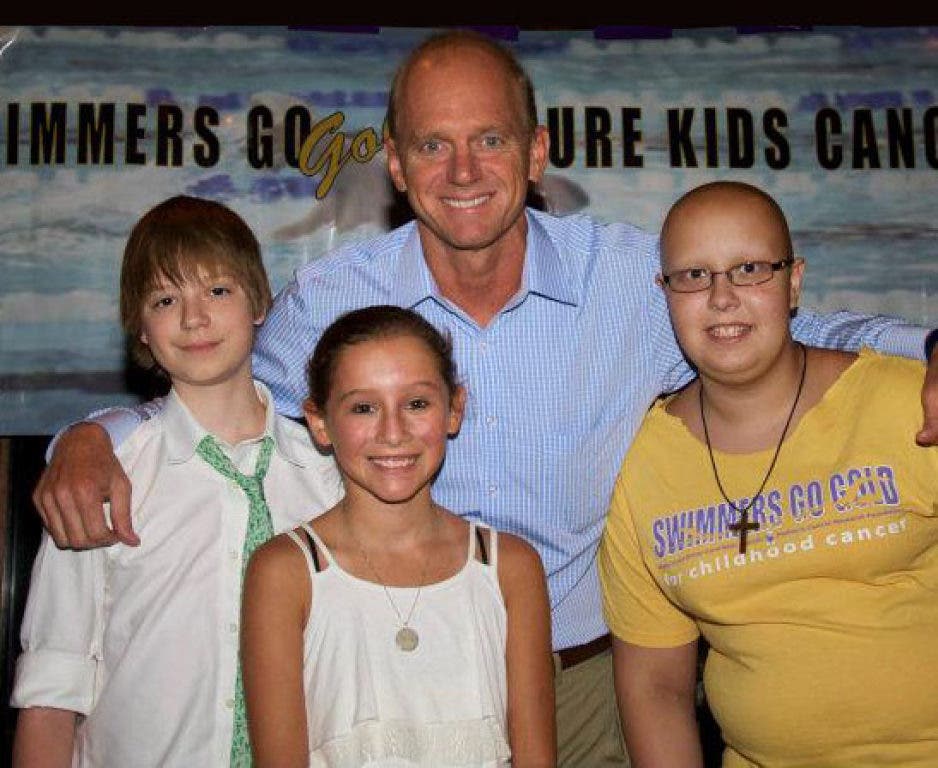

Rowdy Gaines is familiar with extreme highs and lows.
This 53-year-old father of four daughters is an incredibly warm personality who turns to stone-cold competitor once he hits the water. Rowdy won three gold medals at the Los Angeles 1984 Olympic Games after seeing his first shot at glory dashed in 1980 when the U.S. boycotted the 1980 Olympic Games in Moscow.
“It was difficult because in swimming, the Olympics are our Super Bowl and that year there was no light at the end of the tunnel,” Rowdy said. “To train for it and build up to it for four years and then not even get a chance made it an eight-year journey to Los Angeles, but when that happened it was a great feeling to be able to have it happen at home in the United States. I was lucky because a lot of people trained hard for Moscow and never made it to the next Olympics.”
Find out what's happening in New Tampafor free with the latest updates from Patch.
Besides being a father, Rowdy has experienced some other serious life-changing events. At one time he found himself the victim of Guillain-Barre syndrome, a rare disorder in which the body’s immune system mistakenly attacks part of the nervous system, resulting in paralysis.
“It gave me a new perspective, the same effect having kids had,” Rowdy said. “I was 32 years old and within 24 hours of breaking a world record in a Masters event I was paralyzed. It was life changing when it comes to seeing the big picture. I learned a lot about patience after that, having to re-learn how to do everything I ever knew how to do again.”
Find out what's happening in New Tampafor free with the latest updates from Patch.
Learning to swim again, Rowdy couldn’t help but be competitive. Upon his release from the hospital after six months, the Winter Haven, Fla., native wasn’t interested in returning to his home, but to the pool where he trains five days a week to this day.
“Swimming is the only thing I’m any good at,” Rowdy said. “I can’t help it, I like being in the water and I like to swim fast. It was weird, because I swim five days a week and when I got out of the hospital I hadn’t been in the water for six months. It took a couple months before I developed a feel for the water again, but a year to the day after I came down with the syndrome I was back at the Masters World Championships and set another world record.”
Rowdy’s training regimen is still on par with any competitive swimmer his age, but his career has taken him in new directions since 1996, when he was offered a job as a swimming analyst for NBC’s coverage of the Olympic Games. The opportunity came after he had qualified for the 1996 Olympic Trials, a chance he would give up for a broadcast career.
“I knew realistically I wasn’t going to make it and the job offer from NBC was too irresistible,” Rowdy said. “It just felt great to get back and qualify, but this job is something I’m really proud of in my career. I’m doing my sixth Olympics this summer and it’s great for me because it keeps me close to the highest level of the sport. I’ve got the best seat in the house.”
Rowdy also relishes the chance to use his athletic success and . Rowdy is currently supporting the development of an altitude (or “hyperoxic”) swim lane at the U.S. Olympic team training facility in Colorado Springs.
He hopes to encourage younger athletes to appreciate the opportunity to give something back while they are still at the forefront of their careers.
"For me the Olympic movement and swimming have developed me into the person I am today," Rowdy said. "Without it I would have been lost. For athletes that are still competing, doing this kind of stuff is tough because they're so blinded by their focus, but if I can teach them that one day they're going to wish they had given back while they were still competing, because the kids out there look up to you now and use it as an example."