Health & Fitness
New Locally Acquired Zika Case Found in Miami-Dade County
State health officials do not anticipate any new Zika zones as a result of the new cases.


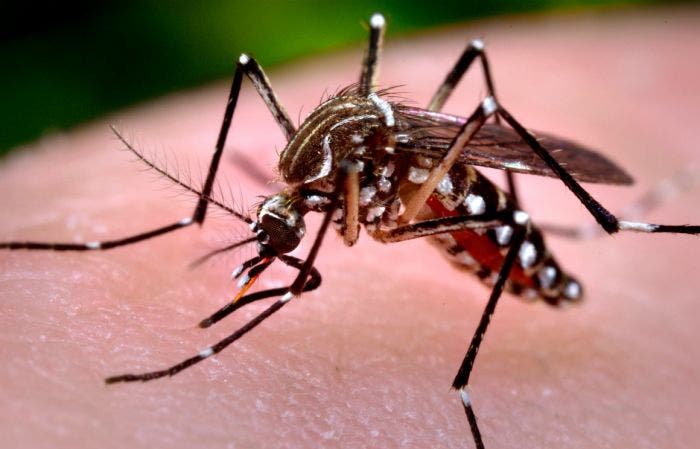
PALMETTO BAY, FL — Florida health officials confirmed one new locally acquired case of the Zika virus in Miami-Dade County on Monday and also a new travel-related case.
Like us on Facebook if you like your Palmetto Bay-Cutler Bay Patch
New travel-related cases were also reported in Broward and Palm Beach Counties, while a fourth travel-related case involved a person who lives outside of Florida but was tested in Miami-Dade County, according to Mara Gambineri of the Florida Department of Health.
Find out what's happening in Palmetto Bay-Cutlerfor free with the latest updates from Patch.
Officials said the new cases will not lead to any new Zika zones in Miami or nearby South Beach.
Find out what's happening in Palmetto Bay-Cutlerfor free with the latest updates from Patch.
With respect to the locally acquired case, "the individual reported no symptoms, but screening conducted in February showed evidence of a past infection," health officials said. "The department just received confirmatory testing back from CDC.
Officials added that the individual had multiple exposures in Miami-Dade County and likely contracted Zika in 2016. "Because the individual was asymptomatic, it is difficult to determine when infection occurred," officials explained. "Florida still does not have any identified areas with ongoing, active Zika transmission."
In early March, Florida health officials confirmed three other new locally acquired cases of the Zika virus in Miami-Dade County but they did not lead to any new Zika zones.
With the new cases, the total number of Zika cases reported in Florida for 2017 stands at 29. Of those, 25 were considered travel-related cases, two were determined to be locally acquired while the remaining two could not be categorized by health officials.
State health officials, however stressed that Florida still does not have any identified areas with ongoing, active Zika transmission.
"One case does not mean ongoing active transmission is taking place," health officials stated. "DOH conducts a thorough investigation by sampling close contacts and community members around each case to determine if additional people are infected. If DOH finds evidence that active transmission is occurring in an area, the media and the public will be notified."
So far the Florida Department of Health has conducted Zika virus testing for more than 13,020 people statewide.
"At Governor Scott’s direction, all county health departments now offer free Zika risk assessment and testing to pregnant women," according to health officials.
The Centers for Disease Control and Prevention now advises pregnant women to postpone travel to Miami-Dade County, which includes Miami and Miami Beach.
"If you are pregnant and must travel or if you live or work in Miami-Dade County, protect yourself from mosquito bites by wearing insect repellent, long clothing and limiting your time outdoors," officials added. "According to CDC guidance, providers should test all pregnant women who lived in, traveled to or whose partner traveled to Miami-Dade County after Aug. 1, 2016. Pregnant women in Miami-Dade County can contact their medical provider or their local county health department to be tested and receive a Zika prevention kit."
State health officials are also working closely with the Healthy Start Coalition of Miami-Dade County to identify pregnant women in Miami-Dade County and make sure they have access to resources and information to protect themselves.
"CDC recommends that a pregnant woman with a history of Zika virus and her provider should consider additional ultrasounds," officials said.
Gov. Rick Scott announced on Dec. 9 that the final remaining Zika zone in the state had been lifted — an area of about 1.5 square miles between Eighth and 28th streets in South Beach.
Secretary of Florida Department of Health Dr. Celeste Philip, who accompanied the governor, warned that the battle over Zika was not over.
"We will continue to see travelers bringing Zika infections into our state and so we must remain on alert and continue all the protective efforts that we’ve doing that have led to this success," cautioned Philip, who also serves as Florida's surgeon general. "That means continuing to use repellent, keeping your skin covered as much as possible .... And we cannot forget about the risk associated with sexual transmission."
On Dec. 2, the governor announced that the Little River zone in Miami had been cleared. That area included a one-square-mile stretch between NW 79th Street to the north, NW 63rd Street to the south, NW 10th Avenue to the west and N. Miami Avenue to the east.
In November, Scott gave the all clear to the Miami Beach area north of 28th Street to 63rd Street. Before that, he announced that the Wynwood area of Miami had also seen no new transmissions of Zika. This included the area of Northwest 5th Avenue to the west, U.S. 1 to the East, 38th Street to the north, and 20th Street to the south.
Despite Zika concerns, Florida set a tourism record last year with 112.8 million visitors.
Additional information can be found on the Department of Health website.
Photo courtesy Florida International University
Get more local news delivered straight to your inbox. Sign up for free Patch newsletters and alerts.