Community Corner
A House with Many Faces
A restaurant on Alternate 19 has a hidden history all its own.
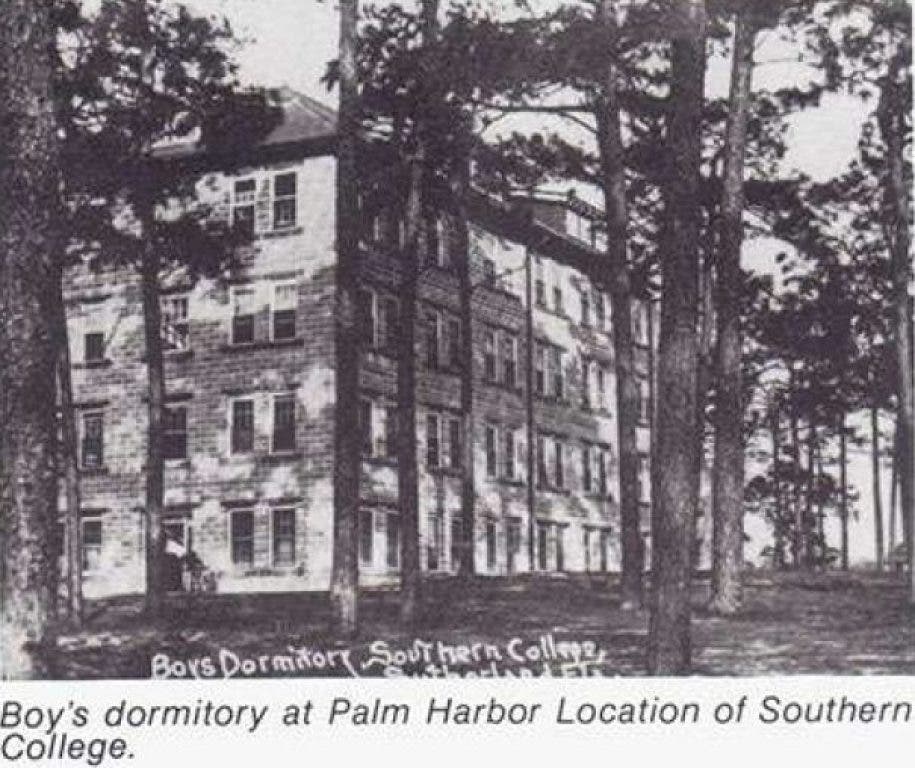


Many years ago, the Palm Harbor area was named Sutherland. The community was home to a beautiful college sitting right above Omaha Street at Florida Avenue. It was originally the San Marino Hotel which was built around 1885, but in 1902 it became the college. Southern College has roots beginning in 1845 in Tallahassee as a result of the Florida Conference of the Methodist Episcopal Church South. In 1885, the then college named Wesleyan Institute was under operation in Orlando. In 1902, Wesleyan College moved to Palm Harbor under the name of the Florida Seminary at Sutherland.
The first president of the college while it resided in Palm Harbor was Dr. Shade Walker who built his home at 1710 Alternate 19. Dr. Walker, a graduate of Harvard University and a native Tennessee man, presided over the college’s first classes in the fall of 1902. He has been described as a brilliant man with much energy and leadership abilities. The college was under Dr. Walker’s presidency from 1902 – 1906. It was in 1906 that the college was renamed Southern College. In 1921, the College burned down under the presidency of Rhenus H. Alderman (a familiar road sign to many in Palm Harbor). The college then moved to Clearwater and finally found its home in Lakeland.
Dr. Walker was an attorney who joined the Florida Methodist Conference in 1893. He and his wife lived at the Alternate 19 home for a few years until she died in a tragic boating accident with four others about three miles offshore due to a sudden and violent squall. She was on her way to Anclote key when the tragedy occurred. Dr. Walker continued on at the college for a couple of more years and ran the college for five seasons. Dr. Walker eventually remarried and went on to have several children with his new wife.
Find out what's happening in Palm Harborfor free with the latest updates from Patch.
In 1921, the year the college burned, and Mr. Francis Skinner of Dunedin purchased the home. He had visions for the property, which had many acres at the time. He turned the acreage into a very profitable citrus grove. Keep in mind that in the first half of the 20th century, Palm Harbor still had many acres of citrus groves. An irrigation system enabled Mr. Skinner’s grove to grow many types of fruits including guavas. These fruits were packaged and sold to local and non-local customers while keeping many people employed in the area. Later, George and Eula Harvey from Walhalla, Georgia came to Palm Harbor and lived in the home. It became a popular place to visit for produce. The Harveys operated a successful fruit stand and business that shipped fruit gift baskets all over the United States. The Harveys also exported citrus out of Palm Harbor utilizing the transportation companies in the area. They did this until the freeze of 1962 when the groves were destroyed.
Obviously, anyone living in the area knows that the citrus groves no longer exist. The home had many owners and uses. It became a business for many, including an antique shop in the 1990’s. Today, the majestic and very popular Casa Ludovico which opened in 2005, sits proudly at Dr. Walker’s old address. It is beautifully restored and is eye catching as one drives on Alternate 19. Casa Ludovico is an Italian restaurant owned by Carmine Cervelli.
Find out what's happening in Palm Harborfor free with the latest updates from Patch.
Did you know that Ida Hartley, who owned the Hartley House and is now the North Pinellas Historical Museum, earned money making guava jelly from Palm Harbor guavas in the 1930's?