Community Corner
Are Religious Private Schools Exempt From Equal Employment Opportunity Laws?
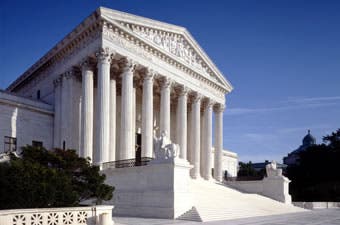
Separation of church and state at the highest court could affect hiring and firing practices for all local religious-based schools.
I know the rule around the water-cooler: Don’t talk about religion, sports, or politics. I am going to break all three rules.
Here is the link to the case that is the subject of this article: Hosanna-Tabor Evangelical Lutheran Church and School v. EEOC, released on Jan. 11, 2012. Constitutional lawyers will agree or disagree on its meaning and application. I will say that the Court’s opinion has a great discussion on the history of the First Amendment and why it became such a cornerstone of our country.
First, let me outline the rough facts of the case before the United States Supreme Court to set the stage. A teacher was hired at a religious private school and for many years taught non-religious subjects. She eventually went through religious-related training and then became, for lack of a better word, “certified” in religious teachings. She still taught the normal non-religious subjects, but she taught religious subjects as well. It is important to note that non-certified teachers taught religious subjects also, but she was a “called” teacher in the religious subjects.
Find out what's happening in Palm Harborfor free with the latest updates from Patch.
The teacher had an ailment in 2004 that prevented her from continuing her duties for a period of time. The school, which was connected with a church, asked her to resign and agreed they would continue to pay her health insurance. She refused, showed up to work, was terminated, and filed a lawsuit based on discrimination for her health issues under federal and state law.
The question before the Supreme Court, which matters to our religiously-based private schools, is whether the teacher could be fired based on her disability. The issue creates a conflict between freedom of religion and termination of employment based on discriminatory reasons. I believe there was little doubt the teacher was terminated because of her disability even though she was cleared by doctors to continue her duties.
Find out what's happening in Palm Harborfor free with the latest updates from Patch.
Religion won unanimously. In essence, the Supreme Court held that the government, in this case the EEOC, could not interfere with decisions made by the Church (the school) on hiring and firing of people who are ministers of the Church. Because the teacher served in a minister-related capacity, the Americans with Disability Act did not apply. As with every United States Supreme Court decision, the argument, logic, and discussion is much more complicated than what is appropriate to discuss in this article.
I can see the faces of the wonderful Patch.com editors and the attorneys I know right now. Their faces are asking one question: how does this affect me and how is this relevant to my community? How does a case that originated in Missouri and was finally decided in Washington, D.C., affect my local church or parochial school? Let me just suggest some points for consideration.
- This was a unanimous decision by the Supreme Court. In a time when political parties are fighting within themselves, the body of nine Justices agreed. Rarely do all Justices agree, much less in such high profile cases.
(Scalia and Thomas appointed by Regan; Thomas by H.W. Bush; Ginsberg and Bryer by Clinton; Chief Justice Roberts and Alito by G.W. Bush; and Sotomayor and Kagan by Obama). This will be a tough decision to overturn by future opinions.
- Let the Constitutional lawyers disagree, but I see this as opening up a new door to hiring and firing practices for many other entities related to religion if there is some minister-related activity. Where the employee’s primary job is not religious, but there is a religious-based function, does this case extend further and allow for discriminatory practices? Can we avoid the EEOC by simply associating with a church?
- What about religion-based assisted living facilities, political groups, television programs, or perhaps part-time employees? What about small-businesses that hire ministers to sell products such as books or literature?
While this decision does not go so far as to resolve future disputes in other areas of religion, it certainly extends the separation and church and state.
I have stated previously that I am not a Constitutional law attorney. However, this Supreme Court opinion will be (or absolutely should be) reviewed by every religiously-based private school, employee, and parent in your community. This absolutely affects the way these schools will hire and terminate employees.
I know I am supposed to put the most controversial issues front and center in articles, but I had to lay the foundation. I ask this hypothetical question: Let us assume that a minority woman with a disability teaches Sunday school at her local church and gets paid for her services. She gets paid for the sole function of teaching religion to young children by the church or the school. A new person takes over the church and terminates her based on her race, gender, or disability. Should the freedom of religion protect the church or should the EEOC protect the Sunday school teacher?
For the members/parents/employees/administrators/supporters of our private-school system and churches, this is a case to take notice of. Let me be clear that I highly respect freedom of religion and at the same time highly disagree with discriminating based on religion, gender, age, race, or disability. I personally cannot reconcile the moral implications of this decision and how it affects either view.
I broke the religion rule, Tim Tebow “tebowed” the Steelers (sports), and politics are part of government. I am three for three this week.
About this column: Each week, we discuss relevant legal issues in your community; the latest legal developments that affect those communities; or answer questions directly from Patch readers. This column is for you, and therefore your comments and questions are highly encouraged. Please send specific legal questions to jts@simonslawfirm.com or www.simonslawfirm.com for potential publication. This column is for informational purposes only. Nothing herein should be construed as giving legal advice to the reader, Patch.com, or any other person or entity. This is not a solicitation for business J.T. Simons, P.A., attempts to provide the most recent and accurate information available. However, nothing herein should be construed as a formal legal opinion that can be relied on for any purpose. In other words, absolutely nothing herein should be construed as giving you any legal advice. Please contact an attorney to verify the validity and/or applicability of any legal issue or comment contained herein. Any questions or comments submitted in response to any column, or any communication made to J.T. Simons, P.A. concerning this column, shall not create an attorney-client relationship.