Politics & Government
Did You Know November is American Indian and Alaska Native Heritage Month?
The U.S. Census Bureau has compiled these facts in honor of American Indian and Alaska Native Heritage Month.


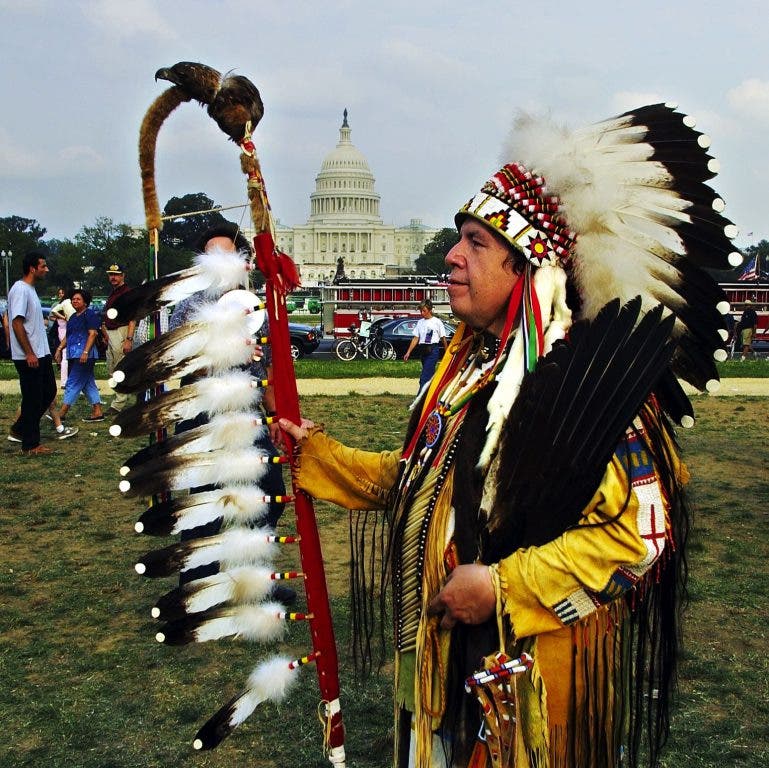
The History of Celebrating American Indians
The first American Indian Day was celebrated in May 1916 in New York. Red Fox James, a Blackfoot Indian, rode horseback from state to state, getting endorsements from 24 state governments, to have a day to honor American Indians.
In 1990, President George H.W. Bush signed a joint congressional resolution designating November 1990 as “National American Indian Heritage Month.” Similar proclamations have been issued every year since 1994.
Population
5.1 million: As of the 2011 American Community Survey, the nation’s population of American Indians and Alaska Natives, including those of more than one race. They made up 1.6 percent of the total population. Of this total, about half were American Indian and Alaska Native only, and about half were American Indian and Alaska Native in combination with one or more other races. Source: 2011 American Community Survey
Find out what's happening in Palm Harborfor free with the latest updates from Patch.
8.6 million: The projected population of American Indians and Alaska Natives, including those of more than one race, on July 1, 2050. They would comprise two percent of the total population. Source: Population projections
1.1 million: Increase in the nation’s American Indian and Alaska Native population between the 2000 Census and 2010 Census. The population of this group increased by 26.7 percent during this period compared with the overall population growth of 9.7 percent. Source: Census 2000 Brief: Overview of Race and Hispanic Origin
Find out what's happening in Palm Harborfor free with the latest updates from Patch.
689,320: The American Indian and Alaska Native population in California as of the 2011 American Community Survey. California was followed by Oklahoma (502,934) and Arizona (346,380). Source: 2011 American Community Survey
14: Number of states with more than 100,000 American Indian and Alaska Native residents as of the 2011 American Community Survey. These states were California, Oklahoma, Arizona, Texas, New Mexico, Washington, North Carolina, New York, Florida, Michigan, Alaska, Colorado, Oregon and Minnesota. Source: 2011 American Community Survey
Reservations
324: Number of federally recognized American Indian reservations in 2010. All in all, excluding Hawaiian Home Lands, there are 617 American Indian and Alaska Native legal and statistical areas for which the Census Bureau provides statistics. Source: Census Bureau Geography Division
Tribes
566: Number of federally recognized Indian tribes. Source: Bureau of Indian Affairs
100,000+: In the 2010 Census, the tribal groupings with 100,000 or more responses for the American Indian and Alaska Native alone-or-in-any combination population were Cherokee (819,105), Navajo (332,129), Choctaw (195,764), Mexican AmericanIndian (175,494), Chippewa (170,742), Sioux (170,110), Apache (111,810) and Blackfeet (105,304). Source: 2010 Census Summary File 1, Table PCT3
Housing
54%: The percentage of American Indian and Alaska Native alone householders who owned their own home in 2011. This is compared with 65 percent of the overall population. Source: 2011 American Community Survey
Languages
27%: Percentage of American Indians and Alaska Natives alone 5 and older who spoke a language other than English at home, compared with 20.8 percent for the nation as a whole. Source: 2011 American Community Survey
Businesses
$34.4 billion: Receipts for American Indian- and Alaska Native-owned businesses in 2007, a 28.0 percent increase from 2002. These businesses numbered 236,967, up 17.7 percent from 2002.
Veterans
153,223: The number of American Indian and Alaska Native alone veterans of the U.S. armed forces in 2010. Source: 2011 American Community Survey
Income and Poverty
$35,192: The median income of American Indian and Alaska Native alone households in 2011. This compares with $50,502 for the nation as a whole. Source: 2011 American Community Survey
29.5%: The percent of American Indians and Alaska Natives alone that were in poverty in 2011. For the nation as a whole, the corresponding rate was 15.9 percent. Source: 2011 American Community Survey
Health Insurance
27.6%: The percentage of American Indians and Alaska Natives alone who lacked health insurance coverage in 2011. For the nation as a whole, the corresponding percentage was 15.1 percent. Source: 2011 American Community Survey
Get more local news delivered straight to your inbox. Sign up for free Patch newsletters and alerts.