Community Corner
Black Skimmer Nesting Season has Begun
Watch out for the newly hatched birds while on the beach.
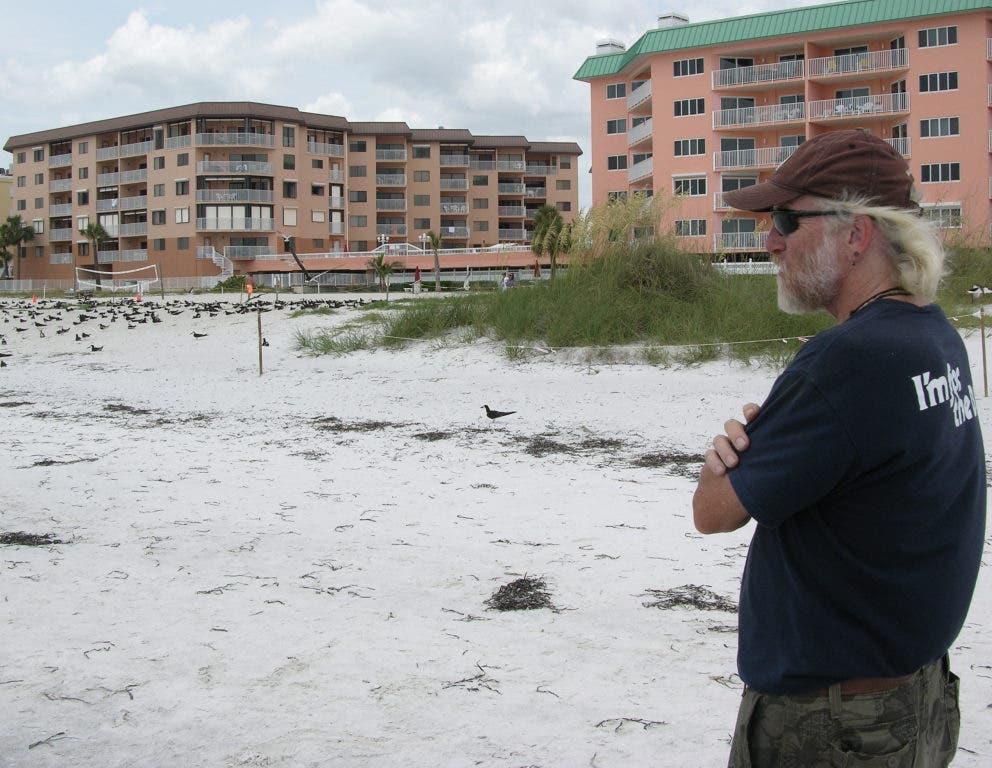


“The birds have to go somewhere. Look along the beach. Where else they gonna go?”
Volunteer Stephen Dugay was pointing to the pack of trees lining the beach side of theSuncoast Seabird Sanctuary in Indian Shores. He was also gesturing to point out the lack of trees nearby.
I watched the proof of his statement play out before me. A baby Black Skimmer was tucked under mama right outside the beach’s designated nesting area. The baby seemed to be complaining, squawking and walking several steps away, then back again to its little scooped out section of sand, just big enough for baby to hide.
Dugay noticed the chick that had my full attention. “That’s why the sanctuary is so important,” he said.
Dugay went on to explain that the black skimmers nest on Florida’s beaches each year. According to The Cornell Lab of Ornithology, the black skimmer is unusual because of its foraging style. You can spot them flying just over the water’s surface with their bill open and lower mandible slicing the surface for fish. These social birds are known to hang out together and nest in the same spot year after year, if left undisturbed.
Outside the sanctuary, a sign south of the nesting area warns beachgoers not to enter. True to form, dozens of adult skimmers with black backs, crisp white bellies and red and orange bills gathered on the shoreline and parted each time a beachgoer walked by. Dugay watched to make sure the adult birds weren’t bothered by human interaction. After teaching middle and high school students English and history for 25 years, his work at the sanctuary has become a kind of calling.
Volunteering here he says, “is good for my soul and keeps my brain sharp.”
“I come here for the mission... the way these people are so dedicated to the birds. I’ve always been an outdoor guy,” he said.
Dugay helps publicize the sanctuary by taking various birds with him to speaking engagements.
“I get to meet people from all over the globe when I go on talks.” He’s spoken to gatherings of disabled groups, elderly folks, boy and girl scout troops, as well as the mentally challenged. The rest of the year, Dugay lives in Maine.
Half a dozen Eastern brown pelicans linger in the water just yards from the sanctuary. They don’t seem to be sure if they want to leave the place that nurtures them.
Find out what's happening in Pinellas Beachesfor free with the latest updates from Patch.
Dugay knows how they feel.
To take a tour, make a donation, or just see some amazing photos of birds, go to: http://www.seabirdsanctuary.com/