Politics & Government
Could 2019 Hurricane Season Dump More Sewage Into Tampa Bay?
Residents are invited to hear Pinellas County's action plan to prevent wastewater treatment facilities from overflowing into waterways.


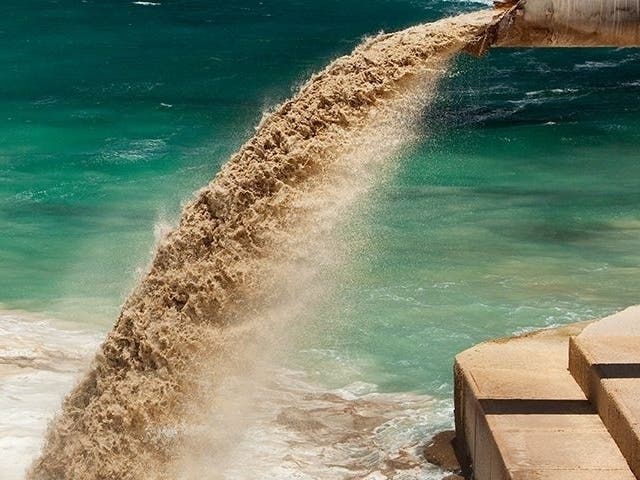

PINELLAS COUNTY, FL -- In advance of the hurricane season, which begins June 1, residents are invited to hear Pinellas County's action plan to prevent wastewater treatment facilities from overflowing into the county's waterways.
The meeting will take place Thursday, May 23, from 9 a.m. to 11 a.m. in the Digitorium of the C.W. "Bill" Young University Partnership Center on the Seminole Campus of St. Petersburg College, 9200 113th St. N., Seminole.
Pinellas County staff will be on hand to give a progress report on the county's wastewater and stormwater mitigation projects outlined in its 2017 action plan.
Find out what's happening in Pinellas Beachesfor free with the latest updates from Patch.
Attending will be members of the Wastewater/Stormwater Partnership, including Megan Ross, utilities director for Pinellas County; Ray Boler, public works director for the City of Safety Harbor; Paul Miselis, watershed section manager for Pinellas County; Dave Porter, public utilities director for the City of Clearwater; and Claude Tankersley, public works administrator for St. Petersburg.
Those attending will learn the results of studies examining the flow of stormwater entering the wastewater system, hear about stormwater improvement projects and initiatives aimed at reducing the flow identified in the studies, the status of legislation and ordinances to aid in reducing stormwater inflow into the wastewater system, and the outreach underway to educate the public about various ways they can help reduce negative impacts to the wastewater system.
Find out what's happening in Pinellas Beachesfor free with the latest updates from Patch.
The county has been grappling with ways to reduce overflow from its wastewater system that, in the past, has dumped millions of gallons of sewage, both treated and untreated, into waterways and Tampa Bay.
In 2016, St. Peterburg's Northwest Wastewater Treatment Plant dumped 128 million gallons of wastewater into Boca Ciega Bay during torrential rains.
That same year, Clearwater's Marshall Street Water Reclamation Facility had a mechanical failure that caused an unintentional release of sewage into Stevenson Creek. Officials estimate that 2.9 million gallons of sewage drained into Old Tampa Bay and 28.8 million gallons ended up in Clearwater Harbor.
When Hurricane Hermine struck Tampa Bay in 2016, dumping 22 inches of rain, Largo discharged 24.4 million gallons of wastewater into Cross Bayou Canal, Clearwater released 31.7 million gallons of partly treated sewage into Tampa Bay, Pinellas County released 7.3 million gallons and St. Petersburg dumped more than 136 million gallons.
Samples taken afterward by the Florida Healthy Beaches Program showed a marked increase in fecal coliform and enterococci bacteria in the bay. Environmental groups claim the spills resulted in the deaths of bird and marine life as well.
The national environmental group, Surfrider Foundation, contends that sewage spills from wastewater treatment plants pose more danger to the health of Tampa Bay than red tide.
In an effort to come up with solutions to the county's insufficient wastewater treatment capacity, the county and municipalities formed the Wastewater/Stormwater Task Force in October 2016 to work on ways to increase capacity, upgrades to prevent leaks and spills and alternative stormwater drainage that don't require stormwater being pumped into the wastewater treatment system.
The big stumbling block to fixing the system is the price tag. The estimated cost to upgrade facilities in the city of St. Petersburg alone is an estimated $304 million, according to St. Petersburg Mayor Rick Kriseman.
It costs about $35 million to upgrade an existing wastewater plant, according to the Environmental Protection Agency. Building a new facility can cost $275 million.
With those price tags, counties and municipalities throughout Florida are vying for limited federal funding including a hunk of the $1.164 billion in capitalization grants to states under the EPA's State Revolving Fund, $60 million in subsidies under the EPA-administered Water Infrastructure Finance and Innovation Act, and $58.6 million for Reclamation’s Title XVI reclamation/recycling projects.
For more information about the Pinellas County Wastewater/Stormwater Partnership, click here
Get more local news delivered straight to your inbox. Sign up for free Patch newsletters and alerts.