Politics & Government
Florida Officials: People, Stop Painting The Wildlife
"Tortoises and turtles don't need touch-ups," the FWC chastised the violators on its Facebook page.


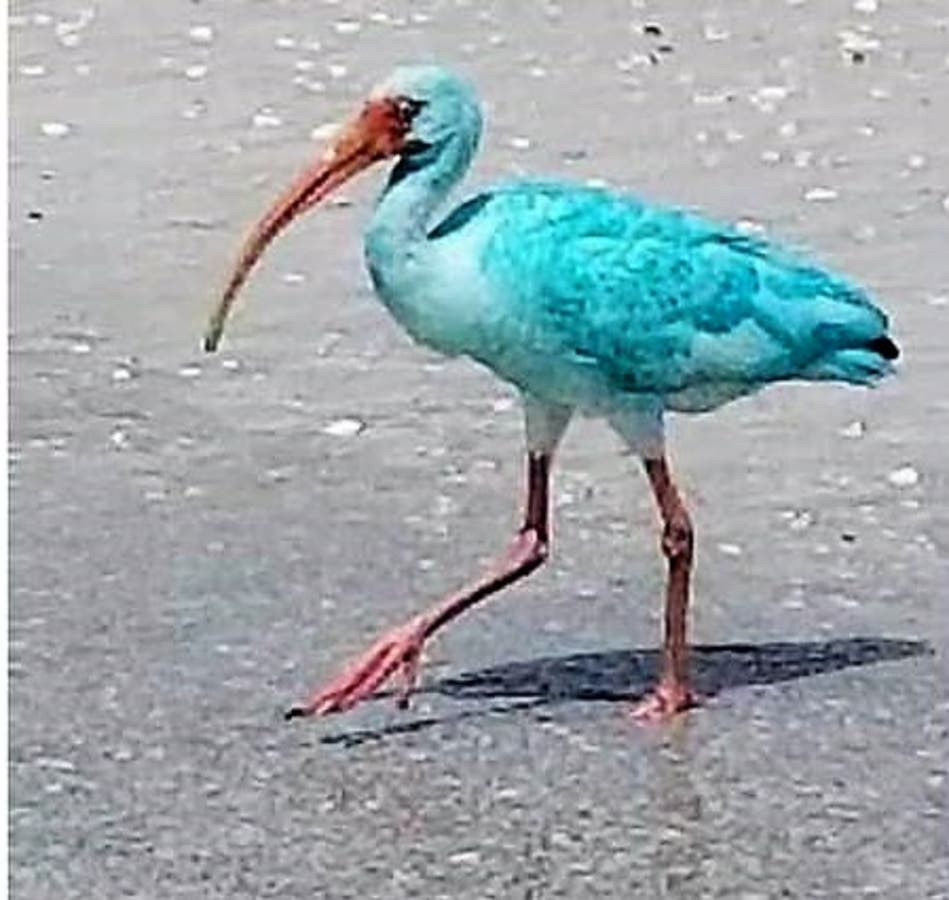


INDIAN ROCKS BEACH, FL – Maybe someone thought it was cute, or funny.
But Birds in Helping Hands wildlife rescue director Shelley Vickery says painting a white ibis blue was neither cute nor funny. It was just stupid.
After seeing a photo of the blue-dyed bird posted on Facebook, Vickery’s Seminole-based nonprofit is trying to locate it to remove the paint or dye from its feathers. She’s afraid that whatever was used to give the bird its blue hue could be toxic and make the bird sick when it preens its feathers.
Find out what's happening in Pinellas Beachesfor free with the latest updates from Patch.
The ibis was last seen on Thursday, Aug. 9.
Vickery said the bird appears to have been dipped in blue food coloring or a dye. However, she spoke to the Audubon Society in Port St. Lucie who encountered a similarly colored ibis.
Find out what's happening in Pinellas Beachesfor free with the latest updates from Patch.
The Audubon Society discovered that the city’s water department uses copper sulfate to manage algae in ponds and the copper sulfate can turned the ibis blue.
“The copper sulfate is the same color as the ibis we have been looking for,” she said. “I have been in contact with FWC and they will check with local environmental agencies. If it is the case, this product can be toxic to wildlife.”
A recent trend in painted wildlife prompted the Florida Fish and Wildlife Conservation Commission to declare, “Enough is enough.”
The FWC issued a plea to the public to leave the color of Florida’s wildlife alone.
It began with the discovery of tortoises and turtles with painted shells.
"Tortoises and turtles don't need touch-ups," the FWC chastised the violators on its Facebook page.
The FWC said the paint or dye can be toxic even when used on the impervious-appearing shells of reptiles.
The paint blocks the absorption of vitamins from the sun and toxic chemicals from the paint can get into the bloodstream, causing a host of health problems.
Additionally, the paint fumes can cause respiratory problems and toxins from the paint can be absorbed into the bloodstream through the shell. The paint also makes the tortoise or turtle more vulnerable because it can be easily spotted by predators.
A licensed wildlife rehabilitator must remove the paint in steps so the reptiles don’t become traumatized.
“If you come across a turtle or tortoise with paint on its shell, do not attempt to remove the paint yourself,” said FWC officials. “Instead, contact the FWC regional office near you to find a licensed wildlife rehabilitator in your area or to speak to an FWC gopher tortoise or wildlife assistance biologist during office hours.
The FWC took to Facebook again with another reprimand after discovering a white ibis in Palm Beach County with its feathers dyed a bright orange color. The paint was so heavy, the bird was having trouble flying.
"First turtles, now birds," the FWC posted on Facebook. "Please keep your paint on the canvas and off the wildlife. White ibis are protected in Florida. Not only is it illegal to paint them, but it is cruel to paint any wildlife."
Now, it’s a blue ibis on Indian Rocks Beach.
“Birds are much smaller than us,” said Vickery. “It doesn’t take a lot ot poison them. It can affect their livers and other body functions.”
She’s asking anyone who spots the blue ibis not to try to capture it but to call her organization right away at 727-365-4592.
Anyone who comes across painted wildlife can also call the FWC’s 24-hour Wildlife Alert Hotline at 888-404-FWCC (3922).
Images via FWC and Birds in Helping Hands
(For more local news from Florida, click here to sign up for real-time news alerts and newsletters from Patch. If you have an iPhone, click here to get the free Patch iPhone app; download the free Patch Android app here.)
Get more local news delivered straight to your inbox. Sign up for free Patch newsletters and alerts.