Politics & Government
Governor Scott Won't Cut Beach Nourishment Dollars
Governor Scott is keeping the funding for beach nourishment at $16 million dollars.
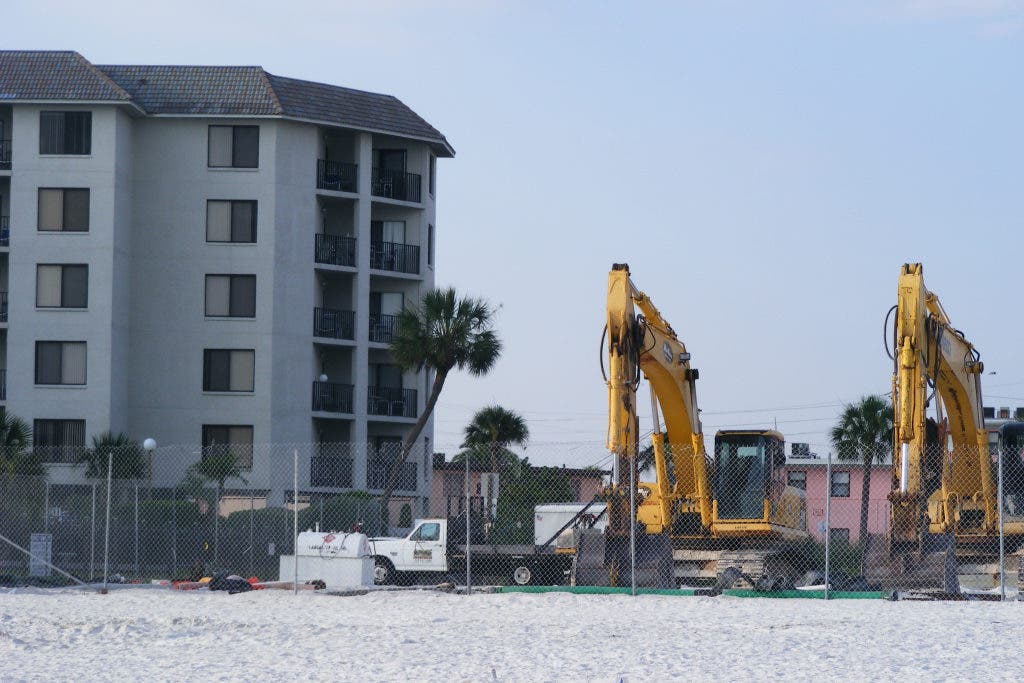

There’s one thing keeping many of the hotels and high-rise condos that line Pinellas county’s world class beaches from literally crumbling into the ocean: money, and lots of it.
The tons upon tons of sand that keep the water from lapping at the shrubs and shuffleboard courts that line those structures are slowly, but surely drifting away due to a natural process called long shore drift.
“If you ever see a true natural beach,” said Scott Orsini, president of the Suncoast Surfrider Foundation, “it has a dune that’s held together by sea oats and palmettos, and kind of a little structure there.”
Find out what's happening in Pinellas Beachesfor free with the latest updates from Patch.
That structure would keep the dunes in place, preventing erosion, but shoreline development has decimated dune systems along many Florida beaches.
“When you go to build buildings you whack down dunes,” Orsini said. “There’s no natural buffer to erosion so what you kind of have to do is put the beach back, because cyclically it washes away.”
Find out what's happening in Pinellas Beachesfor free with the latest updates from Patch.
Beach nourishment (and renourishment) is what puts the beach back. The process involves dredging sand from nearby shoals and channels, and spitting it up onto beaches in need. Such projects are quite pricey and require rare and heavy equipment. There are a handful of nourishment projects in the works along Pinellas County’s coastline, and nearly two-dozen throughout the state.
These projects are funded with federal, state, and local dollars. Many of the federal dollars come as matching funds to the millions the state puts in each year.
This year, governor Rick Scott had planned on vetoing $16 million the legislature had committed to beach nourishment throughout the state. This would have meant a severe loss in federal dollars as well.
It had government officials along the beach like Indian Shores Mayor Jim Lawrence a little scared.
“Beach renourishment is extremely important to the beach communities and to the Florida economy as a whole,” Lawrence said.
State Representative Jim Frishe, a Republican from St. Petersburg said the freshman governor is hyper-wary of budget turkeys benefiting only a small area.
“The governor originally was looking at it as a basically a local expenditure of state funds, Frishe said. “But we had a chance to talk to his staff, and basically educated him as to the beach renourishment program throughout the entire state.”
Having a wider beach also provides a solid barrier against storm surge. State Senator Dennis Jones, a Republican from Treasure Island, said this means lower insurance premiums.
Jones said the state statute requires $30 million in state funding go toward renourishment. That money is supposed to come from doc stamps – taxes you pay when you build a house or get a mortgage. With the housing market in its current paltry state, that amount is not exactly possible.
With the $16 million intact, it makes up just shy of a quarter of the total funds slated for beach nourishment this year, which is about $55.5 million – enough to get by.
“Universal and Disney are great assets, but in the final analysis, people come to Florida for the beaches,” Rep. Frishe said.