Home & Garden
1920s Sarasota Realtor’s Row
When Sarasota Went Boom: The 1920s, Realtor's Row, and the Titans Who Built Our City

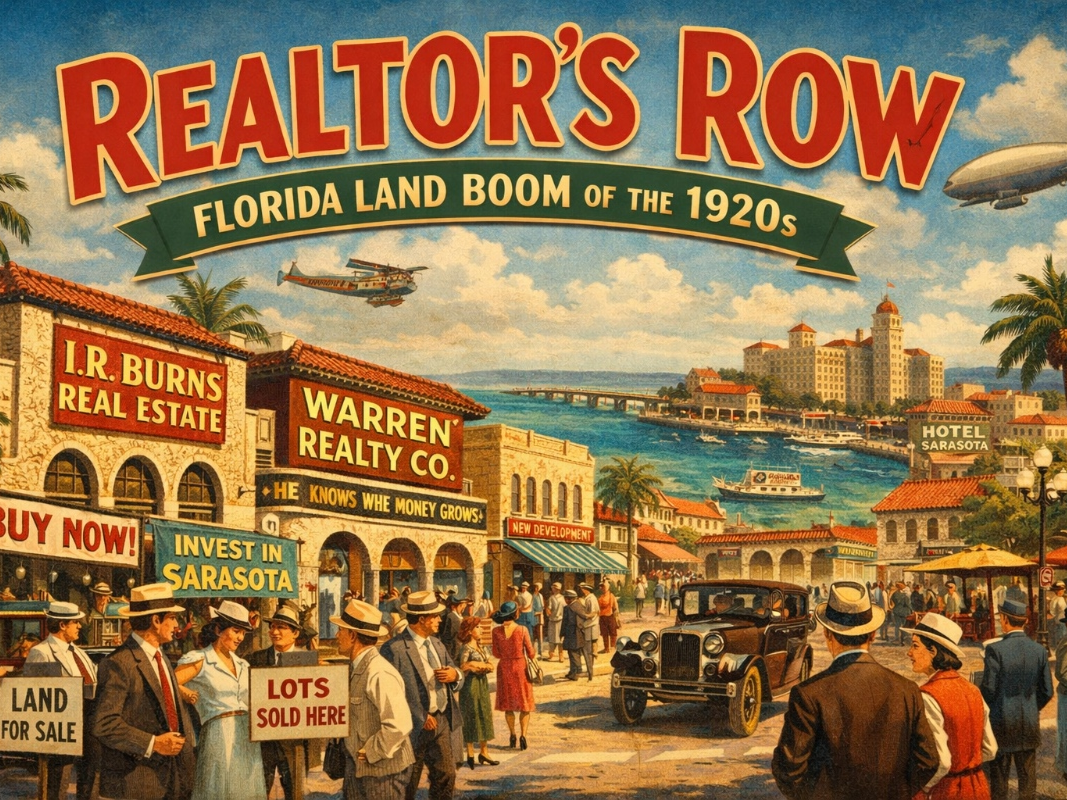
Long before Sarasota became synonymous with beaches, culture, and luxury real estate, it was the epicenter of one of the wildest property booms in American history. The Florida Land Boom of the 1920s transformed Sarasota almost overnight—from a quiet Gulf Coast town into a fast-growing, heavily marketed real estate hotspot. And right in the middle of that frenzy was a stretch of downtown that locals came to call “Realtor’s Row.”
If you’ve ever walked downtown and admired the historic buildings with their Mediterranean flair, you’re literally walking through the physical legacy of that era.
The Boom That Changed Everything
Find out what's happening in Sarasotafor free with the latest updates from Patch.
After World War I, America was optimistic, mobile, and ready to invest. Florida became the dream. Railroads, automobiles, glossy brochures, and aggressive salesmanship turned land into the hottest commodity in the country. Sarasota, with its bays, keys, and sunshine, was irresistible.
Between roughly 1922 and 1926, land values soared. Lots were bought and sold—sometimes multiple times in a single day. Some deals closed before surveys were even finished. The population exploded. New subdivisions were platted across the mainland and barrier islands. Sarasota even briefly expanded its city limits dramatically in a bold vision of “Greater Sarasota.”
Find out what's happening in Sarasotafor free with the latest updates from Patch.
Downtown, real estate offices clustered together in what became known informally as Realtor’s Row—a hub of brokers, developers, speculators, and dreamers all selling the promise of paradise
Realtor’s Row: Where the Deals Happened
Realtor’s Row wasn’t just a nickname—it was a real economic engine. Buildings along downtown streets housed land companies, brokerages, and development offices pushing Sarasota property to buyers across the country.
Two buildings still standing today tell that story:
• The I.R. Burns Building (1925) – Built by one of Sarasota’s most influential developers, this building symbolized the confidence and ambition of the boom years.
• The Warren Building (1926) – Developed by realtor Clark Warren, whose advertisements famously proclaimed, “He knows where the money grows.” That line perfectly captures the mood of the era.
These weren’t just offices—they were sales machines, moving enormous volumes of property and shaping Sarasota’s future footprint.
The Personalities Who Built Boomtown Sarasota
The 1920s Sarasota real estate story is really a story about bold, visionary—and sometimes risky—personalities.
Owen Burns
Often called the father of modern Sarasota, Owen Burns was a developer, financier, and builder who shaped huge parts of the city. He built bridges, developed neighborhoods, financed growth, and put his name on buildings that still define downtown. Burns wasn’t just selling land—he was building a city.
John Ringling
Yes, that Ringling. The circus magnate didn’t just winter here—he invested heavily in Sarasota’s future. He helped transform the city into a cultural destination, backed major developments, and elevated Sarasota’s national profile. His vision went beyond speculation; he saw Sarasota as a refined, world-class coastal city.
Clark Warren
A prominent realtor and developer, Warren embodied the sales-driven energy of the boom. His building and his marketing slogans reflect just how aggressive and confident real estate promotion had become in the mid-1920s.
Bertha Palmer (and other early influencers)
Although her peak influence slightly predates the 1920s boom, Bertha Palmer’s impact on Sarasota’s development, land ownership, and reputation set the stage for the explosive growth that followed. Sarasota’s boom didn’t happen in a vacuum—it was built on foundations laid by earlier visionaries.
The Bust That Followed
Like all bubbles, the Florida Land Boom didn’t last forever. By 1926, rising prices, transportation bottlenecks, tightening credit, and waning confidence brought sales to a sudden halt. Deals collapsed. Speculators left town. Prices fell—hard.
Sarasota survived, but the momentum vanished almost overnight. The city even had to scale back its ambitious expansion plans. A few years later, the Great Depression would seal the end of the boom era for good.
Why It Still Matters Today
Here’s the fascinating part: modern Sarasota is still shaped by the 1920s boom.
• Many of our historic downtown buildings come from this period.
• The Mediterranean Revival style that defines so much of Sarasota’s charm traces straight back to the boom years.
• The layout of neighborhoods, the early road systems, and even the idea of Sarasota as a “destination” city were cemented in the 1920s.
In a very real way, today’s Sarasota real estate market—luxury branding, lifestyle marketing, waterfront premiums—echoes patterns that started a century ago on Realtor’s Row.
From Boomtown to Legacy City
The 1920s were chaotic, ambitious, and transformative. Sarasota’s early developers took enormous risks, sold big dreams, and—despite the crash—left behind a city with enduring character, architecture, and identity.
Next time you walk downtown, take a look at those historic facades and remember: you’re standing in what was once one of Florida’s hottest real estate markets—where fortunes were made, lost, and where Sarasota truly became Sarasota.
______________________
Forest Balderson is a Realtor and the Director of Business Development for VUE Realty, a boutique brokerage in downtown Sarasota. He has a bachelors degree in Creative Writing as well as a graduate certifate in Nonprofit Management. He earned the Graduate, Realtor Institute designation in 2018. as well as a graduate certifate in Nonprofit Management/Board Governance.