Politics & Government
Controversial ‘Don’t Say Gay’ Bill Passes Florida Senate, Heads To DeSantis' Desk: Report
Florida's 'Don't Say Gay' bill passed the state Senate Tuesday and heads to Gov. Ron DeSantis' desk to be signed into law.


FLORIDA — The Florida state Senate passed the controversial "Don’t Say Gay" bill Tuesday in a 22-17 vote, the Hill reported.
The measure limits discussions about sexual orientation and gender identity in Florida's elementary schools, and also restricts how these topics can be discussed by older students.
The legislation says classroom instruction on "sexual orientation or gender identity may not occur in kindergarten through grade three or in a manner that is not age appropriate or developmentally appropriate for students."
Find out what's happening in Sarasotafor free with the latest updates from Patch.
The bill also opens the doors for parents to sue Florida schools if these discussions take place, and it requires schools to alert parents if there's any change to a student's mental, emotional or physical health.
The Florida House of Representatives previously passed the bill on Feb. 24.
Find out what's happening in Sarasotafor free with the latest updates from Patch.
“When you actually look at the bill and it says ‘no sexual instruction to kids pre-K through three,’ how many parents want their kids to have transgenderism or something injected into classroom instruction?” the governor said. “It’s basically saying for our younger students, do you really want them being taught about sex? And this is any sexual stuff. But I think clearly right now, we see a focus on transgenderism, telling kids they may be able to pick genders and all of that.”
Related Stories:
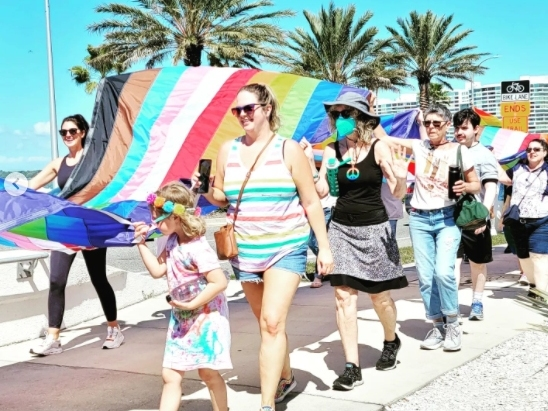
- 'Don't Say Gay' Bill Protest At Sarasota's Ringling Bridge
- Hundreds Of Students Walk Out To Protest 'Don't Say Gay' Bill
- Manatee Pride Brings LGBTQ Community Together In Bradenton
- Abortion, 'Don't Say Gay' Legislation: What's Left This Session?
His press secretary, Christina Pushaw, also called those opposing the “Don’t Say Gay” bill “groomers.”
“The bill that liberals inaccurately call 'Don’t Say Gay' would be more accurately described as an Anti-Grooming Bill,” she tweeted on Friday.
Pushaw wrote in another tweet, “If you’re against the Anti-Grooming Bill, you are probably a groomer or at least you don’t denounce the grooming of 4-8 year old children. Silence is complicity. This is how it works, Democrats, and I didn’t make the rules.”
LGBTQ activists throughout Florida and nationally have slammed the bill.
"The 'Don't Say Gay' bill, which bans discussion of LGBTQ people or issues in primary grades, would further stigmatize the LGBTQ community, chill efforts to create inclusive school environments, and isolate LGBTQ kids who are already at staggeringly higher risk of depression, anxiety and suicidal ideation than their peers," said Equality Florida, a nonprofit LGBTQ+ advocacy group, in a statement.
Advocates with the Human Rights Watch have also spoken out against the bill, saying that if the law goes into effect, "Florida is moving in the wrong direction."
"Teachers should not fear punishment if they celebrate diversity or let kids know that it's okay to be LGBT," one researcher with the organization said, "and students should not be cut off from affirming information and support."
There have been rallies and student walkouts opposing the measure throughout the state in recent weeks, as well.
"I think that this whole thing is an initiative to try to continue to suppress education on minorities and oppressed groups," Shayna Nuenez, a freshman at the University of South Florida, told Patch. "Who's to say that you can omit that from public education and in comparison to everything else that happened in history? It's just shamelessly discriminatory."
Mary Tavarozzi, board president of ALSO Youth in Sarasota and Manatee counties, told Patch that because of the “Don’t Say Gay” legislation, it’s been “a very difficult past couple of months” for the LGBTQ youth her organization supports.
For nearly two years, they've been socially isolated because of the pandemic, she said. "Now, they're finally out and open, but then we have the Florida legislature causing them a lot of trauma and anxiety."
The proposed law has left a lot of LGBTQ youths feeling scared and isolated, Tavarozzi said. "They're fearful their GSA clubs could be stopped, that books are gonna be banned from libraries, that they can't talk to their teachers."
In Sarasota, an openly gay school board member, Tom Edwards, told Patch that he is "most concerned about our LGBTQ students and families."
Florida’s “Don’t Say Gay” bill is part of a larger state trend, he added.
"It's a much bigger, hate-filled era. I think everyone is being attacked: women's rights, LGBTQ rights, antisemitism, CRT (critical race theory) that is a dog whistle for racism. You just name it. Who's next?" he said.
Get more local news delivered straight to your inbox. Sign up for free Patch newsletters and alerts.