Politics & Government
Downgrading Manatee Protections 'Misguided,' Lawmaker Insists
U.S. Rep. Vern Buchanan fired off a letter urging the U.S. Fish and Wildlife Service to reconsider plans to downgrade manatee protections.


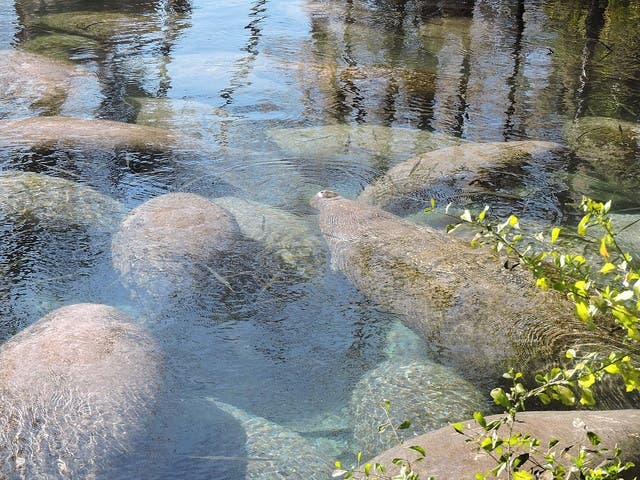
SARASOTA, FL — As the time clock for public comment on the U.S. Fish and Wildlife Service’s proposal to downgrade federal protection for manatees winds down, U.S. Rep. Vern Buchanan fired off another objection letter Monday.
The Republican from the Sarasota area has asked the agency to withdraw its plan to downgrade manatee status from endangered to threatened under the federal Endangered Species Act. The proposal pitched earlier this year has been in a public comment phase since January. That comment period closes this Thursday, paving the way for the agency to make a final determination.
The decision to possibly change the status comes on the heels of pressure from the boating industry and developers who say the state’s low-speed boating zones and other protection measures are too stringent. The Pacific Legal Fund also sued federal officials after filing a petition in 2012 to have the status for Florida manatees changed.
Find out what's happening in Sarasotafor free with the latest updates from Patch.
The U.S. Fish and Wildlife Service defines an endangered species as any species that is in danger of extinction. A threatened species is one that is likely to become endangered. The reclassification to threatened status would still leave a number of protections in place for manatees, but it could also ultimately lead to an easing of boating restrictions meant to protect the creatures.
See Also:
Find out what's happening in Sarasotafor free with the latest updates from Patch.
Manatees have been listed as endangered species under the act since 1966.
“I’m concerned that weakening protections will lead to a decline in the manatee population,” Buchanan said. “Manatees are iconic residents of Florida. We should be doing all we can to ensure the survival of these gentle giants.”
The Florida Fish and Wildlife Conservation Commission estimates the state’s current manatee population at 6,250, according to data released from a count taken earlier this year.
While those numbers show improvements over past years, Buchanan insists the federal agency’s initial analysis was based on outdated information and didn’t take manatee deaths since 2012 into account. In 2013, Buchanan noted that 16 percent of the state’s manatee population died due to a red tide algae bloom and an illness that struck the population along the state’s east coast.
Monday’s letter is the second Buchanan has sent to Daniel Ashe, the fish and wildlife service’s director, since the proposal was floated.
The time for public comments closes on Thursday. It is currently unclear how soon the agency will make a final determination.
More information about the proposed reclassification can be found on the U.S. Fish and Wildlife Service website.
What do you think should happen? Tell us by commenting below.
Buchanan’s full letter reads as follows:
Dear Director Ashe:
I write in strong opposition to the U.S. Fish and Wildlife Service’s (the Service) proposal to downlist the West Indian manatee under the Endangered Species Act (ESA) from endangered to threatened status. This decision is based on outdated information and underestimates the effect that a downlisting will have on protections that have helped limit manatee deaths. As a result, I urge you to withdraw this proposed rule.
Manatees are special for many Floridians. In addition to being the state’s official marine mammal, an entire county – which I represent – is named after these gentle giants.
Just 25 years ago, there were barely over 1,000 manatees in the state of Florida. That number is now estimated to be around 6,000. The Service points to this as good news and rightfully credits the species’ listing as endangered under the ESA for this increase. The ESA has worked to help manatees overcome multiple threats to their existence. These challenges are not static, nor are they predictable. The Service should be taking a precautionary approach when it comes to the recovery of the manatee, and in light of the following concerns, the Service should withdraw its downlisting proposal and retain the manatees’ endangered status.
The basis for the Service’s proposal to reduce the status of manatees is said to be an analysis of the population’s viability. It is cited in the proposal as “Runge, 2015.” However, the Service’s proposal acknowledges that this analysis contains outdated data and information. For example, adult survival rates are based on data only through the winter of 2008-2009 and, elsewhere, the most recent information cited in the report is from 2011-2012.
Since the years used in the analysis, manatees have suffered a catastrophic die-off in the Indian River Lagoon that the U.S. Geological Service Representatives have stated cost the lives of five percent of the manatees on the U.S. east coast. During that same time, toxic algae (red tide) killed a record number of manatees on the state’s west coast. According to the Florida Fish and Wildlife Research Institute, the statewide death toll of manatees was 803 as of 2013; or around 16 percent of the state's entire population. Yet none of this information was considered in the Service’s outdated analysis.
In addition, in its analysis, the Service assumes that the current level of mortality in each category (e.g., watercraft collisions, cold stress, red tide, etc.) will stay approximately the same indefinitely. However, this is unlikely. The likelihood of deaths from both red tide events and from unknown pathogens has not been adequately analyzed when projecting the future for manatees. Additionally, as noted by the Service itself, there will be a continued loss of artificial sources of warm water in the winter and, as a result, manatees in the Southwest and Northeast regions of the state will show “long-term decline” as a result of the loss of these warm water winter refuges.
In its January 6, 2016 press release, the Service stated that “[t]he proposal to downlist the manatee to threatened will not affect federal protections currently afforded by the ESA.” If all protections will remain the same, it is not apparent that a change in the listing status is necessary. In fact, downlisting the manatee may open the door to future erosions of protections for these unique animals.
The Service cites the existence of federal and state laws such as the Marine Mammal Protection Act and Florida Manatee Sanctuary Act as sufficient in providing the animals with the protections they need. Yet there is no guarantee that such other laws will remain in place to protect the species even if manatees are downlisted under the ESA.
Approximately fifty manatee protection areas are set up by federal, local, and industry leaders and many of these areas or their protective restrictions can be altered or removed if a downlisting goes forward. For example, despite the Service stating in its proposal that on the east coast of Florida “watercraft-related mortality is the major threat to this population,” five days after the proposed reduction in protections, the Brevard County commissioners approved a resolution requesting that the Florida Legislature review slow-speed zones for boats to determine whether they are effective or still necessary. The resolution also called for reconsidering the need for the Manatee Sanctuary Act, stating that it has “become a hindrance to effective manatee management.”
Manatees are iconic residents of Florida. Their presence drives a robust tourist industry. Their unhurried progress in my state’s waters is a reminder to us all to slow down and appreciate the world around us. Manatees deserve better than a premature determination that they have recovered when so many threats still face them and cloud our understanding of their future. I urge continued endangered status for manatees under the ESA, and ask you to immediately withdraw the Service’s proposal to downlist manatees to threatened status.
Photo courtesy of the Florida Fish and Wildlife Conservation Commission
Get more local news delivered straight to your inbox. Sign up for free Patch newsletters and alerts.