Politics & Government
Neighborhoods Grill City Commission Candidates
On Saturday a candidate forum was held in Sarasota for city commission candidates.
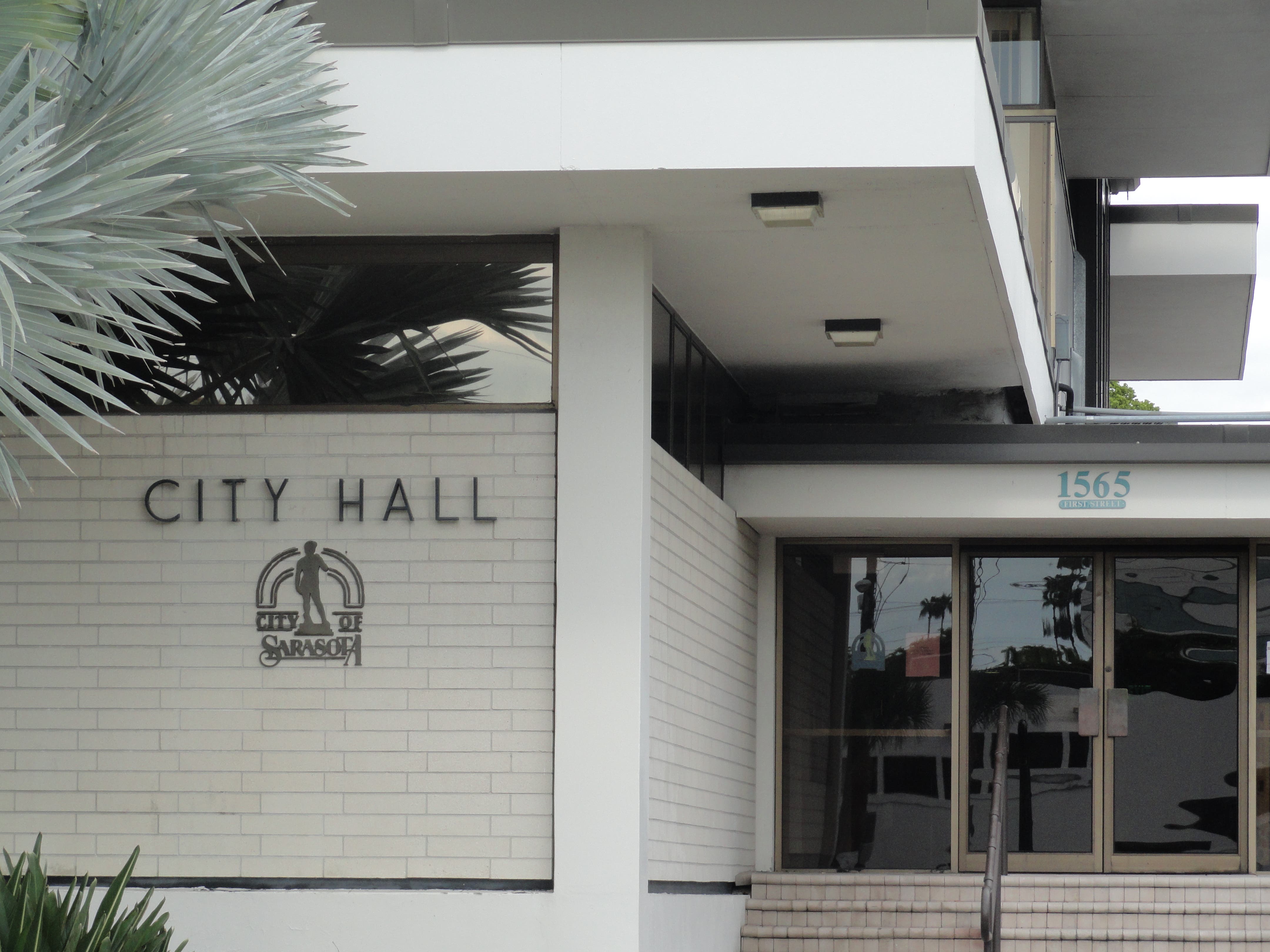
In Sarasota city elections, neighborhoods rule. Winners can be decided by narrow margins, and neighbors often ask their association leaders who is the best candidate. Money matters less, and door-to-door campaigning is not only the norm, it is required.
Thus Saturday’s campaign forum before the Coalition of City Neighborhood Associations may be pivotal for electoral success. We’ll break the coverage into districts. The election is March 8, with a run-off (if necessary) in April. All the districts have roughly the same population.
District One: Four years ago, a mere 1,095 votes were cast in the district covering the northeastern quadrant of the city, north of Fruitville Road but minus the waterfront. This year D1 has the most crowded field, with four candidates vying for an open seat vacated by Fred “Glossie” Atkins. In the race are Richard Dorfman, Linda Holland, Willie Charles Shaw and Frederick Douglas Williams.
Find out what's happening in Sarasotafor free with the latest updates from Patch.
The race is almost guaranteed to go to a runoff. It could take as few as 400 votes to guarantee a spot on the April ballot, and the same 400 could ensure victory. This is retail politics, vote-by-vote.
There was a clear split among the D1 candidates on “administrative review” of development plans. For projects not requiring a rezoning or comprehensive plan change, developers would be subject to staff review but no public hearings. Dorfman said he favors administrative review “but we need criteria, something definite on the books.” Holland seemed to favor it too. “We went through this with the Duany master plan,” she said. “We ended up with administrative review, and it worked with our neighborhood.”
Find out what's happening in Sarasotafor free with the latest updates from Patch.
However Shaw tilted in the opposite direction. “Without standards, we have nothing to measure by.” Williams straddled the issue. “Normally I’d be in favor of administrative review, but at present I’m not,” he said. “We need staff input into the commissioners, and public input.”
Should the front-yard parking ban in Gillespie Park be extended city-wide? Holland pushed hard to put it place and said, “It has worked in Gillespie Park.” Dorfman said, “I applaud what Linda has done.” Shaw agreed. “I would like to see this ordinance throughout the city,” he said. Williams however said the ban raises a constitutional issue about property use. “Can we legally vote that you cannot put cars on your front lawn, but you can put roses there?” he asked.
The biggest issue facing the Sarasota City Commission at the coming year is pensions for police and other city workers (two very different plans). Holland and Shaw support a defined-contribution plan, while Dorfman ducked the issue, saying “The pension issue isn’t going away. It has to change.” Williams ducked even harder: “I plead ignorance,” he said. “We should set up a panel of experts to bring back a report.”
Candidates were asked if they have read the Duany downtown master plan? Of the nine, only two admitted they have not: Shaw and Dorfman.
One big issue hangs over D1 – race. Since district elections were demanded as part of the 1985 settlement of a Voting Rights Act lawsuit, D1 has always elected a Black city commissioner. This year, two of the four candidates are White. The question posed: how can Newtown be assured of representation if it is not represented by a minority commissioner?
Holland, a 30-year neighborhood activist, said, “I can represent everybody. I’ve done it for years.” Shaw said, “I’m going to put you on notice, we will never see people coming her to create jobs until we address the issue of race. When we open ourselves up to diversity, we will see change.” Williams concurred. “The greatness of America is diversity. This race thing is patronizing and condescending,” he said. Dorfman played the question with a twist. “Color doesn’t really matter to me,” he said. “You’ve been represented by the same individual – pretty much – for the past 20 years. Has he represented you well? Are you happy with what’s been accomplished?”
And last, would the candidates support changing the date of elections from Spring to Fall, a proposal the city’s Charter Review Committee rejected last week but one the city commission could revive. “I don’t support the change of dates,” said Shaw. Williams agreed, “I’m in favor of remaining where we are now.” Both Holland and Dorfman favor moving the dates of the city elections.
District Two: 3,795 votes were cast in this district four years ago. The district encompasses all the waterfront property out to US 41, almost all of downtown, the islands and a tiny sliver of the city’s southern boundary. Paul Caragiulo is challenging incumbent Dick Clapp for the seat.
Administrative review is an important issue in D2, because two of its neighborhoods – south Palm Avenue and Laurel Park – want it removed from their borders. Caragiulo said it “is appropriate from some projects,” but in general “I am not in favor of removing administrative review.” Clapp agreed that “it is appropriate in some instances,” but “I’m in favor of doing away with it for those two neighborhoods.”
A decision from the “baseball-deal days” came up. When the city and county were negotiating with the Boston Red Sox, three lots were purchased for $5 million by the city on the western side of Payne Park to support construction of a new baseball stadium. Was it too much, was it premature? “I don’t believe we paid that much more than the appraised value,” said Clapp. “The plan was to add that to Payne Park to have a presence on US 301.” Caragiulo was blunt: “Basically we got hijacked. It was a bad decision and a bad deal.”
Banning front-yard parking? “What’s good for one neighborhood should be good for all,” said Caragiulo. Clapp was more guarded: “Nobody’s come forward to ask the city commission for an expansion.”
On pensions, Caragiulo supported a defined-contribution plan for general city employees; it’s an IRA-like system that is portable, should the employee take another job elsewhere. But the police plan is a pure-retirement system; they don’t even pay Social Security. Caragiulo said the police issue “is complex” and “not sustainable.” Clapp said, “We have to do something and something now.” He noted the police pension costs are rapidly becoming unsustainable.
On medical benefits for city retirees, Clapp tried to clear the air. “There was never a city commission vote” to pay for 100 percent of retiree health care. “We found one flier on a bulletin board mentioning free health care for life,” he said. “There was no written contract. We searched all the minutes back to 1993. There is no record a commitment was made.” Caragiulo said, “You have to stick with your deal.”
Both Clapp and Caragiulo have read the Duany downtown plan. “Several times,” said Clapp. “Yes, and it’s in the back of my car,” said Caragiulo.
Both men acknowledged Sarasota has a race problem. “The level of segregation that exists in this town is pretty amazing,” said Caragiulo. “I will give you my word I will work to bring this community together.” Clapp said, “Yes, we have not resolved the race problem. We are still segregated in Sarasota. During my time as mayor, I held regular office hours in Newtown. My door is open.”
As for changing the date of elections, Caragiulo says yes and Clapp says no.
District Three: Four years ago the district three election was a blowout of historic proportions. Kelly Kirschner won 73 percent of the 2,128 votes cast to unseat the incumbent. He is not running for re-election, leaving the seat open to three challengers: Diana Hamilton, Shannon Snyder and Pete Theisen. The District is the southwest quadrant of the city south of Fruitville Road and East of U.S. 41 (And minus that tiny D2 strip on the Southern border).
The first question in the forum was of special importance to D3 voters, because the district lies outside the Duany downtown plan, yet in the path of redevelopment. Planner Andreas Duany thought growth would go north into Gillespie Park. But five years ago, plans by developer Ron Burks to move east with 10-story buildings next to one-story Alta Vista collided with neighborhood resistance in Kirschner’s home turf. The sparks produced a shower of lessons for neighbors, planners, politicians and developers.
Theisen’s lesson: “If there is any objection to a project from the neighborhood, I would probably vote against it.” Snyder was on the planning board at the time, and voted with the majority against Burk’s proposal. His lesson: “Neighborhood compatibility means we make sure the neighborhoods are protected. We need to get on the front end of the conversation, not the back end after [developers] have spent a lot of money and are defensive.” Hamilton – a self-professed New Urbanist – supported Burks’ redevelopment plans at the time. “Compatibility is a design and use issue,” she said. “We get caught up in numbers, height and density.” It’s still a hot-button issue. Four years ago, D3 incumbent Danny Bilyeu cast the deciding vote in favor of Burks’ project, and promptly was voted out of office.
Administrative review of projects drew different views from the D3 candidates. After reviewing four years of planning board minutes, Theisen concluded, “Only about five projects per year get turned down. There’s lots of discussion and then unanimous approval. I don’t think there’s much review at all.” Hamilton said, “I am not in favor of doing away with administrative review…. If somebody is building to an approved plan, at the end of the day, they can build it.” Snyder’s service on the planning board gave him a more nuanced view. “We have no standards. They were removed, and the neighborhoods were left holding the bag,” he said. “I don’t’ think people are against development, if it’s the right development. But without standards, what criteria do you use?”
Front-yard parking? “It should have been done from the beginning,” said Hamilton. “Parking in the street slows down traffic.” Snyder agreed. “On the planning board, I voted for it. I’d like to see it expanded over time.” Theisen didn’t agree. “To impose it on the whole city is problematic.”
Pensions? “This is much bigger than sound-byte issue,” said Snyder. “We have to find a different solution.” Hamilton said, “We have to go back to the [police] union and work out the issues. About 50 percent of our officers are not vested. They could move to another jurisdiction.” Theisen was adamant: “To cut their pension off is unthinkable.”
Change election dates? Snyder sits on the Charter Review Committee, which visited the issue this week. “I voted to keep the dates where they are,” he said. He also suggested all-mail votting to control the cost of city elections. Hamilton supported moving the date of city elections to the Fall. After making a pun about an all-mail/male election, Theisen said the dates should remain the same: “I don’t like the idea of campaigning in the heat [of Summer].”